true

This is not your grandma's pap

The BD Onclarity HPV test now allows you to collect your own sample privately in a healthcare provider's office or from the comfort of your home.*,1  The BD Onclarity self collected vaginal HPV Test is similar to a clinician collected HPV test.2

Breaking barriers image

Routine screening can save your life

Almost all cervical cancers are caused by Human papillomavirus (HPV).3 Get Tested. Diagnosing HPV early is key to preventing cervical cancer.

Know your cervical cancer risk

There are many types of HPV. Some have a higher risk of causing cervical cancer than others. The BD Onclarity™ HPV Test helps you and your healthcare provider understand your risk by individually detecting the most cancer-causing HPV types.†,1

Protect yourself against cervical cancer, your way

With the BD Onclarity™ HPV Test, the power is in your hands—literally. 
It’s a test designed to put you in control. Stirrups, speculum and anxiety not included.

  • No speculum

    No pelvic exam required


    Takes less than a minute to collect your own sample privately

  • seal of approval

    FDA approved


    BD Onclarity is aligned wit the latest medical guidelines1,5,6

  • test checks

    Comprehensive† results


    Reports the most detailed HPV results so you can know your risk†,1

Don't settle for less

Some HPV tests only give results for two types of high-risk HPV. The BD Onclarity™ HPV Test individually reports more high-risk HPV types.1,† This can help you avoid extra follow-up testing or invasive procedures.7

Screening image

Do I need to screen for cervical cancer?

Ask your healthcare provider if a test like the BD Onclarity™ HPV Test is right for you. According to the American Cancer Society guidelines, you may need cervical cancer screening if:9,††
 

✓ You are between 25 and 65 years old

✓ You have not had a primary HPV test†† in the last 5 years

 
†† A primary HPV test specifically detects high-risk HPV, the virus responsible for most cervical cancers. The US FDA has approved certain tests to be primary HPV tests, as a standalone screening method.

Frequently Asked Questions

Your health matters, and so does having the information you need. To learn more, download the FAQ Fact Sheet.

Human papillomavirus (HPV) is responsible for over 90% of cervical cancer cases.12 HPV is common, and in most cases, the body clears it on its own. However, in some cases it can lead to serious health issues, including cervical cancer. Early detection of HPV is the key to preventing cervical cancer before it develops.


Yes—The vaccine protects against many types of HPV, but not all of them. Still, 4 out of 5 women by age 50 will have HPV at one point in their lives.13 The vaccine and screening work best together to reduce rates of cervical cancer.14


For many people with HPV, they don’t have any symptoms at all, which is why routine screening is essential. When symptoms do occur, they depend on the type of HPV. High-risk types usually don’t cause symptoms, but can lead to changes in cervical cells that may progress to cancer if untreated.15


There are different kinds of HPV, called genotypes. Some genotypes are higher risk and can cause cervical cancer. Screening with a test that has extended genotyping can identify specific high-risk HPV, helping you and your healthcare provider better understand and manage your health. 


Yes—in fact 60% of cervical cancers occur in people who have not been screened in the last 5 years or who have never been screened.16 Because HPV infections are often silent, testing is the only way to know if you have HPV.


The American Cancer Society recommends starting cervical cancer screening at age 25.17 People with a cervix between the ages of 25 to 65 years old should have a primary HPV test† every 5 years.17


Yes—the BD Onclarity™ HPV Test is a clinical laboratory test that must be ordered by a licensed healthcare provider as part of cervical cancer screening.


Any provider who performs or manages cervical cancer screening can order the test. This typically includes obstetricians/gynecologists (OB/GYNs), family medicine doctors, internal medicine physicians, nurse practitioners or physician assistants who provide women’s health/cervical screening services.


Primary HPV screening is a widely covered service, and generally the BD Onclarity™ HPV Test is covered by insurance. Please check with individual plans for specific questions about coverage.


No—the BD Onclarity™ HPV Test must be ordered by a licensed healthcare provider for a specific patient, based on screening guidelines and appropriate clinical context.


A Pap test evaluates cells from your cervix for abnormal changes. An HPV test (both self-collected11,* and cliniciancollected) detects the presence of HPV, which causes cells of the cervix to become abnormal and potentially cancerous. The self-collected option tests vaginal cells, while the clinician-collected option tests cervical cells.


Samples collected by yourself are similar in accuracy to samples collected from a healthcare provider in a traditional pelvic exam.11,*


The BD Onclarity™ HPV Test delivers comprehensive‡ results and detects 14 high-risk HPV types.11 Specifically:

  • It individually identifies types: HPV 16, 18, 31, 45, 51, and 52.
  • It groups other high-risk types: 33 / 58, 35 / 39 / 68, and 56 / 59 / 66.


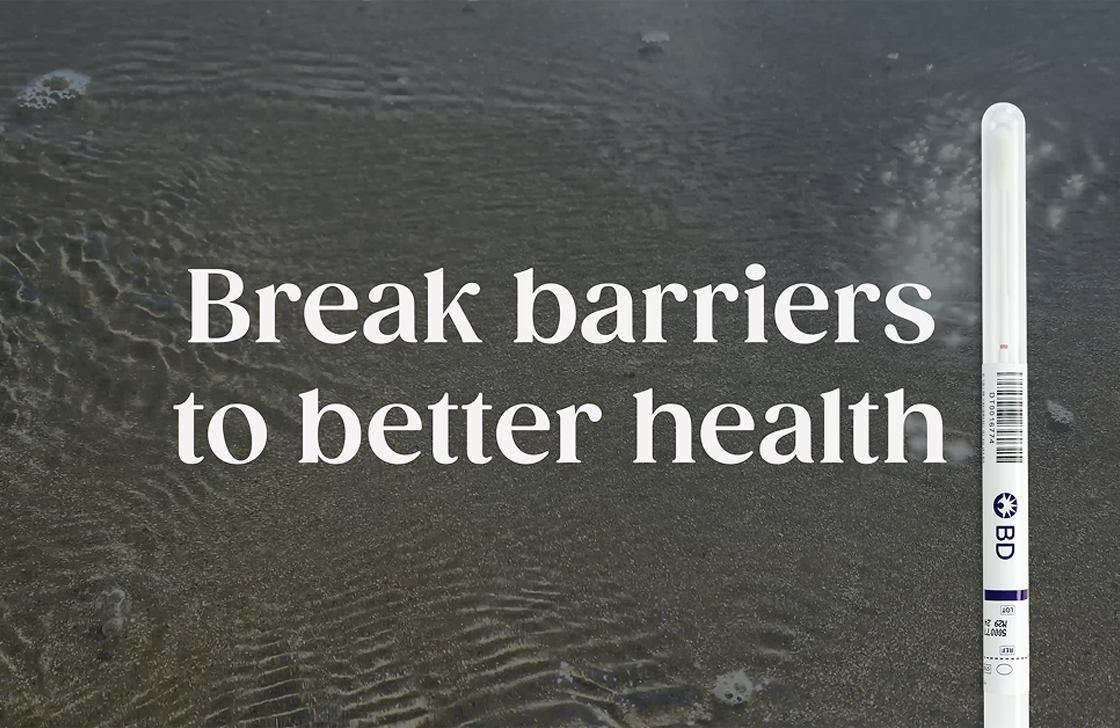
The self-collection swab looks like a long cotton swab, and the collection process takes less than a minute to do in a private space at your healthcare provider’s office or in your own home.11,* You will only need to insert the thin swab 2 inches into the vagina, and rotate it to collect your sample. Once collected, the sample will be sent to the lab.


Talk to your OBGYN and/or primary care physician to see if this test is right for you. Based on guidelines, screening is recommended only if your cervix was not removed during the hysterectomy procedure.18


Negative Result: NO HPV detected

  • A negative result means that the test did not detect the presence of HPV. Your healthcare provider will make recommendations for your next screening.


Positive Result: YES HPV detected

  • If you test positive for HPV, your risk for cervical cancer may be higher based on the type of HPV you have. The BD Onclarity™ HPV Test delivers comprehensive results,11,‡ helping your healthcare provider recommend either additional testing or repeat HPV testing to monitor for changes.


A positive test result does not mean you have cervical cancer nor does it mean you will get cancer. HPV positivity is common and in most patients, the infection will resolve on its own. There are many types of HPV. Some have a higher risk of causing cervical cancer.13 Based on your results, your healthcare provider may recommend follow-up testing to determine your risk.


Yes—medical test results are part of your protected health information under U.S. law (HIPAA) and state regulations.


HPV spreads through skin-to-skin contact and sexual activity, including vaginal, anal, and oral sex. Talking with your partner about HPV can also foster shared responsibility for health. Seek out trustworthy sources, like your healthcare provider, to educate yourself and your partner.


Talk to your doctor about your HPV self-collection options with BD Onclarity™

Reference

*Self-collected vaginal specimens can be tested as an alternative specimen type when cervical sampling is either contraindicated or cervical samples otherwise cannot be obtained.

†The BD Onclarity™ HPV Assay is the only FDA-approved HPV test which provides the capability for individually genotyping six high-risk types and three genotype groups.

‡The BD Onclarity™ HPV Assay is the only FDA-approved HPV test which provides the capability for individually genotyping six high-risk types and three genotype groups.

  1. BD Onclarity™ HPV Assay US Package Insert [8089894].
  2. Martinelli M, et al. Microbiol Spectr. 2024;12(3):e0287223. doi:10.1128/spectrum.02872-23
  3. Cancers Caused by HPV. Centers for Disease Control and Prevention. Published March 3, 2025. Accessed April 29, 2026, at https://www.cdc.gov/hpv/about/cancers-caused-by-hpv.html
  4. CDC. Cancer. Basic Information about HPV and Cancer. Published 2024. https://www.cdc.gov/cancer/hpv/basic-information.html 
  5. Wentzensen N, Massad LS, Clarke MA, et al. Self-Collected Vaginal Specimens for HPV Testing: Recommendations from the Enduring Consensus Cervical Cancer Screening and Management Guidelines Committee. J Low Genit Tract Dis. 2025;29(2):144-152. doi:10.1097/LGT.0000000000000885 
  6. ACOG. Screening for Cervical Cancer. Obstetrics & Gynecology. Accessed April 28, 2026, at https://journals.lww.com/greenjournal/fulltext/9900/screening_for_cervical_cancer.1515.aspx 
  7. Xue H. J Cancer. 2021; 12(14): 4332-4340.
  8. American Cancer Society. “Cervical Cancer Screening Guidelines.” American Cancer Society, 1 July 2025, www.cancer.org/cancer/types/cervical-cancer/detection-diagnosis-staging/cervical-cancer-screening-guidelines.html
  9. Scarinci IC, Garcia FA, Kobetz E, Partridge EE, Brandt HM et al. (2010) Cervical cancer prevention: new tools and old barriers. Cancer 116 (11): 2531-2542.
  10. Subramaniam A, Fauci JM, Schneider KE, et al. Invasive cervical cancer and screening: what are the rates of unscreened and underscreened women in the modern era?. J Low Genit Tract Dis. 2011;15(2):110-113. doi:10.1097/LGT.0b013e3181f515a2.
  11. BD Onclarity™ HPV Assay US Package Insert [8089894].
  12. Centers for Disease Control and Prevention. Cancers Caused by HPV. Published March 3, 2025. Accessed April 29, 2026, at https://www.cdc.gov/hpv/about/cancers-caused-by-hpv.html
  13. Centers for Disease Control and Prevention. Basic Information about HPV and Cancer. Published September 17, 2024. Accessed April 29, 2026, at https://www.cdc.gov/cancer/hpv/basic-information.html
  14. Scarinci IC, Garcia FA, Kobetz E, Partridge EE, Brandt HM et al. (2010) Cervical cancer prevention: new tools and old barriers. Cancer 116 (11): 2531-2542.
  15. Centers for Disease Control and Prevention. Cervical Cancer Risk Factors. Published December 11, 2024. Accessed April 29, 2026, at https://www.cdc.gov/cervical-cancer/risk-factors/index.html
  16. Subramaniam A, Fauci JM, Schneider KE, et al. Invasive cervical cancer and screening: what are the rates of unscreened and underscreened women in the modern era?. J Low Genit Tract Dis.2011;15(2):110-113. doi:10.1097/LGT.0b013e3181f515a2
  17. National Cancer Institute. ACS’s Updated Cervical Cancer Screening Guidelines Explained. Published September 18, 2011. Accessed April 29, 2026, at https://www.cancer.gov/news-events/cancercurrents-blog/2020/cervical-cancer-screening-hpv-test-guideline
  18. Centers for Disease Control and Prevention. Sexually Transmitted Infections (STI) Treatment Guidelines, 2021: HPV-Associated Cancers and Precancers. Last reviewed July 22, 2021. Accessed April 29, 2026, at https://www.cdc.gov/std/treatment-guidelines/hpv-cancer.htm
Chat with us
Our live chat is available between the hours of 8.30am - 5.00pm EST, Monday - Friday
×
true