true
Icon to close the modal
Support
Sales
Modal Close Icon
Icon to close thank you modal
Thank you for contacting our sales team!
A sales representive will get in touch with you shortly.
Customer Care

BD® Nexiva™ Diffusics™ Closed IV Catheter System

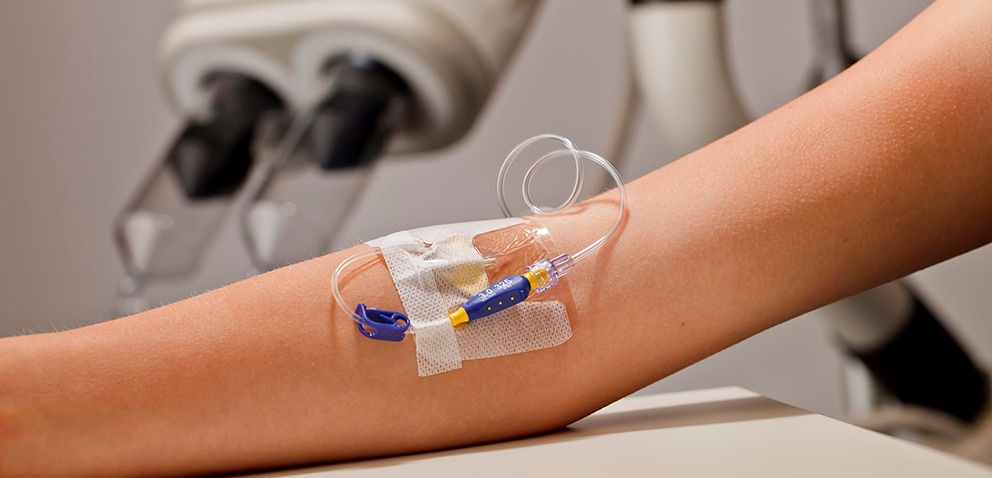
One catheter to meet your power injectable and computed tomography (CT)* scan needs

Contact Us
BD Nexiva™ Diffusics™ closed IV catheter system hero
Loading
Designed With CT Scan Injections in Mind

Address common challenges encountered during CT scan injections

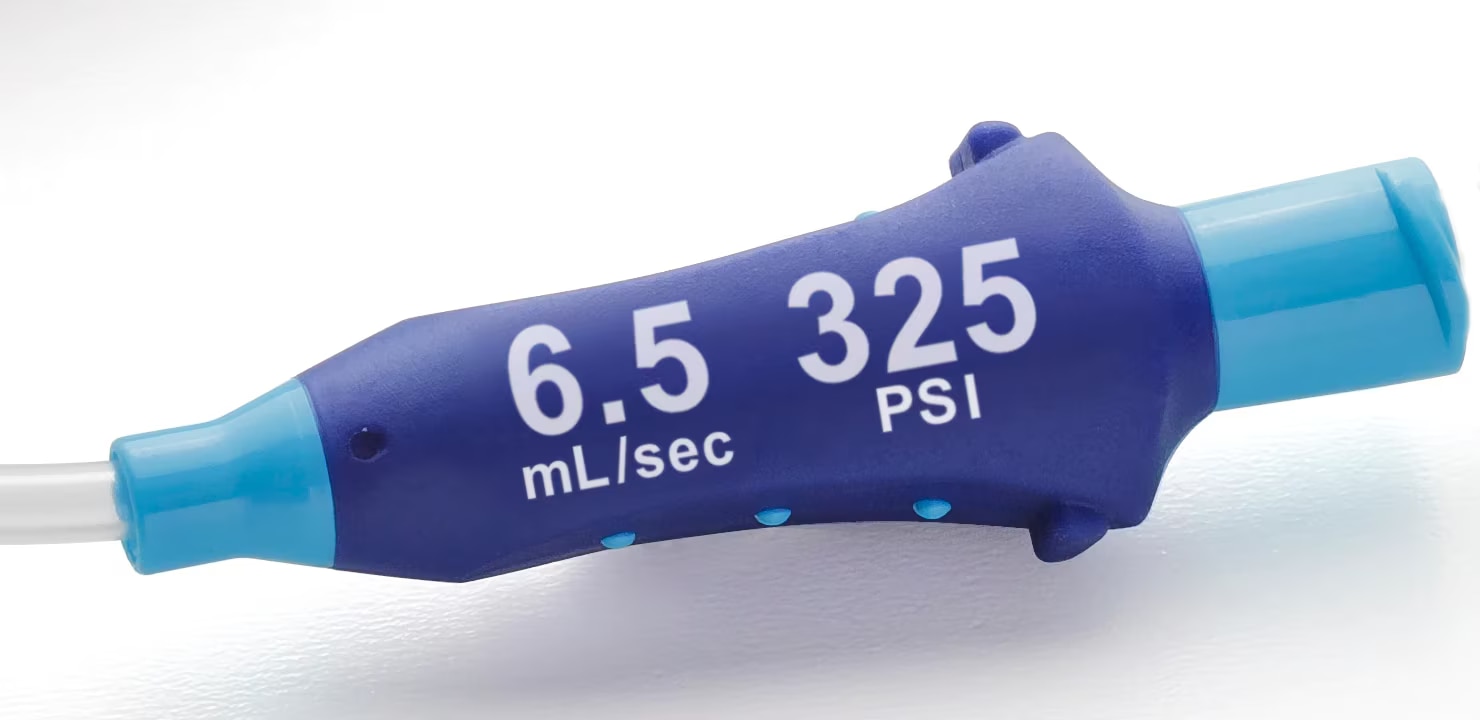
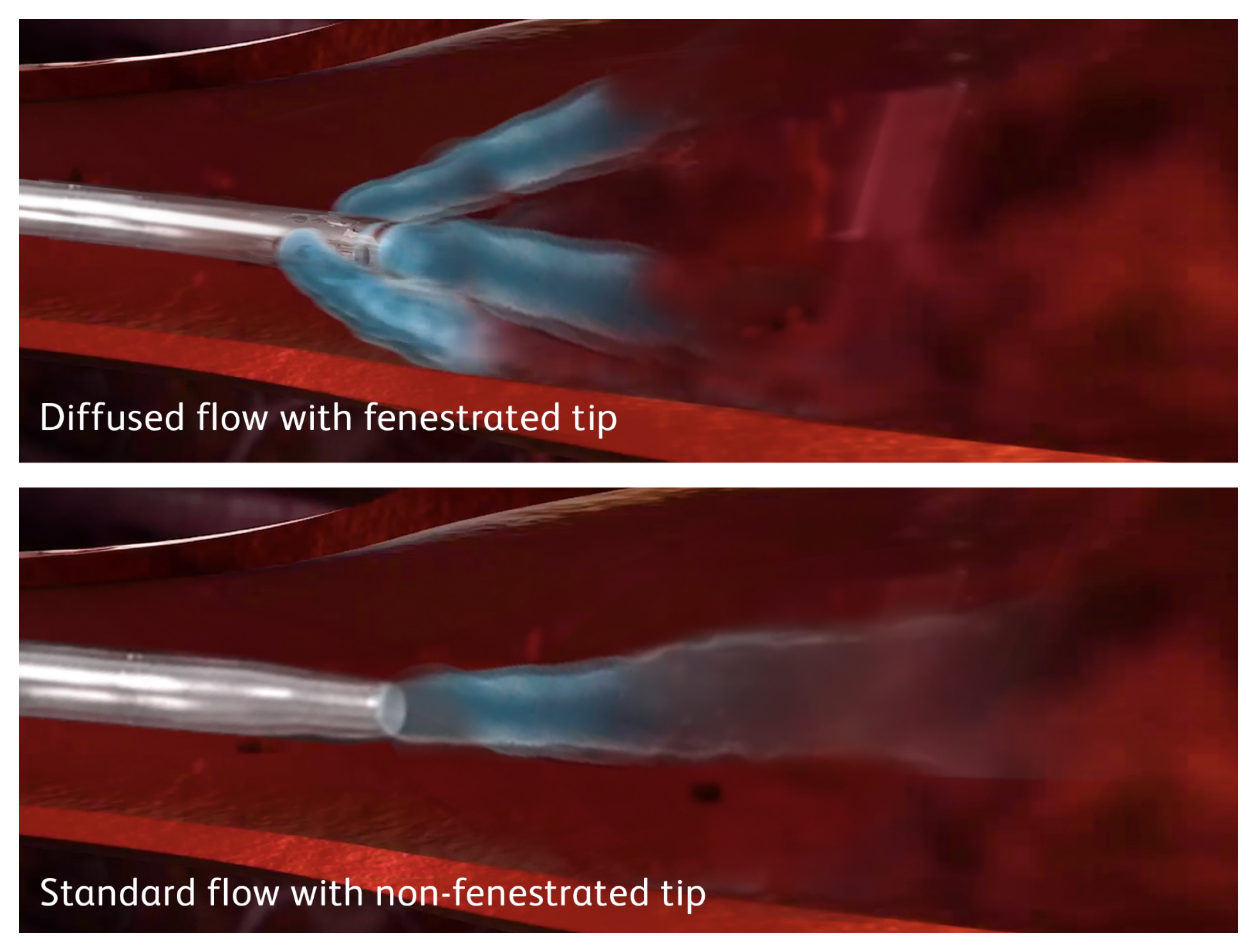
The unique diffusion tip of Nexiva™ Diffusics™ Closed IV Catheter System adds three laser-cut teardrop holes around the catheter tip. It can accommodate power injection up to 325 psi and meet high flow injection protocols.*

Nexiva™ Diffusics™ Catheter System is built on the Nexiva™ platform and is specifically designed to address the infusion challenges of contrast-enhanced CT.

*22 G up to 6.5 mL/sec

true

Common CT Scan Injection Challenges

High IV flow rates have traditionally required large gauge catheters

Unfortunately, many patients’ vasculature cannot accommodate 18- or even 20-gauge catheters, and using smaller gauge sizes can result in slower flow rates and reduced image quality.

What can cause catheter motion during contrast injection?

While achieving appropriate flow rates is crucial to image quality, the high IV flow rates required for power injection during CT may also cause catheters to move or whip around in the vein which may lead to extravasation and could be costly. 1, 2

How can high IV flow rates be achieved in small-gauge catheters?

The Infusion Therapy Standards of Practice recommend placing the smallest-gauge catheter that will accommodate the prescribed therapy and patient need.3

The diffusion tip on Nexiva™ Diffusics™ Catheter System enables desired contrast media flow rates to be achieved using a smaller gauge catheter† without compromising image quality. This enables clinicians to perform CT scan injections that require high IV flow rates when a patient's vasculature cannot accommodate a large catheter (i.e., 18 or 20 gauge).‡,4

†22–24 gauge

‡Bench test results may not necessarily be indicative of clinical performance.

How can CT departments help reduce contrast delivery complications?

Reduce the force of contrast delivery

While flow rates of contrast media are important, the delivery force should also be considered. Nexiva™ Diffusics™ Catheter System’s diffusion tip reduces the force of contrast delivery by up to 48%,§ helping decrease the impact of contrast media on the vessel wall.

§Compared to a non-diffusion-tip catheter. Bench test results may not necessarily be indicative of clinical performance.

Decrease potential catheter motion in vein

High IV flow rates required for power injection during CT may cause some catheters to move or whip around in the vein. Catheter motion may lead to extravasation, a complication caused by the catheter backing out of the vein.1

Extravasation may be painful for the patient, potentially resulting in tissue damage.3 The average potential liability for a moderate extravasation is EURO 18.6k and up to EURO 123k for a severe extravasation.2#

Nexiva™ Diffusics™ Catheter System has been shown to reduce the forces that may cause catheter motion in the vein by up to 67%. This reduction in force stabilises the catheter in the vein, and prevents the whipping, movement and backing out of the vein that may lead to extravasation.1

The videos below show catheter motion and extravasation of a non-diffusion tip catheter compared to the stability that Nexiva™ Diffusics™ Catheter System provides during power injection.


Power injection through a non-fenestrated catheter: extravasation

Note that, due to the force of the injection, the catheter tip will slowly move, backing out of the vein until the tip escapes the vein completely and contrast media enters the surrounding tissue.


Power injection through a non-fenestrated catheter: catheter motion

Note the catheter stays in the vein, but the forces from the power injection create enough turbulence to cause the catheter tip to whip around within the vein. This creates significant motion, potentially irritating or damaging the vessel wall.


Power injection through Nexiva™ Diffusics™ Catheter System with fenestrated tip: stability

Note the contrast media flows throughout the vasculature, while the catheter remains still.


Videos are from an animal study. Animal study results may not be indicative of clinical performance.

Explore Our Portfolio

Nexiva™ Diffusics™ Catheter System Portfolio

Nexiva™ Diffusics™ Catheter System is offered in a single port configuration.

Together, we all play a part in preventing vascular access complications.

BD Vascular Access Management assessments

Our powerful evidence-based assessments, with analytics and benchmarks, are the first phase of BD Vascular Access Management—and the first step on the path to enhance patient safety, workflow efficiency and cost-effectiveness across the entire patient journey.

Learn more

Partner with BD

References

Please consult BD product labels and inserts relevant to your geography for any indications, contraindications, hazards, warnings, cautions and instructions for use. Any discussion and/or content regarding BD products is limited to this information and instructions for use.

Please note, not all products, services or features of products and services may be available in your local area. Please check with your local BD representative.

† Converted from USD to EURO using Xe Currency rate on April 16, 2026.

  1. Boschi R, Rostagno R. Extravasation of antineoplastic agents: prevention and treatments. Pediatric Reports. 2021;4(e28);98-100.
  2. Paice T. Economic impact of an extravasation. an analysis. Imaging Economics. 2007;20(3):14.
  3. Infusion Nurses Society. Infusion therapy standards of practice. J Infus Nurs. 2024.
  4. Johnson PT, Christensen GM, Fishman EK. IV contrast administration with dual source 128-MDCT: a randomized controlled study comparing 18-gauge nonfenestrated and 20-gauge fenestrated catheters for catheter placement success, infusion rate, image quality and complications. Am J Roentgenol. 2014;202(6):1166-70.
<h2>How can contrast delivery be optimised for CTCA scans?</h2>

How can contrast delivery be optimised for CTCA scans?

The all-in-one closed IV catheter system leverages a fenestrated tip to accommodate power injection at high flow rates (e.g., 6.5 mL/sec for 22 G) and provides higher vascular attenuation for Computed omography Coronary Angiogram (CTCA) scan when compared with nonfenestrated catheters at the same IV flow rates.

Practice guidelines include using a fenestrated peripheral IV catheter (PIVC), ensuring the IV used is rated to administer flow rates required for CTCA scans (e.g., 5–7 mL/s).1

CCTA benefits

What benefits should a power injectable catheter have for CTCA scans?

  • Ensures high risk patients are appropriately triaged to cardiac catheterisation1

  • Offers rapid evaluation of the degree of coronary stenosis and atherosclerosis1

  • Reduction Time

    Allows significant reduction in time-to-discharge1

CTCA conditions

What conditions are required to use a power injectable catheter for CTCA scans?

  • Patient

    Appropriate utilization and patient selection1

  • Diffusics

    Requires high contrast media injection flow rates2

Extracting potential clinical and economic value for CCTA includes improving patient outcomes, lowering healthcare costs and preventing unnecessary diagnostic procedures.1

The Nexiva™ Diffusics™ Advantage

The Nexiva™ Diffusics™ Advantage


<p>Contrast enhancement</p> <p>Contrast enhancement</p>

Contrast enhancement

Expedite triage Expedite triage
Expedite triage
Reduce risk of IV complications<sup>3</sup> Reduce risk of IV complications<sup>3</sup>
Reduce risk of IV complications3

How can contrast enhancement be optimised during CTCA scans?

Achieving high diagnostic accuracy with the lowest possible radiation dose requires careful preparation of CTCA patients1. Adequate peripheral IV access is necessary to ensure diagnostic, high-quality images.2

Image quality is affected by the attenuation achieved in Multidetector Computed Tomographic (MDCT) coronary angiography, particularly in the small coronary arteries. Overall diagnostic accuracy improves significantly when higher intracoronary attenuation is achieved. 4Nexiva™ Diffusics™ Catheter System has been shown to provide higher vascular attenuation for CTCA when compared with non-fenestrated catheters at the same flow rates.*,5,6

Morbid obesity in CTCA

Morbid obesity is a scenario where CTCA may be difficult or non-diagnostic. Strategies to improve image quality include ensuring high-flow IV contrast injections of 6–7 mL/sec. 1 Nexiva™ Diffusics™ Catheter System can accommodate power injection at 6.5 mL/sec for 22 G and up to 15 mL/sec for 18 G.

*The catheter system has been tested at the flow rates noted for contrast media viscosity 27.5 cP(mPa-s). However, due to variations in add-on devices, tubing, contrast media temperature and pressure limit settings, these flow rates may not be achievable.

How can Nexiva™ Diffusics™ Closed IV Catheter System help expedite triage?

Acute chest pain in CTCA scans

CTCA is a proven strategy to safely expedite diagnosis and limit resource utilisation for patients presenting with acute chest pain (ACP) in the Emergency Department (ED) with no known prior coronary artery disease.¹

CTCA has established itself as the preferred first-line test for ACP triage in select patients. and is also now recognised as a Class I indication by multiple international professional societies, including the American College of Cardiology, the American College of Radiology and the European Society of Cardiology.¹

Infusion Therapy Standards of Practice state to consider a fenestrated catheter for a contrast-based radiographic study.⁸ Nexiva™ Diffusics™ Catheter System is the only peripheral IV catheter with a fenestrated catheter tip specifically designed for power injection.

How can the risk of IV complications be reduced during CT scan injections?

Nexiva™ Diffusics™ Catheter System is designed to enable contrast delivery during CT with smaller IV catheters without increasing the risk of complications.

The stabilising catheter system resources:


  • Force of contrast delivery by up to 48%*
  • Destabilising effects that may lead to extravasation3
  • Potential for the catheter to move or whip around in the vein
  • Chance of phlebitis by up to 29%†,7

These factors enable power injection with smaller IV catheters without an increased risk of complications. Nexiva™ Catheter System has also been associated with lower complications in a number of studies.

Clinical evidence

*Compared to a non-diffusion tip catheter. Bench test results may not necessarily be indicative of clinical performance.
†Nexiva™ Catheter System with a polytetrafluoroethylene (PTFE) catheter demonstrated a 29% reduction in phlebitis rates when compared to an open system. 

Explore Our Portfolio

Nexiva™ Diffusics™ Catheter System Portfolio

Nexiva™ Diffusics™ Catheter System is offered in a single port configuration.

Partner with BD

References

Please consult BD product labels and inserts relevant to your geography for any indications, contraindications, hazards, warnings, cautions and instructions for use. Any discussion and/or content regarding BD products is limited to this information and instructions for use.

Please note, not all products, services or features of products and services may be available in your local area. Please check with your local BD representative.

† Converted from USD to EURO using Xe Currency rate on April 16, 2026.

  1. Maroules C, Rybicki F, Ghoshhajra B, et al. 2022 use of coronary computed tomographic angiography for patients presenting with acute chest pain to the emergency department. Journal of Cardiovascular Computed Tomography. 2023;17:146-163. https://doi.org/10.1016/j.jcct.2022.09.003.
  2. Fischer AM, Riffel P, Henzier T, et al. More holes, more contrast? Comparing an 18-gauge non-fenestrated catheter with a 22-gauge fenestrated catheter for cardiac CT. PLoS ONE 15(6):e0234311. https://doi.org/10.1371/journal.pone.0234311
  3. Boschi R, Rostagno R. Extravasation of antineoplastic agents: prevention and treatments. Pediatric Reports. 2021;4(e28);98-100.
  4. Cademartiri F, Mollet N, Lemos P, et al. Higher intracoronary attenuation improves diagnostic accuracy in MDCT coronary angiography. AJR. 2006;187:W430-W433. doi:10.2214/AJR.05.1406
  5. Harraz M, Abouissa A, Kamr W. Closed versus conventional IV catheter in performing coronary CT Angiography. Egyptian Journal of Radiology and Nuclear Medicine. (2020) 51:89. https://doi.org/10.118/s43055-020-00211-4.
  6. Kim JeongJae, Kim Eun Jeong, Hur Jee Hye, et al. The Usefulness of Fenestrated Intravenous Catheters Compared with Nonfenestrated Catheter for Cardiac Multidetector Computed Tomography. J Comput Assist Tomogr. Volume 43, Number 3, May/June 2019.
  7. González López J, Arribi Vilela A, Fernández Del Palacio E, et al. Indwell times, complications and costs of open vs closed safety peripheral intravenous catheters: a randomized study. J Hosp Infect. 2014;86(2):117-126.
  8. Infusion Nurses Society. Infusion therapy standards of practice. J Infus Nurs. 2024.

Clinical evidence on IV complications, satisfaction and safety

Nexiva™ Diffusics™ Catheter System is built on the Nexiva™ platform. Nexiva™ has been shown to deliver higher clinician satisfaction, improved clinician safety and a reduction in overall complication rates versus non-integrated, open systems.1–3

The platform is backed by evidence in peer-reviewed journals from as early as 20094 to as recently as 2024.5

Nexiva™ Diffusics™ Closed IV Catheter System is also backed by peer-reviewed journals and infusion guidelines. Infusion Therapy Standards of Practice state to consider a fenestrated catheter for a contrast-based radiographic study and in coronary CTA.6 Nexiva™ Diffusics™ Catheter System is the only peripheral IV catheter with a diffusion catheter tip specifically designed for power injection.

Closed IV Catheter System

Comparative 
catheter

Data gathered

Year published

Study type

Journal

Authors

Nexiva™ Diffusics™Smiths Jelco
ProtectIV®
Plus
Aortic enhancement levels, catheter placement success, complications, contrast volume, extravasation, image quality, infusion rate, maximum pressure2014Randomized Controlled Trial(RCT)7American Journal
of Roentgenology
Johnson PT,
Christensen GM, Fishman EK.
Nexiva™VariousCatheter failure, dislodgement, occlusion, phlebitis2024Systematic review/
meta analysis5
Journal of Vascular
Access
Gidaro A, Quici M, Giustivi D, et al.
Nexiva™BD® Insyte
Autoguard™
Dwell time, complications, dislodgement, occlusion, infiltration, phlebitis2023RCT8European Journal
of Oncology Nursing
Gerceker GO, 

Yildirim BG, 

Onal A, et al.
Nexiva™B. Braun 
Introcan 
Safety®

Insyte 

Autoguard™
Catheter-associated bloodstream infection,
clinician satisfaction, cost savings/utilisation reduction, dwell time, dislodgement/leaking, infiltration/extravasation, local infection, insertion success, occlusion, phlebitis
2022RCT1Journal of Hospital MedicineRickard CM, 

Larsen E, 

Walker RM, et al.
Nexiva™Smiths Jelco ProtectIV® PlusClinician satisfaction, dwell time, infection, infiltration, pain, phlebitis2019Prospective, quasi-experimental9Journal of Infusion
Nursing
Penoyer D, Fowler S, Bennett M
Nexiva™NoneBlood exposure, dislodgement, kinking, leaking,
phlebitis, restarts
2017Observational10Journal of Vascular
Access
deRosenroll A
Nexiva™MedikitBending and kinking, blood exposure, cost savings/utilisation reduction, dislodgement, dwell time, extravasation, insertion success, obstruction, phlebitis2014Quasi-randomized study11Journal of Vascular
Access
Tamura N, Abe S, Hagimoto K, et al.
Nexiva™
B. Braun
Vasocan® Safety
Catheter-related infection, cost savings/utilisation reduction, dwell time, infiltration/extravasation, insertion success, occlusion, pain, painful hematoma, phlebitis2014RCT2
Journal of Hospital Infection
González López J,
Arribi Vilela A, Fernández Del,
Palacio E, et al.
Nexiva™
B. Braun Introcan Safety® 
(non-winged)
with BD® StatLock™ Stabilisation Device
Clinician satisfaction, cost savings/utilisation reduction, dislodgement, dwell time, infiltration, insertion success,
leaking, phlebitis
2010RCT3Journal of Infusion
Nursing
Bausone-Gazda D, Lefaiver CA,
Walters SA, et al.
Nexiva™
NoneClinician satisfaction, clotting, dislodgement, infiltration, leaking, restarts, securement2009Pre-and post-use survey4Journal of the
Association of
Vascular Access
McNeil E, Hines N, Phariss R


Partner with BD

References

Please consult BD product labels and inserts relevant to your geography for any indications, contraindications, hazards, warnings, cautions and instructions for use. Any discussion and/or content regarding BD products is limited to this information and instructions for use.

Please note, not all products, services or features of products and services may be available in your local area. Please check with your local BD representative.

  1. Rickard CM, Larsen E, Walker Rachel M, et al. Integrated versus nonintegrated peripheral intravenous catheter in hospitalized adults (OPTIMUM): A randomized controlled trial. J Hosp Med. 2022;1-12.
  2. González López J, Arribi Vilela A, Fernández Del Palacio E, et al. Indwell times, complications and costs of open vs closed safety peripheral intravenous catheters: a randomized study. J Hosp Infect. 2014;86(2):117-126.
  3. Bausone-Gazda D, Lefaiver CA, Walters SA. A randomized controlled trial to compare the complications of 2 peripheral intravenous catheter-stabilization systems. J Infus Nurs. 2010;33(6):371-384.
  4. McNeil E, Hines N, Phariss R. A clinical trial of a new all-in-one peripheral-short catheter. JAVA. 2009;14(1):46-51.
  5. Gidaro A, Quici M, Giustivi D, et al. Integrated short peripheral intravenous cannulas and risk of catheter failure: a systematic meta-analysis. J Vasc Access. 2024.
  6. Infusion Nurses Society. Infusion therapy standards of practice. J Infus Nurs. 2024.
  7. Johnson PT, Christensen GM, Fishman EK. IV contrast administration with dual source 128-MDCT: a randomized controlled study comparing 18-gauge nonfenestrated and 20-gauge fenestrated catheters for catheter placement success, infusion rate, image quality and complications. Am J Roentgenol. 2014;202(6):1166-70.
  8. Gerceker GO, Yildirim BG, Onal A, et al. The effect of the closed intravenous catheter system on first insertion success, indwelling time, and complications in pediatric hematology and oncology patients: a randomized controlled study. Eur J Oncol Nurs. 2023 Dec:67:102430. doi: 10.1016/j.ejon.2023.102430. Epub 2023 Oct 7.
  9. Penoyer D, Fowler S, Bennett M. Evaluation of the Use of Open Versus Closed Short Peripheral Catheters on Catheter Dwell Time. J Infus Nurs. 2019;42(6):276-282.
  10. deRosenroll A. Peripheral intravenous catheters: Improving outcomes through change in products, clinical practice and education. Vasc Access. 2017;11(1):7-12.
  11. Tamura N, Abe S, Hagimoto K, et al. Unfavorable peripheral intravenous catheter replacements can be reduced using an integrated closed intravenous catheter system. J Vasc Access. 2014;15(4):257-263.

Nexiva™ Diffusics™ Catheter System


    Catalog no.

    Color

    Gauge

    Catheter length (in)/(mm)

    Gravity flow rate
(mL/min)

    Maximum power
    injector pressure
    limit setting (psi)

    Max power
    injector
    flow rate
    for contrast
    media viscosity
    < 27.5 cP (mPa-s)*
    (mL/sec)

    383691Yellow240.75 (19)213253.00 mL/sec
    383692Blue221.00 (25)453256.50 mL/sec
    383693Pink201.00 (25)6832510.00 mL/sec
    383694Pink201.25 (32)6432510.00 mL/sec
    383695Green181.25 (32)9032515.00 mL/sec


    *The catheter system has been tested at flow rates; however, due to variations in add-on devices, tubing, contrast media temperature and pressure limit settings these flow rates may not be achievable.

    Partner with BD

    References

    Please consult BD product labels and inserts relevant to your geography for any indications, contraindications, hazards, warnings, cautions and instructions for use. Any discussion and/or content regarding BD products is limited to this information and instructions for use.
     
    Please note, not all products, services or features of products and services may be available in your local area. Please check with your local BD representative. 
    EIFUs
    Resources

    Partner with BD

    true
    BD Nexiva™ Diffusics™ closed IV catheter system BD BD Nexiva Diffusics™ Closed IV Catheter System BD Nexiva Diffusics™ /content/dam/bd-assets/bd-com/en-us/logos/bd/header-bd-logo.svg

    One catheter to meet your power injectable and computed tomography (CT)* scan needs

    383695 BD® Nexiva™ Diffusics™ Closed IV Catheter System 18 G x 1.25 IN (32 mm) 383694 BD® Nexiva™ Diffusics™ Closed IV Catheter System 20 G x 1.25 IN (32 mm) 383693 BD® Nexiva™ Diffusics™ Closed IV Catheter System 20 G x 1.00 IN (25 mm) 383692 BD® Nexiva™ Diffusics™ Closed IV Catheter System 22 G x 1.00 IN (25 mm) 383691 BD® Nexiva™ Diffusics™ Closed IV Catheter System 24 G x 0.75 IN (19 mm)
    fenestrated catheter