
In addition to StO2 measurements, ForeSight™ Sensor trends the relative change in total tissue haemoglobin (ΔctHb). The ΔctHb parameter provides additional information relating to StO₂ trends and tissue oxygenation changes.
true
ForeSight™ Tissue Oximetry Sensor
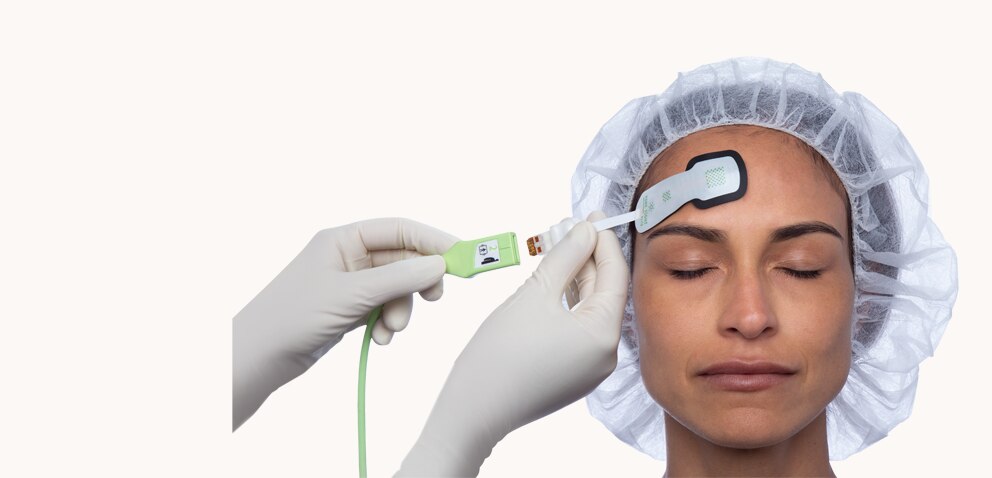
Tissue oximetry monitoring with ForeSight™ Sensor.

- Overview
- Actionable Insights
- EIFU & Resources
The right monitoring makes a difference – for all your patients' differences
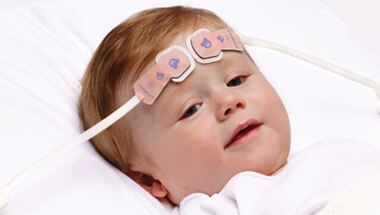
The ForeSight™ Tissue Oximetry Sensor provides tissue oximetry and haemodynamic information that may assist clinicians in monitoring cerebral oxygenation for a diverse patient population, all available on one monitor.
ForeSight™ Tissue Oximetry Sensor:
- Accounts for patient-to-patient differences, including skin tone, size, age, scalp-to-cortex distance and acuity
- Delivers absolute StO2 values, making a preinduction baseline optional
- Measures relative change in total tissue haemoglobin, providing additional information relating to StO₂ trends and changes
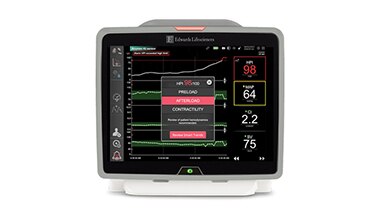
- Integrates with the HemoSphere™ platform to display tissue oximetry and haemodynamic information on a single monitor

With ForeSight™ Sensor, you can have tissue oximetry information that may support clinical assessment and decision-making.
The ForeSight™ Sensor Difference
-

Absolute, actionable tissue oximetry measures
-

Across a diverse patient population
-

As part of a complete haemodynamic profile
A tissue oximetry sensor designed with patient differences in mind
Due to the limitations in some other tissue oximetry sensor designs, patient differences including melanin or bilirubin concentrations, cranial thickness, etc., can cloud the accuracy – and therefore the reliability – of oxygenation measures.
With a unique sensor design and exclusive fifth wavelength of near infrared light (NIRS), ForeSight sensor is designed to account for patient differences such as skin pigmentation and scalp-to-cortex distance.
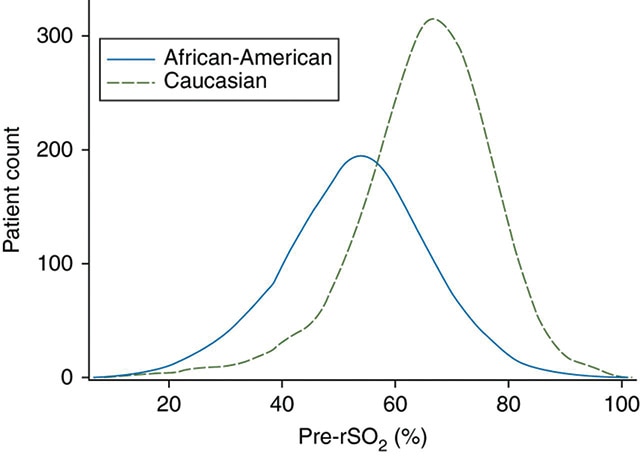
Figure 1. Preoperative tissue oximetry, Sun et. al.
In conventional two-wavelength tissue oximetry systems, skin pigmentation has been shown to interfere with the clinical measurement of regional cerebral oxygen saturation.1
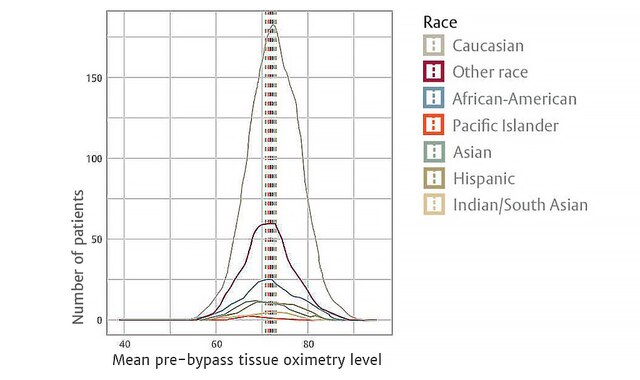
Figure 2. Foresight sensor readings by race, Stannard et. al.
Tissue oxygenation monitoring using a fifth wavelength of NIRS has been shown to accommodate for the melanin present in a patient’s skin.2
ForeSight™ Sensors is designed with a penetration depth of approximately 2.5 cm.
Research shows that a 2 cm depth of penetration is insufficient for accurate measurement of StO2 in adult cardiac patients with a deeper scalp-to-cortex distance. But ForeSight™ Sensors is designed to penetrate deeper. At 2.5 cm, ForeSight™ Sensors is designed to provide tissue oximetry measurements in patients with greater scalp-to-cortex distance.
Model | Description |
FSESL | ForeSight™ Elite large sensor (≥40 kg), 20 sensors/box |
- Sun X, Ellis J, Corso PJ, Hill PC, Chen F, Lindsay J. Skin pigmentation interferes with the clinical measurement of regional cerebral oxygen saturation. Br J Anaesth. 2015;114(2):276-280. doi:10.1093/bja/aeu335
- Stannard B, Levin MA, Lin HM, Weiner MM. Regional cerebral oximetry is consistent across self-reported racial groups and predicts 30-day mortality in cardiac surgery: a retrospective analysis. J Clin Monit Comput. 2021;35(2):413-421. doi:10.1007/s10877-020-00487-x
ForeSight™ Sensor algorithms are calibrated and validated to both cerebral and somatic regions:
- Cerebral oximetry SctO2 calibrated and validated to SjvO2
- Somatic oximetry SmtO2 calibrated and validated to ScvO2
Additionally, you can view regional oxygenation values specific to sensor location via HemoSphere advanced monitoring platform.
Because ForeSight™ Sensor integrates with HemoSphere™ Advanced Monitoring Platform, you get more than numbers—you get displayed tissue oximetry and haemodynamic information to support clinical assessment.
According to published studies, cerebral desaturations are:
-

Common
Mean desatuation incidence across studies1-9
-

Critical
Linked to increase risk of cognitive dysfunction, 4 POCD10 and mortality11
-

Treatable
Reversing or avoiding cerebral desaturations has been shown to reduce incidence of cognitive impairment,12 ICU stay1 and hosptial stay1
- Schön J, et al. Cerebral oxygen saturation monitoring in on-pump cardiac surgery – A 1 year experience. Appl Cardiopulm Pathophysiol. 2009;13:243-252.
- Yao FSF, et al. Cerebral oxygen desaturation is associated with early postoperative neuropsychological dysfunction in patients undergoing cardiac surgery. J Cardiothorac Vasc Anesth. 2004;18(5):552-558. doi:10.1053/j.jvca.2004.07.007
- Murkin JM, et al. Monitoring brain oxygen saturation during coronary bypass surgery: a randomized, prospective study. Anesth Analg. 2007;104(1):51-58. doi:10.1213/01.ane.0000246814.29362.f4
- de Tournay-Jetté E, et al. The relationship between cerebral oxygen saturation changes and postoperative cognitive dysfunction in elderly patients after coronary artery bypass graft surgery. J Cardiothorac Vasc Anesth. 2011;25(1):95-104. doi:10.1053/j.jvca.2010.03.019
- Deschamps A, et al. Reversal of decreases in cerebral saturation in high-risk cardiac surgery. J Cardiothorac Vasc Anesth. 2013;27(6):1260-1266. doi:10.1053/j.jvca.2013.01.019
- Greenberg SB, et al. Cerebral desaturation events in the intensive care unit following cardiac surgery. J Crit Care. 2013;28(3):270-276. doi:10.1016/j.jcrc.2012.09.004
- Deschamps A, et al. Cerebral oximetry monitoring to maintain normal cerebral oxygen saturation during high-risk cardiac surgery: a randomized controlled feasibility trial. Anesthesiology. 2016;124(4):826-836. doi:10.1097/ALN.0000000000001029
- Subramanian B, et al. A multicenter pilot study assessing regional cerebral oxygen desaturation frequency during cardiopulmonary bypass and responsiveness to an intervention algorithm. Anesth Analg. 2016;122(6):1786-1793. doi:10.1213/ANE.0000000000001275
- Uysal S, et al. Optimizing cerebral oxygenation in cardiac surgery: a randomized controlled trial examining neurocognitive and perioperative outcomes. J Thorac Cardiovasc Surg. 2020;159(3):943-953. doi:10.1016/j.jtcvs.2019.03.036
- Slater JP, et al. Cerebral oxygen desaturation predicts cognitive decline and longer hospital stay after cardiac surgery. Ann Thorac Surg. 2009;87(1):36-45. doi:10.1016/j.athoracsur.2008.08.070
- Stannard B, et al. Regional cerebral oximetry is consistent across self-reported racial groups and predicts 30-day mortality in cardiac surgery: a retrospective analysis. J Clin Monit Comput. 2021;35(2):413-421. doi:10.1007/s10877-020-00487-x
- Colak Z, et al. Influence of intraoperative cerebral oximetry monitoring on neurocognitive function after coronary artery bypass surgery: a randomized, prospective study. Eur J Cardiothorac Surg. 2015;47(3):447-454. doi:10.1093/ejcts/ezu193
One monitor, comprehensive insights
Tissue oximetry measures are only one part of a surgical patient’s haemodynamic profile.
That’s why the ForeSight™ System is available as part of the HemoSphere™ Advanced monitoring platform – providing an integrated display of tissue oximetry and haemodynamic parameters on a single monitoring platform.
This “all-in-one” view delivers comprehensive insights into patient perfusion that may support assessment of haemodynamic and tissue oxygenation trends – supporting clinical assessment and decision-making.
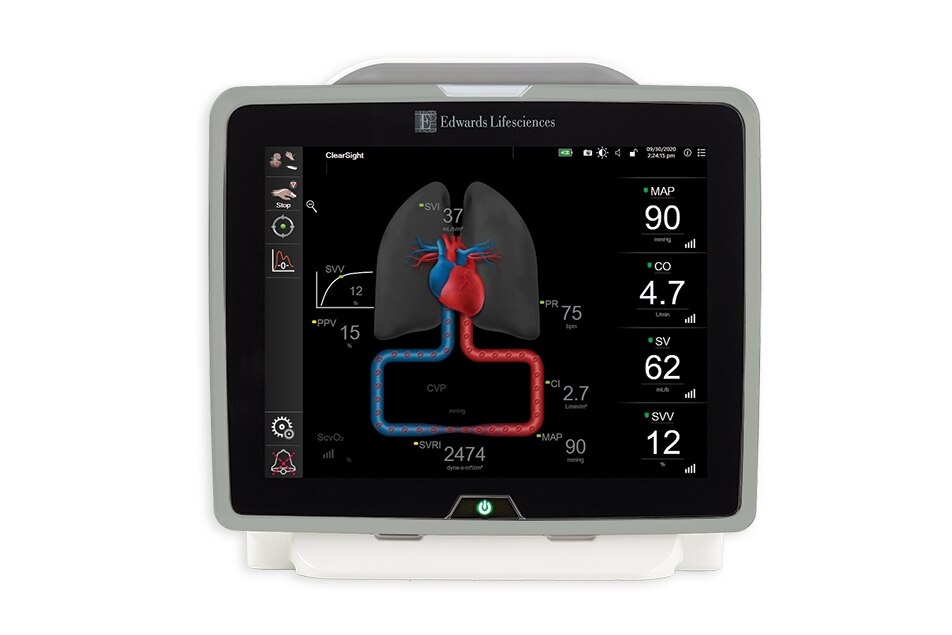
ForeSight™ System delivers tissue oximetry insights via HemoSphere™ advanced monitoring platform

Literature
Access our extensive collection of informative product and educational resources, designed to keep you informed and help you achieve excellence.
Learn More

Learning
BD Advanced Patient Monitoring is here to help you stay on top of the latest clinical challenges and make the most of haemodynamic monitoring solutions.
Explore Resources
true
true
true
