


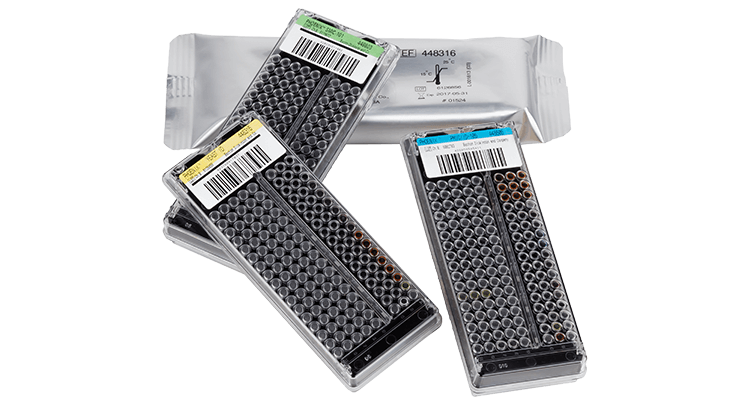
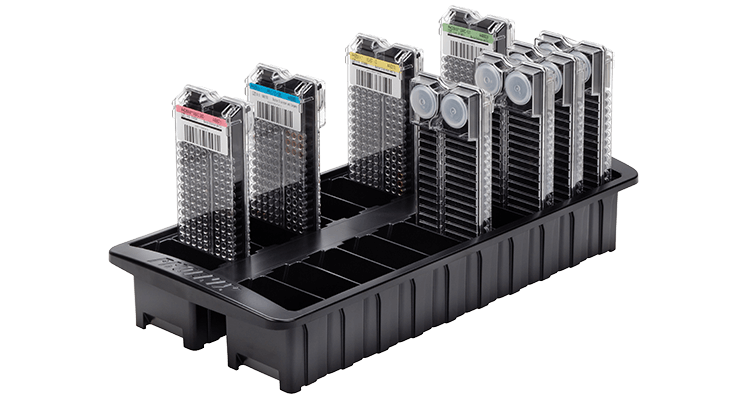
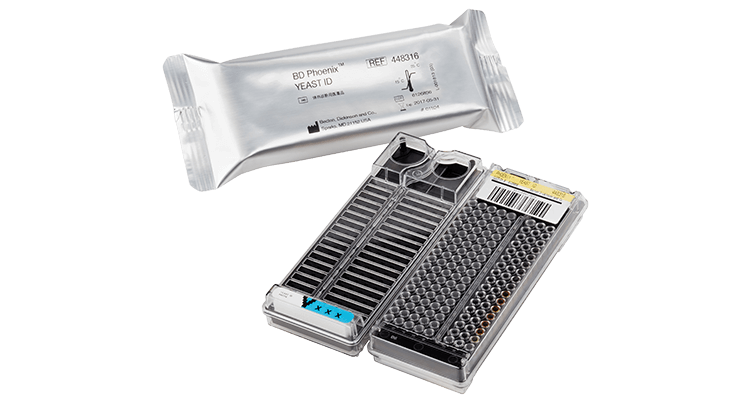
The BD Phoenix™ system offers a variety of identification only, susceptibility only and combination of identification and susceptibility panels. BD Phoenix™ panels provide accurate, rapid identification and antimicrobial susceptibility testing results for most clinically significant aerobic and facultative anaerobic Gram-negative and Gram-positive bacteria, as well as identification of yeast and yeast-like organisms.
true

Support
West Africa

+233 302 769 692
West Africa Secant Tower West Wings, 4th Floor, Secant Tower, Plot #398, Papa Monrovia Street, 7th Lane Osu Kuku Hills, Accra Ghana
Thank you for contacting our sales team!
A sales representive will get in touch with you shortly.
East Africa
+254 20 2738339/40
Africa Re Center, 2nd FL, Hospital Rd, Upper Hill, P.O. Box 76613 – 00508, Nairobi, Kenya
+254 758 726613
East & West Africa

ODE.africa@bd.com
serviceclaims.africa@bd.com
South Africa
+27 10 201 7400
20 Woodlands Drive, The Woodllands Office Park Build 6 (G), Woodmead, Johannesburg, Gauteng, 2191
orderssa@bd.com

- Overview
- Applications
- EIFU & Resources
true
Trusted performance
The BD Phoenix™ system provides on-panel doubling dilutions and built-in detection resistance, including CPO, MRSA, mecA, VRSA, VRE, ESBL, HLAR, and iMLSb*.
Ease of use
BD Phoenix™ panels can be stored at room temperature, are leak-resistant and do not require reagent additions post inoculation.
Emerging resistance detection
The BD Phoenix™ Emerge™ Gram-negative and Gram-positive panels offer 136 wells for susceptibility testing, allowing for additional antimicrobial dilutions that help provide the foundation for detecting emerging resistance.
Detecting Carbapenamase producing organisms (CPOs)
The BD Phoenix™ CPO detect test, offered on certain Gram-negative panels, provides results, including Ambler classification that can support clinicians in making treatment decisions.
Dual growth detection technology
BD Phoenix™ panels allow the BD Phoenix™ M50 instrument to determine growth using both an oxidation-reduction reaction and turbidity development, providing both rapid and accurate susceptibility results.
True doubling dilutions
The BD Phoenix™ system utilises on-panel doubling dilutions of antimicrobial concentrations for determination of MIC results.
Multiple panel formats
BD Phoenix™ panels, which require no refrigeration and are leak resistant, are available in a variety of formats including identification-only and susceptibility-only, and in combination identification and susceptibility panels.
Largest number of wells per panel
With 136 wells dedicated to susceptibility testing, the BD Phoenix™ Emerge™ panel may allow for additional antimicrobial dilutions or additional drugs.
Resistance detection
The BD Phoenix™ system provides on-panel doubling dilutions of antimicrobials and built-in detection of resistance, including CPO, MRSA, mecA, VRSA, VRE, ESBL, HLAR, and iMLSb*
Automated panel inoculation preparation
The BD Phoenix™ AP automated inoculation preparation instrument may help to reduce sample preparation workflow burdens, reducing total hands-on time per sample by 50% compared to manual BD Phoenix™.1
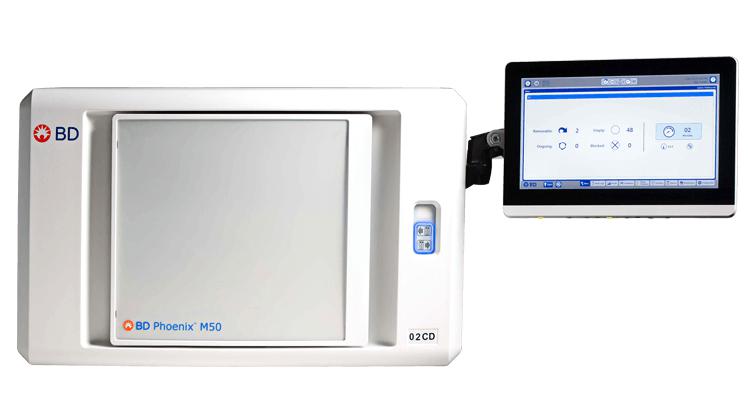
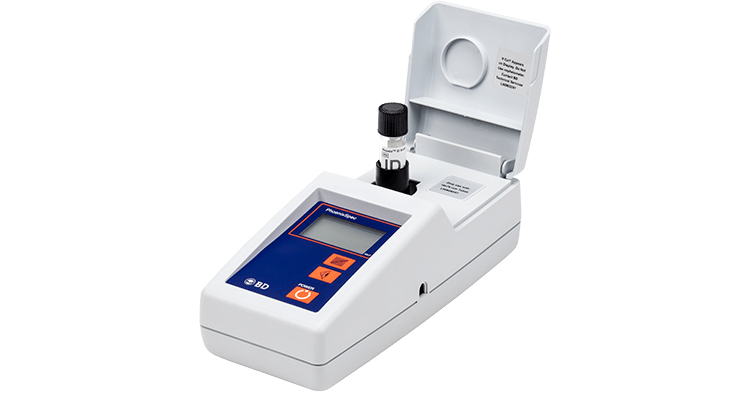
- The BD Phoenix™ system offers identification-only panels and combination ID/AST panels, using 51 wells for identification substrates.
- The instrument can provide identification of most clinically significant Gram-negative and Gram-positive bacteria, as well as yeast.
- The BD Phoenix™ system offers 85 wells for antimicrobial dilutions on standard AST-only panels and combination ID/AST panels, and 136 wells on the BD Phoenix™ Emerge™ panel.
- The instrument can provide susceptibility results for most clinically significant Gram-negative and Gram-positive bacteria.
- The BD Phoenix™ system panels test for several resistance markers* such as** :
- Gram-positive bacteria
- HLAR—High Level Aminoglycoside Resistant Enterococcus
- iMLSb—Inducible Clindamycin Resistance
- MRSA—based on Oxacillin Interpretation with Staphylococcus species
- mecA - detection in mecA-mediated resistance Staphylococcus aureus
- BL-Staphylococcus ß-Lactamase (Nitrocefin-based test)
- VRSA—Vancomycin-Resistant Staphylococcus aureus
- VRE—based on Vancomycin interpretation
- Gram-negative bacteria
- CPO—Carbapenemase Producing Organism
- ESBL—offered on Gram-negative panels and requires no additional disc diffusion or E-Test confirmation
- Gram-positive bacteria
- The BD Phoenix™ CPO detect test, available on certain BD Phoenix™ Gram-negative panels, provides information, including Ambler classification, to help guide clinicians in their treatment decisions.
- This test is available in two-panel configurations that allow microbiology labs to test for CPOs as part of routine susceptibility testing on BD Phoenix™ panels:
- 2-well configuration—provides detection of Carbapenemase-producing organisms in Enterobacterales, Pseudomonas aeruginosa and Acinetobacter baumannii
- 9-well configuration—provides detection of Carbapenemase-producing organisms and Ambler classification (A, B or D) in Enterobacterales, Pseudomonas aeruginosa and Acinetobacter baumannii
- The BD Phoenix™ CPO detect test is currently the only phenotypic test on an automated AST system that provides CPO detection and Ambler classification.
- On average, the BD Phoenix™ CPO detect test detects and classifies CPOs from isolated colonies within 6 to 11 hours**.

true

Literature
BD's collection of literature on industry and on our offerings gives you information you can use to continue striving for excellence.
Learn more

Case Studies
BD promotes clinical excellence by providing various resources on best practices, clinical innovations and industry trends in healthcare.
Learn more
true
Please note, not all products, services or features of products and services may be available in your local area. Please check with your local BD representative.

*Depending on BD Phoenix™ panel type and organism identification.
**BD internal studies—data on file
References
- Junkins A, et al. Comparison of BD Phoenix AP Workflow with Vitek 2. J. Clin. Microbiol. 2010. 48 (5): 1929-1931. – Study was a supported grant from BD Diagnostic Systems
BD-38368
true