true

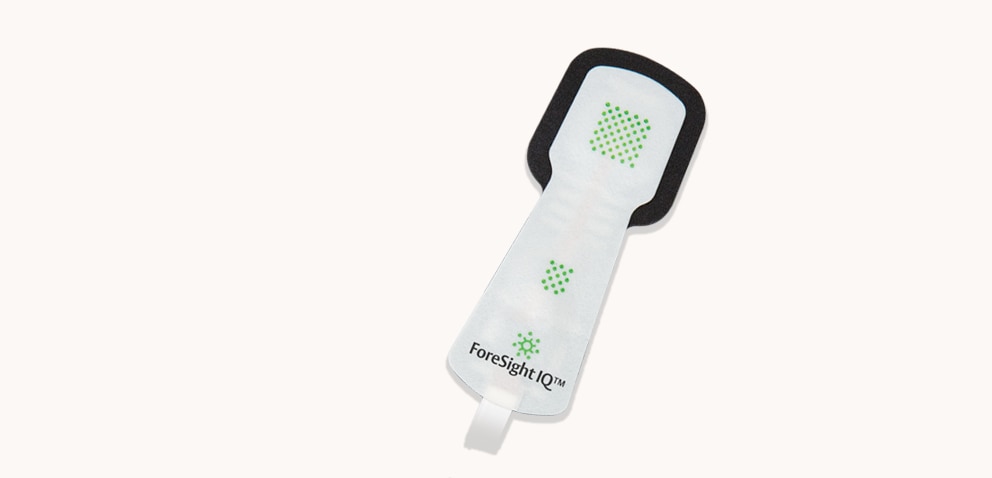
ForeSight IQ™ Tissue Oximetry Sensor

Smart Technologies For Smarter Insights

Background Image
Loading
Overview

A smarter ForeSight™ Tissue Oximetry Sensor to support insight-driven, individualized patient care

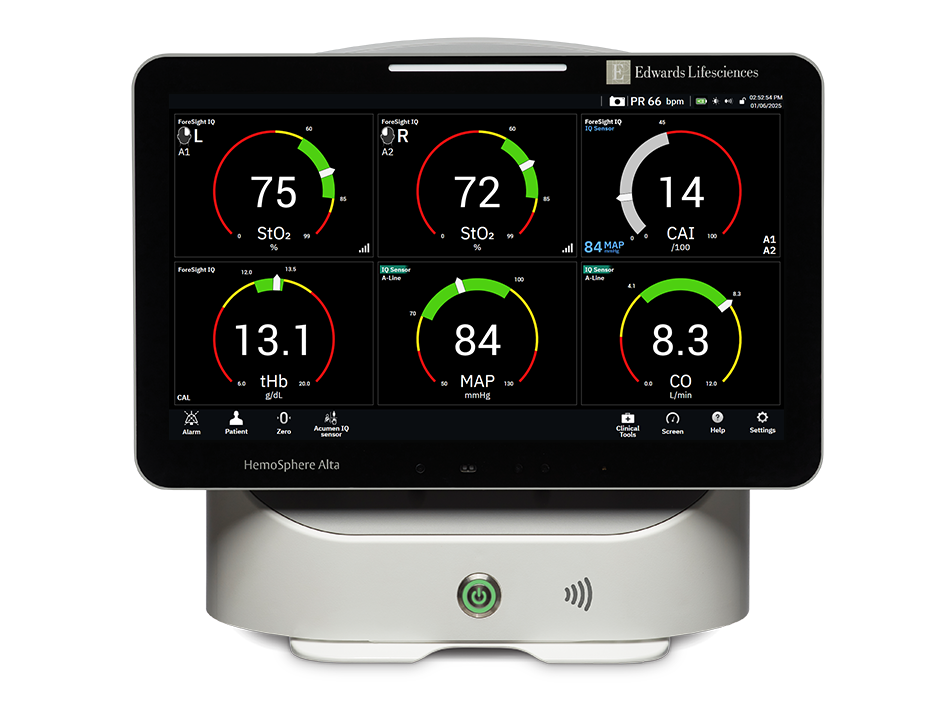
ForeSight IQ™ Sensors on HemoSphere Alta™ Monitor give clinicians noninvasive, continuous insights into cerebral and somatic tissue oxygenation, helping support individualized patient care. Designed to adapt to patient differences, ForeSight IQ™ Sensors on HemoSphere Alta™ Monitor delivers absolute StO2

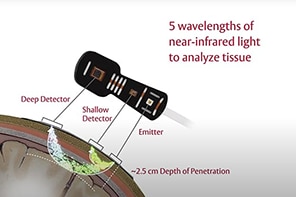
ForeSight IQ™ Sensors share the same foundational StO2 technology as ForeSight™ Sensors, which includes absolute StO₂ values, five wavelengths of near-infrared light, 2.5 cm depth of penetration, optional preinduction baselines, and ability to account for patient-to-patient differences, including darker skin tones.

Building on the foundational capabilities of ForeSight™ Sensors, ForeSight IQ™ Sensors on HemoSphere Alta™ Monitor introduces two additional smart algorithms Cerebral Autoregulation Index (CAI) and continuous total hemoglobin (tHb).

ForeSight IQ™ Sensors on the compatible HemoSphere Alta™ Monitor

Evaluates the dynamic relationship between MAP and StO2

Delivers accurate and continuous calibrated total hemoglobin

Sensor Comparison
 ForeSight IQ™ Tissue Oximetry SensorForeSight™ Tissue Oximetry Sensor
Cerebral Autoregulation Index (CAI) algorithm 
Continuous total hemoglobin (tHb) algorithm 
Measures absolute StO2 values
Trends the relative change in total tissue hemoglobin (ΔctHb)
Preinduction baseline optional
Accounts for individual differences in melanin
Actionable, Noninvasive Insights

ForeSight IQ™ Sensors are designed to provide continuous, noninvasive monitoring of tissue oxygenation. When combined with HemoSphere Alta™ Monitor, clinicians gain continuous visibility into cerebral and somatic tissue perfusion, supporting timely interventions and individualized care decisions. 

Absolute StO₂ Monitoring 

ForeSight IQ™ Sensors provide continuous, absolute StO2 readings without the need for a preinduction baseline.

Designed for Patient Differences

A tissue oximetry sensor designed with patient differences in mind

Due to the limitations in some other tissue oximetry sensor designs, patient differences including melanin or bilirubin concentrations, cranial thickness, etc., can cloud the accuracy – and therefore the reliability – of oxygenation measures. 

Exclusive fifth wavelength

With a unique sensor design and exclusive fifth wavelength of near-infrared light (NIRS), ForeSight IQ™ Sensor can account for these patient differences – enabling reliable StO2 measures from patient to patient.
Card Image
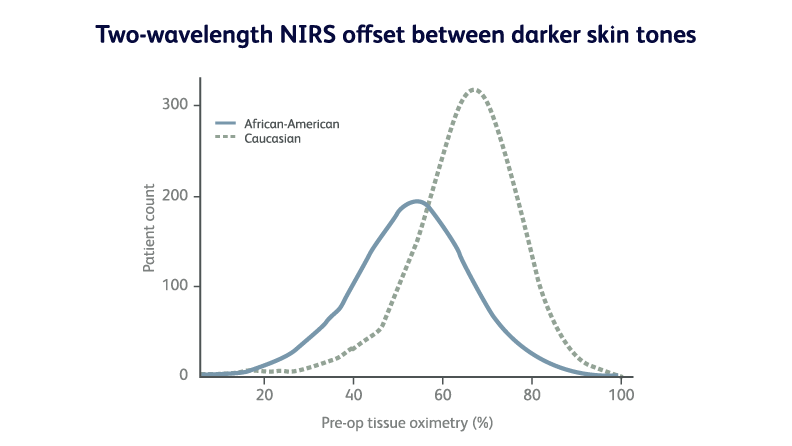
Study shows the ability to account for individual differences in melanin
Figure 1. Preoperative tissue oximetry, Sun et. al.

Figure 1. Preoperative tissue oximetry

In conventional two-wavelength tissue oximetry systems, skin pigmentation has been shown to interfere with the clinical measurement of regional cerebral oxygen saturation.1

See the study

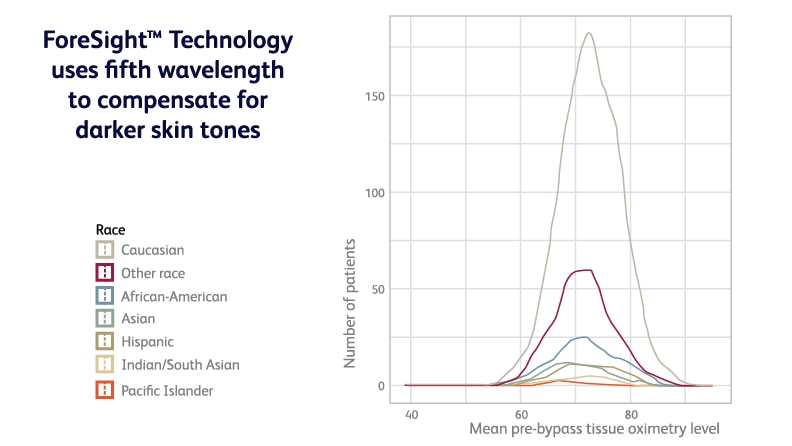
ForeSight™ Sensor readings by race, Stannard et. al.

Figure 2. Readings by race

ForeSight™ Tissue Oximetry Technology uses a fifth wavelength of near-infrared light (NIRS)2 which as been demonstrated to accommodate for the melanin present in a patient's skin.

See the study

Understanding the role of melanin in tissue oximetry

Designed to Penetrate 25% Deeper

ForeSight IQ™ Sensors are designed to penetrate 25% deeper than other technologies

Research shows that a 2 cm depth of penetration is insufficient for accurate measurement of StO2 in some adult cardiac patients with a deeper scalp-to-cortex distance. ForeSight IQ™ Sensors are designed to penetrate deeper and at 2.5 cm, they can provide reliable readings for patients with greater than 2 cm scalp-cortex distance.3 

HemoSphere Alta™ Monitor

HemoSphere Alta™ Monitor is purpose built to support your clinical decisions with smart and predictive parameters.

HemoSphere Alta™ Monitor features smart algorithms and predictive decision support software to enhance proactive clinical decision making and provide personalized patient care insights.

Learn more

References
  1. Sun X, Ellis J, Corso PJ, et al. Skin pigmentation interferes with the clinical measurement of regional cerebral oxygen saturation. Br J Anaesth. 2015;114(2):276-280.
  2. Stannard B, Levin MA, Lin HM, et al. Regional cerebral oximetry is consistent across self-reported racial groups and predicts 30-day mortality in cardiac surgery: a retrospective analysis. J Clin Monit Comput. 2021;35(2):413-421.
  3. Kobayashi K, Kitamura T, Kohira S, et al. Factors associated with a low initial cerebral oxygen saturation value in patients undergoing cardiac surgery. J Artif Organs. 2017;20(2):110-116.
ForeSight IQ™ Sensor

Smart algorithms unlocked by ForeSight IQ™ Sensor build on the capabilities of ForeSight™ Tissue Oximetry Technology

Expanding on the existing platform of ForeSight™ Sensor, ForeSight IQ™ Sensor unlocks two additional smart algorithms on HemoSphere Alta™ Monitor. While both ForeSight™ and ForeSight IQ™ Sensors provide access to continuous tissue oximetry monitoring, ForeSight IQ™ Sensor goes further by unlocking the Cerebral Autoregulation Index (CAI) and continuous total hemoglobin (tHb) algorithms.

Cerebral Autoregulation

The body naturally protects the brain through autoregulation

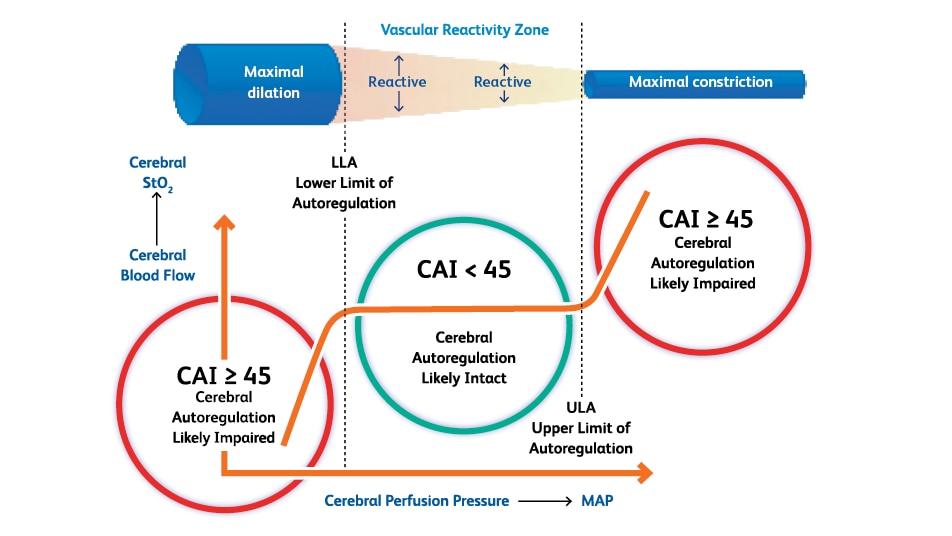
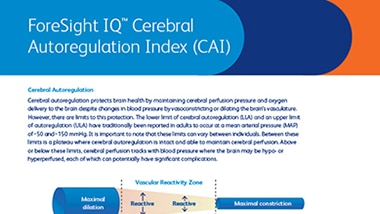
Cerebral autoregulation protects brain health by maintaining cerebral blood flow and oxygen delivery despite fluctuations in blood pressure, primarily through vasoconstriction or vasodilation of the cerebral vasculature. However, this protective mechanism has its limits. In adults, the lower limit of cerebral autoregulation (LLA) and the upper limit of autoregulation (ULA) are traditionally reported to occur at mean arterial pressures (MAP) of approximately 50 mmHg and 150 mmHg, respectively. It is important to note that these thresholds can vary between individuals.  

Between these limits lies a plateau where cerebral autoregulation remains intact and effectively maintains cerebral perfusion. Outside of this range, cerebral perfusion becomes pressure dependent, potentially leading to hypo- or hyperperfusion—each of which is associated with significant complications.

Cerebral Autoregulation Index (CAI) Algorithm

Overview of CAI Algorithm

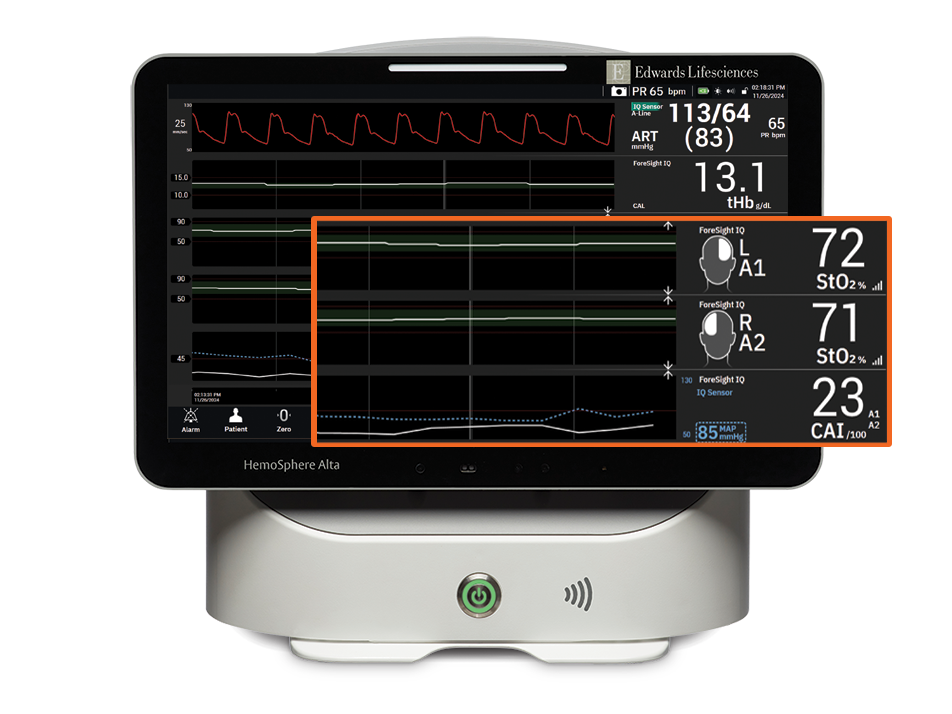
CAI algorithm provides clinicians with continuous insights into the status of cerebral autoregulation, which may help support informed decisions about patient care. It serves as a guide to assess the dynamic relationship between MAP and cerebral StO2 of a patient's cerebral autoregulation.

When displayed on HemoSphere Alta™ Monitor, CAI acts as a surrogate indicator of whether cerebral autoregulation is likely intact or impaired


Interpreting CAI values:

  • High CAI values (CAI ≥ 45) indicate that MAP and cerebral StO2 are closely associated. This suggests that changes in MAP will likely cause changes in cerebral StO2, as cerebral autoregulation is likely impaired.
  • Low CAI values (CAI < 45) indicate less coherence between MAP and cerebral StO2, suggesting that cerebral autoregulation is likely intact. 
  • CAI Index Scale: 0–100
     

Note: CAI requires a ForeSight IQ™ Sensor for cerebral StO2, a BD pressure transducer (Acumen IQ™ Sensor, TruWave™ Transducer, or FloTrac™ Sensor) for arterial blood pressure and a HemoSphere Alta™ Monitor. CAI is not available in pediatric mode.

Continuous Total Hemoglobin (tHb) Algorithm

Smart Calibrated Total Hemoglobin (tHb) Monitoring

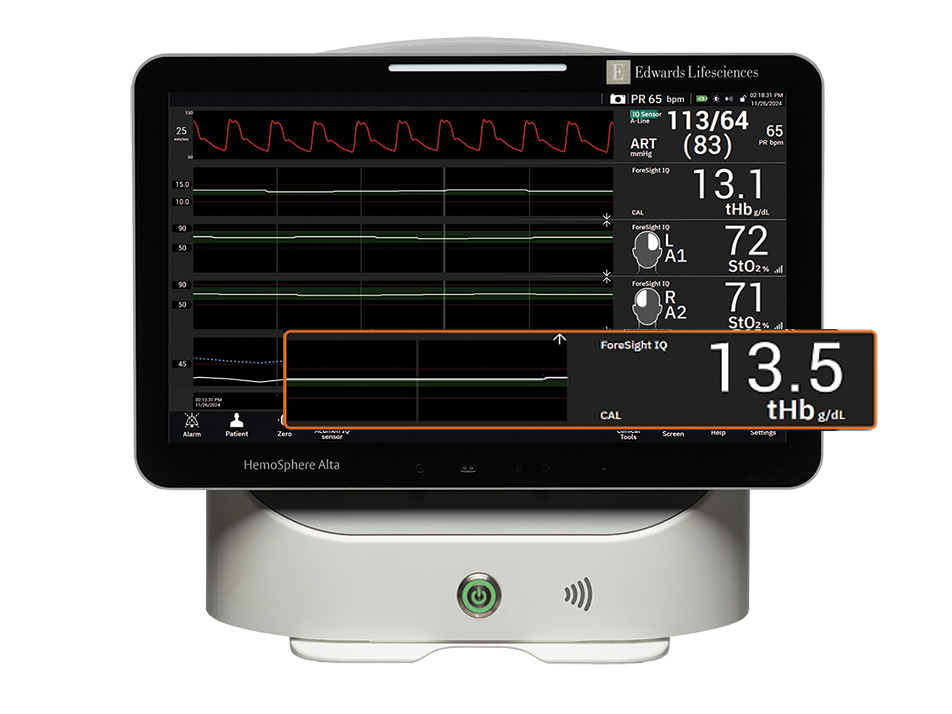
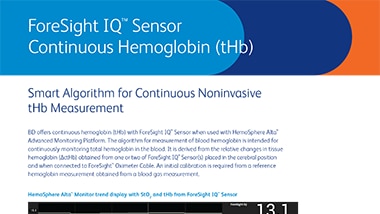
HemoSphere Alta™ Monitor offers a continuous calibrated total blood hemoglobin (tHb) smart algorithm when used with ForeSight IQ™ Sensors.

  • Smart calibrated tHb algorithm delivers accurate, and continuous total hemoglobin values.
  • Identify whether a patient’s hemoglobin (ΔctHb) levels are stable, increasing, or decreasing between blood draws. 
  • tHb monitoring may help clinicians optimize transfusion decisions and may aid in the detection of occult bleeding.
Model Number

Model number

Description

FSESLIQ

ForeSight IQ™ Tissue Oximetry Sensors (>40 kg - adult) 20 sensors/box

ForeSight IQ™ Sensor

The right monitoring makes a difference – for all your patients' differences

The tissue oximetry and advanced hemodynamic insights you need to identify and even reverse cerebral desaturations for a diverse patient population are available on one monitor.

The ForeSight IQ™ Sensor Difference

  • Absolute, actionable tissue oxygenation measures

  • Across a diverse patient population

  • As part of a complete hemodynamic profile

Actionable Insights

Absolute Values, Actionable Insights

The realities of the operating room don’t always allow for the opportunity to set a preinduction baseline – but with ForeSight IQ™ Sensor you can start monitoring without delay.

ForeSight IQ™ Sensor provides continuous, absolute StO2 readings without the need for a preinduction baseline – while still giving you the freedom to set treatment thresholds and trend from a patient baseline.

In addition to StO2 measurements, ForeSight IQ™ Sensor trends the relative change in total tissue hemoglobin (ΔctHb). The ΔctHb parameter gives you greater insights into potential causes of StO2 imbalances so that you can better understand and respond to desaturation events.

ForeSight IQ™ Sensor algorithms are calibrated and validated to both cerebral and somatic regions:

  • Cerebral oximetry (SctO2) calibrated and validated to SjvO2
  • Somatic oximetry (SmtO2) calibrated and validated to ScvO2

Because ForeSight IQ™ Sensor integrates with HemoSphere Alta™ Monitor, you get more than numbers – you get comprehensive insights into patient perfusion, as well as the ability to identify the potential root cause of imbalances.

Electronic Instructions for Use (eIFUs)
false
true
Getting Started

ForeSight IQ™ Tissue Oximetry CAI algorithm Tech Sheet

ForeSight IQ™ Tissue Oximetry tHb algorithm Tech Sheet

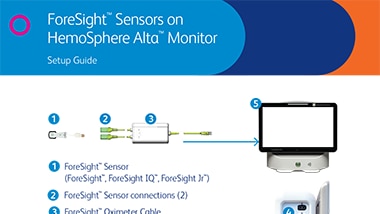
ForeSight IQ™ Tissue Oximetry Setup Guide

Resources

Let’s have a conversation

Fill out our form to have one of our hemodynamics experts contact you

ForeSight IQ Tissue Oximetry Sensor
Ready to learn more? Let’s have a conversation.
true
ForeSight IQ™ Sensor /content/dam/bd-assets/bd-com/en-us/images/product-family/advanced-patient-monitoring/foresight-iq/foresight_iq-wp-tn.png BD ForeSight IQ™ sensor ForeSight™

Figure 1. Preoperative tissue oximetry

,

In conventional two-wavelength tissue oximetry systems, skin pigmentation has been shown to interfere with the clinical measurement of regional cerebral oxygen saturation.1

See the study

,

Figure 2. Readings by race

,

ForeSight™ Tissue Oximetry Technology uses a fifth wavelength of near-infrared light (NIRS)2 which as been demonstrated to accommodate for the melanin present in a patient's skin.

See the study

,

ForeSight IQ™ Tissue Oximetry CAI algorithm Tech Sheet

,

Download guide

,

ForeSight IQ™ Tissue Oximetry tHb algorithm Tech Sheet

,

Download guide

,

ForeSight IQ™ Tissue Oximetry Setup Guide

,

Download guide

/content/dam/bd-assets/bd-com/en-us/logos/bd/header-bd-logo.svg

Smart Technologies For Smarter Insights