true

Peripheral Arterial Disease

People say they are Vascular Surgeons, Interventional Radiologists or Angiologists. But for us they are Life Openers.

Life Openers
Watch the Life Openers Film

Peripheral Arterial Disease (PAD) treatment has moved on. Have you?

Across the world, leading vascular teams are rethinking how they approach PAD.

For years, Plain Old Balloon Angioplasty (POBA) alone was the default choice. But today, the data shows that this mindset leads to more problems than you think. That’s why Life Openers are moving forward- and why it’s time to rethink your PAD strategy. 

Why POBA-alone falls short 

Evidence

POBA-alone leads to structural vessel damage and long term risks

POBA-alone may look simple on the surface but the data tells a different story. Dissections, bailout stenting and restenosis add hidden risks that compromise both patient outcomes and procedural inefficiency

Discover the Life Openers story 

  • 84%
    Vessel dissection

    up to 84% of POBA alone cases cause vessel dissection1

  • ~3x
    Bailout stenting

    POBA-alone leads to nearly 3x more bailout stenting 2

  • 50%

    Restenosis

    POBA-alone treatments have around 50% higher rates of restenosis 3

Life Openers Story

The story of Lucien and Mark


When Lucien first met Consultant Vascular Surgeon Dr. Mark Portou, he was facing major amputation. Standard treatments were no longer enough. With a modern PAD strategy, Mark and his team saved Lucien’s leg.
 
But something else happened too. Along the way, Lucien and Mark built a bond that went beyond the operating room. Their story is about more than PAD- it’s a story about life, and about opening it up again. 

“PAD is moving fast, and it’s not easy to always stay ahead. But good enough isn’t what got us here”.

- Dr. Mark Portou Consultant Vascular Surgeon practicing in London

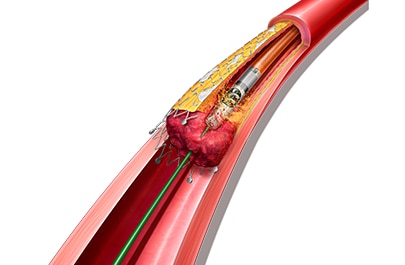
Why leading teams are adopting modern vessel preparation
  • Fewer acute failures.

    Modern vessel preparation may reduce the risk of
    acute technical failure by up to 78% 5

  • Less need for bailout stenting.

    Modern vessel preparation may reduce
    bailout stenting rates by up to 85% 5

  • Higher freedom from reintervention.

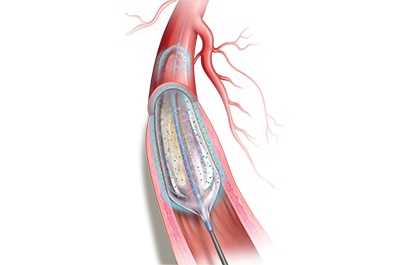
    Modern vessel preparation might deliver 21% higher freedom from Reintervention 6

  • Lower follow-up costs.

    ~29% lower target limb-related follow-up costs for DCB – due to reduction in repeat revascularisation procedures7

Recording, videotaping or photography is strictly prohibited. Any reproduction or representation in any way of the material of this landing page, in whole or in part, without the express prior authorization of Becton, Dickinson and Company nor its affiliates (“BD”), is prohibited. The information contained in this landing page is not intended as a substitute for professional medical advice. Only a healthcare professional can diagnose and treat symptoms appropriately. The information on this landing page is intended for healthcare professionals only.

Please consult BD product labels and inserts relevant to your geography for any indications, contraindications, hazards, warnings, cautions and instructions for use. Any discussion and/or content regarding BD products is limited to this information and instructions for use.

Presentations are made on behalf of BD Peripheral Intervention. Healthcare professionals has been compensated by BD for the time and effort in preparing the elements contained in this presentation. Presentations were developed by the respective presenter(s), and the findings, interpretations, and any conclusions contained or expressed within it do not necessarily reflect the views of BD. To the extent this presentation relates to specific products, such products should always be used in accordance with the relevant instructions for use and other product documentation. This content should not be copied or distributed without the consent of the copyright holder. For further information, please contact BD. The images and content of these presentations are used with the expressed permission of the author.

The opinions, techniques and clinical experiences presented herein are for informational and educational purposes only. The choice of which techniques to use in a specific medical situation should be made by healthcare professionals based on the individual facts and circumstances of the patient and previous surgical experience. The results included in this landing page and related content may not be predictive or indicative for all patients. Individual results may vary depending on a variety of patient specific attributes. Informational/ educational presentations used in countries requiring Regulatory Authorities Approval prior use of promotional documents.

The information provided in this material is intended for informational and educational purposes only. It is not intended to serve as advertising or promotional material. The content herein may be subject to regulatory review and approval in certain countries before it can be used for advertising or promotional purposes to ensure compliance with applicable laws and regulations. 

Any references and citations of third-party material are provided only to allow the user to trace the authors mentioned, without this implying any assumption of responsibility or approval of the material in question and without this being interpreted as an indication of any relationship existing between the named third parties and BD. Third party references (and the websites they link to) may contain inaccurate, incomplete or outdated information for which BD assumes no responsibility. The access and examination of third-party websites (and any website to which the user should connect) is carried out under your direct and exclusive responsibility. Access to and review of third-party websites (and any website to which the user should connect) is carried out under the direct and exclusive responsibility of the user.

This website is funded and operated by BD. The use of this website is reserved for adults. All the contents of this website are for general information only and in no case should they replace the relationship that you have with your healthcare professional, nor the opinion, diagnosis or treatment prescribed by a healthcare professional. BD does not practice medicine or provide medical services or advice and the information on this website should not be considered medical advice. You should always talk to your healthcare professional for diagnosis and treatment.

Health information changes quickly. Therefore, it is always best to confirm information with your healthcare professional.

On this website you may see information about products or therapies that are not approved or marketed in your country. Please always talk to your healthcare professional.

Testimonials reflects the personal experience of the particular individual(s) providing it and is not intended to be a recommendation or a referral of any device or procedure. Testimonials are not necessarily representative of what anyone else using our products may experience. Neither BD warrants that any of the statements contained in testimonials are accurate, complete, or will apply to any particular individual’s circumstances. Testimonials may have been edited for clarity or brevity. Individuals providing testimonial has been compensated by BD for their time and effort in preparing this testimonial for BD’s further use and distribution.

Not all products, services, claims or features of products may be available or valid in your local area. Please check with your local BD Representative.

This information is intended for healthcare professionals only.

References
  1. Fujihara M, Takahara M, Sasaki S, et al. Angiographic Dissection Patterns and Patency Outcomes After Balloon Angioplasty for Superficial Femoral Artery Disease. J Endovasc Ther. 2017;24(3):367-375. doi:10.1177/1526602817698634
  2. Jaff MR, Rosenfield K, Scheinert D, et al. Drug-coated balloons to improve femoropopliteal artery patency: Rationale and design of the LEVANT 2 trial. Am Heart J. 2015;169(4):479-485. doi:10.1016/j.ahj.2014.11.016
  3. Krankenberg H, Tübler T, Ingwersen M, et al. Drug-Coated Balloon Versus Standard Balloon for Superficial Femoral Artery In-Stent Restenosis: The Randomized Femoral Artery In-Stent Restenosis (FAIR) Trial. Circulation. 2015;132(23):2230-2236. doi:10.1161/CIRCULATIONAHA.115.017364
  4. Feldman DN, Armstrong EJ, Aronow HD, et al. SCAI consensus guidelines for device selection in femoral-popliteal arterial interventions. Catheter Cardiovasc Interv. 2018;92(1):124-140. doi:10.1002/ccd.27635
  5. Wu Z, Huang Q, Pu H, et al. Atherectomy Combined with Balloon Angioplasty versus Balloon Angioplasty Alone for de Novo Femoropopliteal Arterial Diseases: A Systematic Review and Meta-analysis of Randomised Controlled Trials. Eur J Vasc Endovasc Surg. 2021;62(1):65-73. doi:10.1016/j.ejvs.2021.02.012
  6. Fan W, Lu S, Tan J, et al. Midterm Results of Drug-Coated Balloon Alone or Combined with Rotarex Thrombectomy Device for Treatment of Subacute Femoropopliteal Artery Thrombotic Occlusion. Ann Vasc Surg. 2023;92:240-248. doi:10.1016/j.avsg.2022.11.019
  7. Salisbury AC, Li H, Vilain KR, et al. Cost-Effectiveness of Endovascular Femoropopliteal Intervention Using Drug-Coated Balloons Versus Standard Percutaneous Transluminal Angioplasty: Results From the IN.PACT SFA II Trial. JACC Cardiovasc Interv. 2016;9(22):2343-2352. doi:10.1016/j.jcin.2016.08.036
  8. Pan T, Tian SY, Liu Z, Zhang T, Li C, Ji DH. Combination of Rotarex S Rotational Atherothrombectomy and Drug-Coated Balloonangioplasty for Femoropopliteal Total In-Stent Occlusion. Ann Vasc Surg. 2022;80:213-222. doi:10.1016/j.avsg.2021.08.058
  9. Bailey SR, Beckman JA, Dao TD, et al. ACC/AHA/SCAI/SIR/SVM 2018 Appropriate Use Criteria for Peripheral Artery Intervention: A Report of the American College of Cardiology Appropriate Use Criteria Task Force, American Heart Association, Society for Cardiovascular Angiography and Interventions, Society of Interventional Radiology, and Society for Vascular Medicine. J Am Coll Cardiol. 2019;73(2):214-237. doi:10.1016/j.jacc.2018.10.002
  10. Scheinert D, Schmidt A, Zeller T, et al. German Center Subanalysis of the LEVANT 2 Global Randomized Study of the Lutonix Drug-Coated Balloon in the Treatment of Femoropopliteal Occlusive Disease. J Endovasc Ther. 2016;23(3):409-416. doi:10.1177/1526602816644592
  11. Krankenberg H, Tübler T, Ingwersen M, et al. Drug-Coated Balloon Versus Standard Balloon for Superficial Femoral Artery In-Stent Restenosis: The Randomized Femoral Artery In-Stent Restenosis (FAIR) Trial. Circulation. 2015;132(23):2230-2236. doi:10.1161/CIRCULATIONAHA.115.017364
  12. Baumann F, Fust J, Engelberger RP, et al. Early recoil after balloon angioplasty of tibial artery obstructions in patients with critical limb ischemia. J Endovasc Ther. 2014;21(1):44-51. doi:10.1583/13-4486MR.1
true
Peripheral Arterial Disease (PAD) Thumbnail Image BD BD-151866 logo

People say they are Vascular Surgeons, Interventional Radiologists or Angiologists. But for us they are Life Openers.