


- Overview
- Clinical Application
- Technology Overview
- EIFU & Resources
A noninvasive solution that enables clinical decision support to help optimize patient perfusion
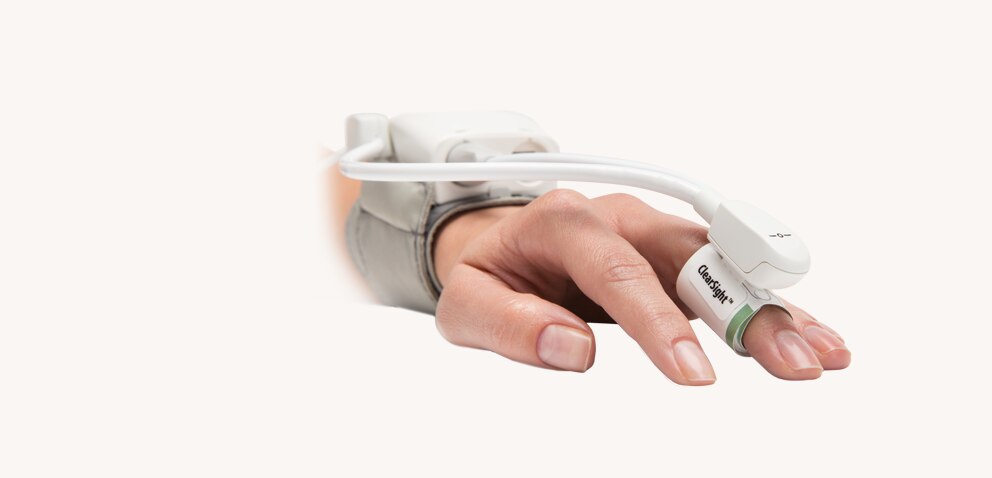
The ClearSight™ System provides continuous blood pressure and advanced hemodynamic parameters from a noninvasive finger cuff.
Continuous data offered by the ClearSight™ System enables you to proactively optimize perfusion through hemodynamic management.
Proactive decision support for individualized patient care
Noninvasive hemodynamic monitoring offered by the ClearSight™ System provides information to enable you to make proactive clinical decisions across the continuum of care, including moderate- to high-risk surgery patients, and can be utilized to manage your patients’ changing clinical situations in the hospital environment.
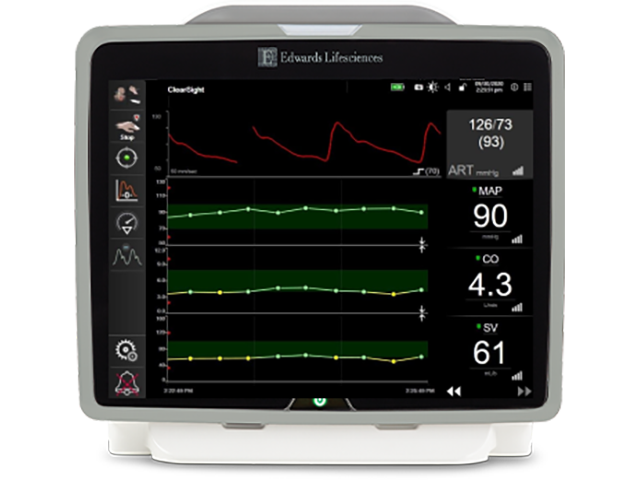
Continuous noninvasive monitoring
Continuous noninvasive blood pressure (BP) from a noninvasive finger cuff in addition to key advanced hemodynamic parameters:
- Cardiac Output (CO)
- Stroke Volume (SV)
- Stroke Volume Variation (SVV)
- Systemic Vascular Resistance (SVR)
- Mean Arterial Pressure (MAP)
Extend the benefits of hemodynamic monitoring
The ClearSight™ System gives you noninvasive access to automatically calculated, beat-to-beat hemodynamic information for a broader patient population, including patients in whom an arterial line would not be typically be placed.1
A versatile approach to continuous monitoring
The ClearSight™ System connects to your patient’s finger. Upon starting a measurement, the finger cuff can be used and re-applied for up to 72 hours on one patient. After 8 hours of continuous monitoring on a single finger, the finger cuff should be re-applied to another finger. To increase comfort, two ClearSight™ finger cuffs may be connected simultaneously to alternate the measurement between two fingers. This allows uninterrupted continuous monitoring up to 72 hours.
Now available on HemoSphere advanced monitoring platform
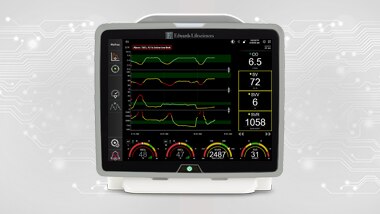
HemoSphere™ Advanced Monitoring platform provides a comprehensive view of hemodynamics and tissue oximetry, giving you confidence in knowing continuous oxygen saturation and perfusion for your patient. Full-range compatibility with noninvasive, minimally-invasive and catheter solutions allow you to pair a single monitor with the right device for your patient across different clinical settings and diverse patient profiles.
ClearSight™ System
Model | Description |
ClearSight™ Finger Cuff Small (multi pack, 5) | CSCS |
| ClearSight™ Finger Cuff Medium (multi pack, 5) | CSCM |
| ClearSight™ Finger Cuff Large (multi pack, 5) | CSCL |
Model | Description |
HemoSphere™ ClearSight™ Upgrade Kit | HEMCSMUPG |
| HemoSphere™ smart recovery non-cardiac with ClearSight™, Acumen IQ™ sensor, FloTrac™, and Tissue Oximetry Module | HEMAQSR2 |
| HemoSphere™ ClearSight™ Module | HEMCSM10 |
- Truijen, J et al. Noninvasive Continuous Hemodynamic Monitoring. Journal of Clinical Monitoring and Computing 2012;26(4):267–268.
The ClearSight system offers continuous clinical decision support to enable proactive clinical decisions for your moderate- to high-risk surgical patients and patients at risk for complications.
Hypotension management
Studies show associations between intraoperative hypotension and:
Increased risk of Acute Kidney Injury (AKI)
Cardiac & Non-Cardiac Surgery1
Myocardial Injury MINS
Leading cause of post-operative mortality within 30 days after surgery1
Cleveland Clinic researchers discovered that:2
- Continuous noninvasive monitoring reduced the amount of IOH by nearly half when compared to intermittent blood pressure monitoring.
- Early detection of hypotension by continuous hemodynamic monitoring allows for timely remedial actions, thereby reducing IOH.
Clarity through advanced hemodynamic parameters CO, SV, SVV, and SVR can help you determine if the cause of IOH is preload, afterload, or contractility.
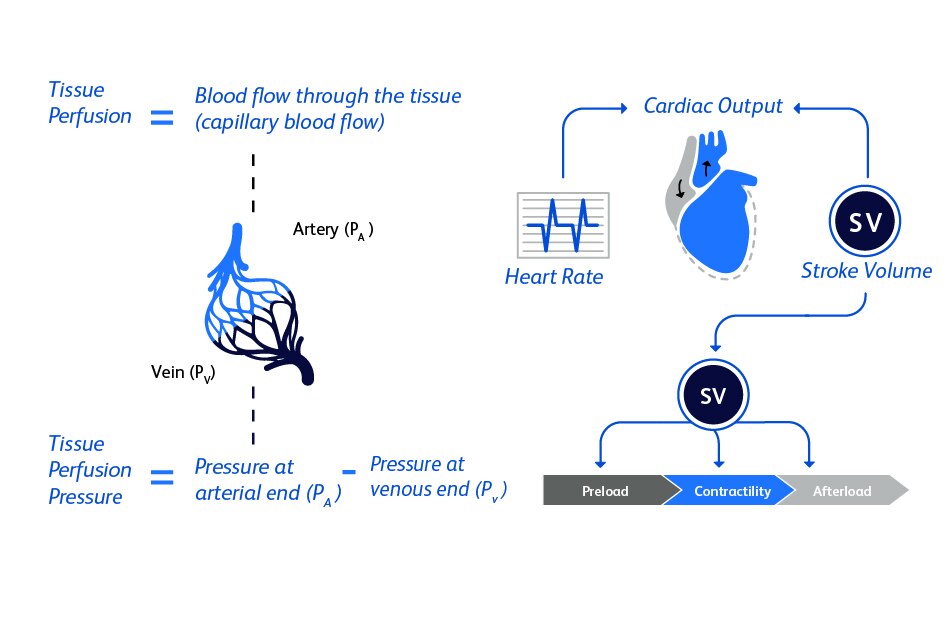
Hemodynamic instability
Critically ill patients are often hemodynamically unstable owing to hypovolemia, cardiac dysfunction, and alterations in vasomotor function.3 These conditions may lead to deterioration into multi-organ failure, and eventually death.
Continuous access to pressure and flow parameters allow you to evaluate hemodynamic instability and guide appropriate treatment including individualized fluid management.
The ClearSight system offers a noninvasive approach to monitoring the following key hemodynamic parameters:
- Cardiac Output (CO)
- Stroke Volume (SV)
- Stroke Volume Variation (SVV)
- Systemic Vascular Resistance (SVR)
- Mean Arterial Pressure (MAP)
When managing perfusion, stroke volume (SV) can be optimized using the patient’s own Frank-Starling curve.
The patient’s response to a fluid challenge may be assessed by changes in SV, as indicated by location on the curve. Dynamic and flow-based parameters provide a comprehensive hemodynamic assessment and may help guide individualized fluid administration to avoid over and under resuscitation.4
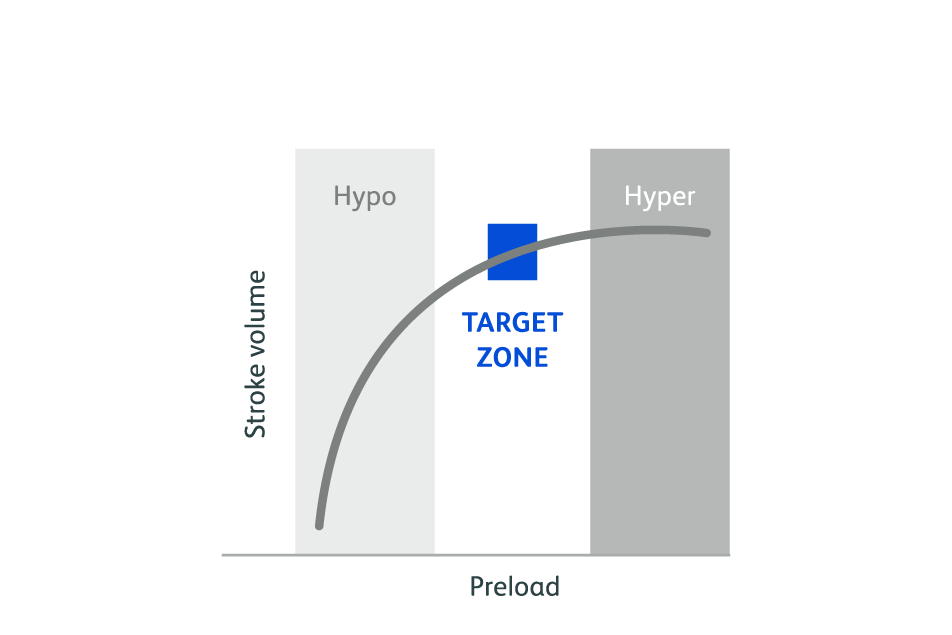
Frank-Starling relationship between preload and stroke volume (SV)
Sepsis Management
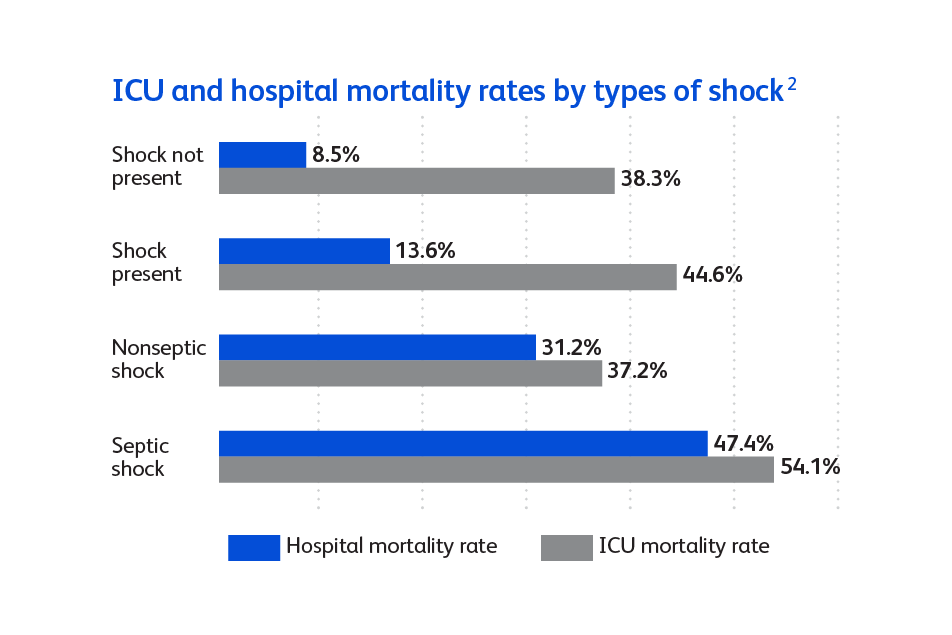
Severe sepsis and septic shock are leading causes of morbidity and mortality in patients admitted to the intensive care unit.
Access to CO and SV enables early detection and management of sepsis which is critical to improving survival rates and reducing the economic burden of sepsis.
The noninvasive ClearSight™ System allows continuous assessment of your patient’s physiological needs and helps you recognize hemodynamic instability from sepsis.5 The ClearSight™ Finger Cuff can be used to measure flow-based parameters continuously prior to, during, and after the fluid administration portion of 3-hour and 6-hour CMS sepsis bundles.
Frank-Starling relationship between preload and stroke volume (SV)
- Salmasi, V., Maheshwari, K., Yang, G., Mascha, E.J., Singh, A., Sessler, D.I., & Kurz, A. (2017). Relationship between intraoperative hypotension, defined by either reduction from baseline or absolute thresholds, and acute kidney injury and myocardial injury. Anesthesiology, 126(1), 47-65
- Maheshwari, K et al. A Randomized Trial of Continuous Noninvasive Blood Pressure Monitoring During Noncardiac Surgery. Anesthesia & Analgesia, 2018 Aug; 127(2)424-431.
- Huygh, J., Peeters, Y., Bernards, J., Malbrain, M. (2016). Hemodynamic monitoring in the critically ill: an overview of current cardiac output monitoring methods.
- Cannesson, M. (2010) Arterial pressure variation and goal-directed fluid therapy. Journal of Cardiothoracic and Vascular Anesthesia, 24(3), 487-97.
- Marik, et al: Hemodynamic parameters to guide fluid therapy. Annals of Intensive Care 2011 1:1
How does it work?
ClearSight™ System technology is based on two methods: the volume clamp method to continuously measure blood pressure (BP) and the Physiocal method for initial and frequent calibration.
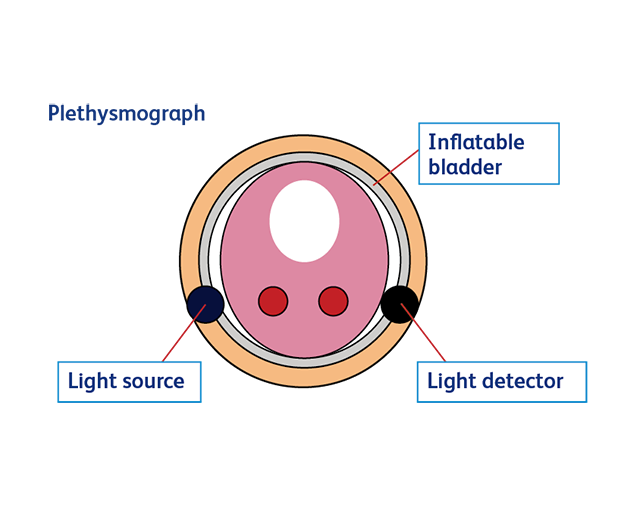
Volume Clamp Method
The essence of the volume clamp method involves clamping the artery to a constant volume by dynamically providing equal pressure on either side of the arterial wall. The volume is measured by a photo-plethysmograph built into the cuff.
The counter pressure is applied by an inflatable bladder inside the cuff and is adjusted 1000 times per second to keep the arterial volume constant.
Continuous recording of the cuff pressure results in real-time finger pressure waveform.1
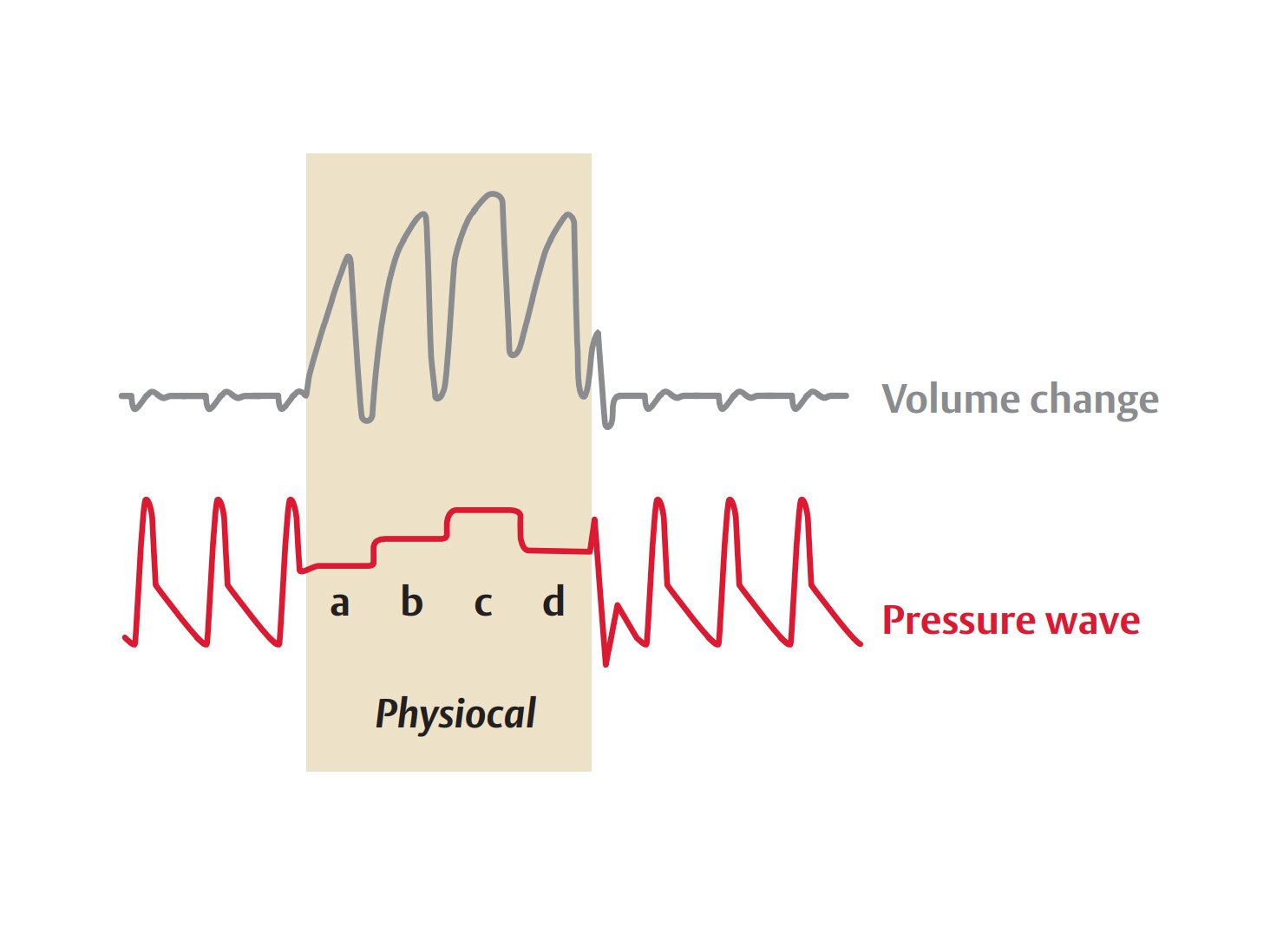
The Physiocal method - Physiological Calibration
Physiocal is the real-time method for determining the proper arterial ‘unloaded’ volume, i.e. the volume without a pressure gradient across the arterial wall. Physiocal analyzes the curvature and sharpness of the plethysmogram during short episodes of constant pressure levels. It then automatically and periodically recalibrates the system allowing accurate tracking of physiologic changes, e.g. in vasomotor tone
Calibration interval starts at 10 beats, but it increases to every 70 beats as stability increases. Physiocal interval >30 beats is considered reliable.2
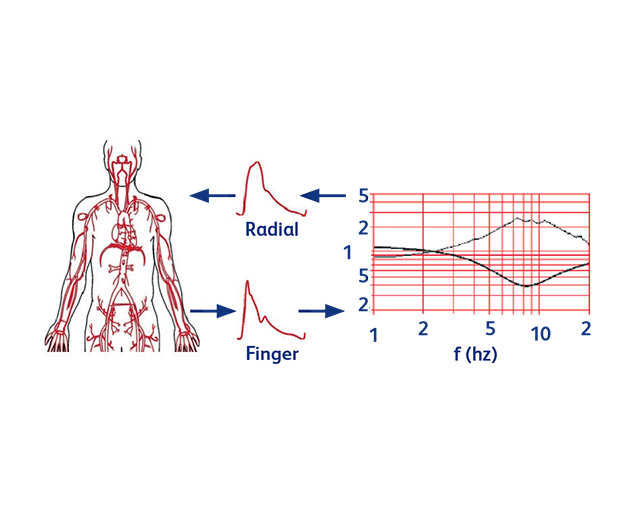
Brachial pressure reconstruction
Clinical standard for noninvasive BP is brachial level. The ClearSight™ S ystem reconstructs the brachial arterial pressure waveform from the finger arterial pressure waveform. The reconstruction algorithm is based on a vast clinical database3

Cardiac output calculation
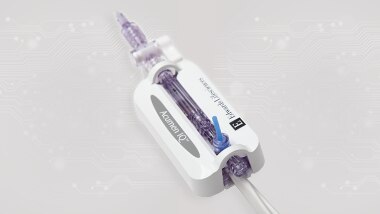
Stroke volume is calculated by an algorithm based on an improved pulse contour method. Cardiac output results from stroke volume times heart rate, and is updated every beat4
- Peñáz J. Photoelectric measurement of blood pressure, volume and flow in the finger. 1973; Dresden 1973. p. 104
- Wesseling KH, Wit B, Hoeven GMA, Goudoever J, Settels JJ. Physiocal, calibrating finger vascular physiology for Finapres. Homeostasis. 1995;36:67-82.
- Gizdulich P, Prentza A, Wesseling KH. Models of brachial to finger pulse wave distortion and pressure decrement. Cardiovasc Res. 1997;33:698-705. doi: 10.1016/S0008-6363(97)00003-5
- Truijen J, van Lieshout JJ, Wesselink WA, Westerhof BE. Noninvasive continuous hemodynamic monitoring. J Clin Monit.Comput. 2012 Jun 14.



Access our extensive collection of informative product and educational resources, designed to keep you informed and help you achieve excellence.

BD Advanced Patient Monitoring is here to help you stay on top of the latest clinical challenges and make the most of hemodynamic monitoring solutions.
CAUTION: Federal (United States) law restricts this device to sale by or on the order of a physician.
See Instructions For Use (IFU) / Directions For Use (DFU) for full prescribing information, including indications, contraindications, warnings, precautions and adverse events.