

Educational videos to help you learn more about fluid optimization and management.
true

- Overview
- Clinical Application
- EIFU & Resources
Proven Solution for Continuous Flow Insights
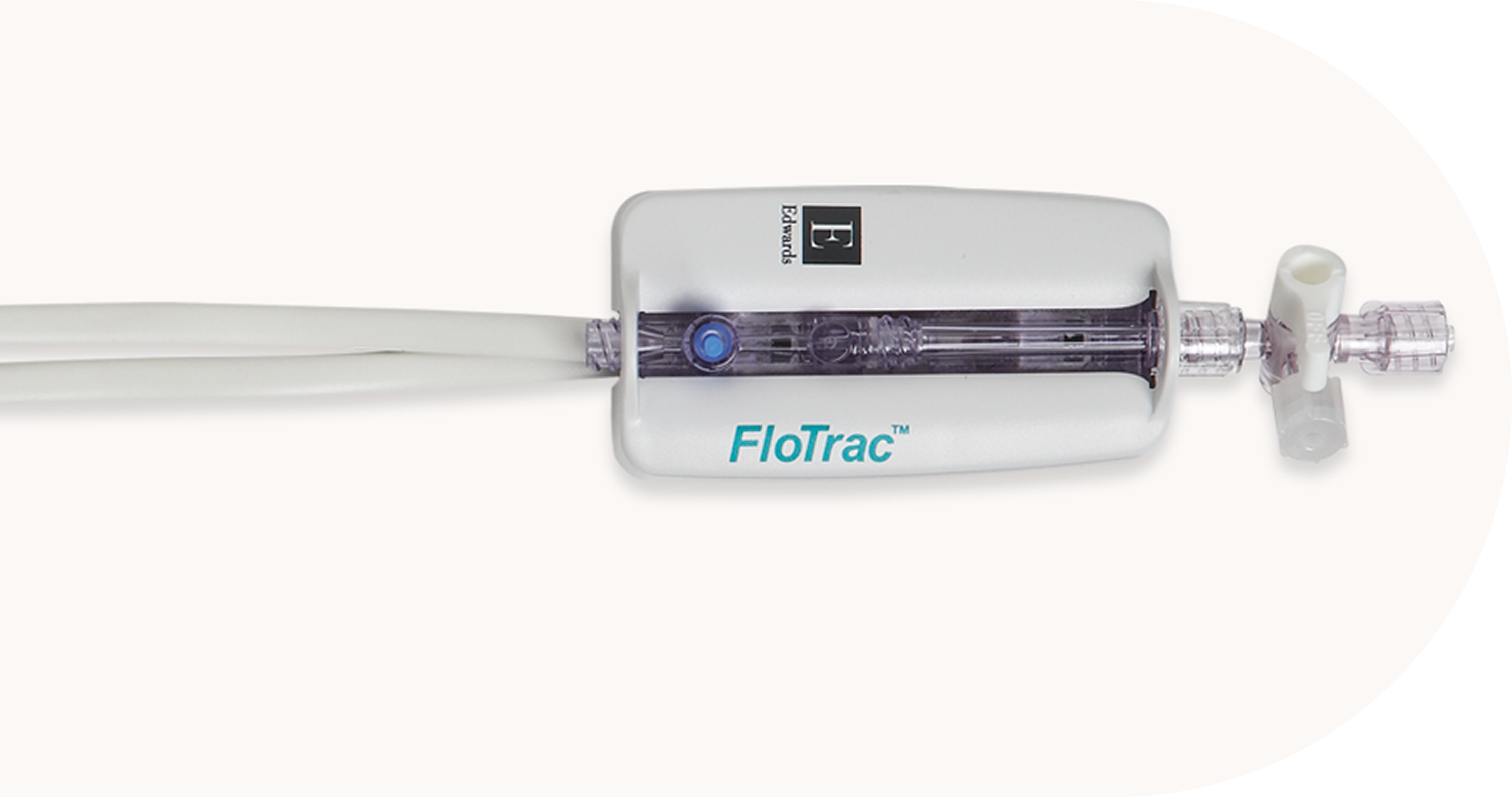
The minimally-invasive FloTrac™ Sensor is a proven solution for advanced hemodynamic monitoring that automatically calculates key pressure and flow parameters every 20 seconds. Continuous clarity provided by FloTrac™ Sensor offers proactive decision support to manage hemodynamic instability and help you ensure adequate patient perfusion.
FloTrac™ System
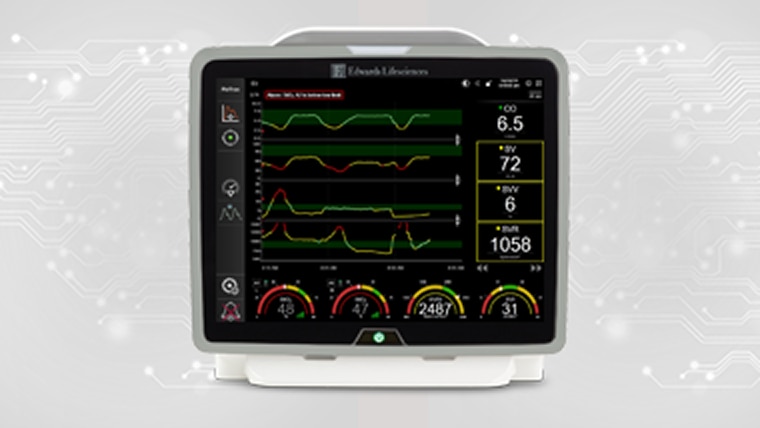
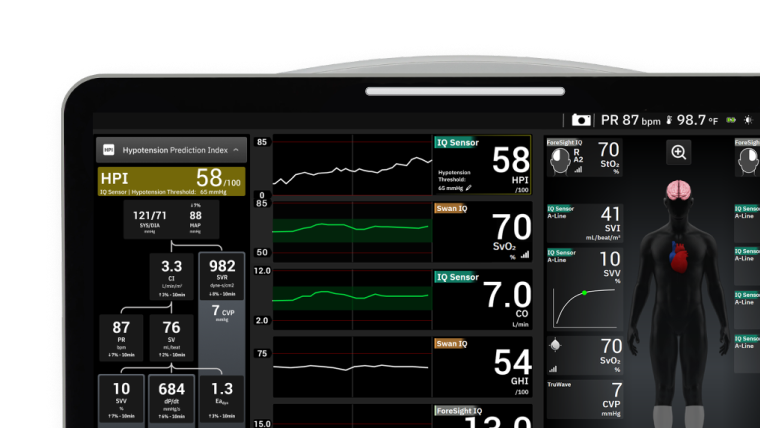
When used with HemoSphere™ Monitor, FloTrac™ Sensor provides a patient status at a glance, for visual clinical support and increased clarity in volume administration.

Proactive decision support offered by FloTrac™ Sensor helps guide individualized treatment decisions for your moderate- to high-risk surgery patients, and can be utilized perioperatively to proactively manage your patient’s physiological status in rapidly changing clinical situations in acute care settings.
Key hemodynamic parameters that update every 20 seconds
- Stroke Volume (SV)
- Stroke Volume Variation (SVV)
- Mean Arterial Pressure (MAP)
- Systemic Vascular Resistance (SVR)
- Cardiac Output (CO)

Trusted
Chosen by clinicians for patient monitoring

Worldwide
Used by clinicians worldwide for minimally-invasive hemodynamic management.

Literature
Used by clinicians worldwide for minimally-invasive hemodynamic management.

FloTrac™ Sensor Algorithm
Used by clinicians worldwide for minimally-invasive hemodynamic management.
FloTrac™ Sensor algorithm provides clarity in various patient conditions and procedures
FloTrac™ Sensor validated algorithm
Offers specific monitoring of a broad range of changing patient conditions
FloTrac™ Sensor algorithm is based on the principle that aortic pulse pressure (PP) is proportional to stroke volume (SV) and inversely related to aortic compliance. The algorithm compensates for the effects of compliance on PP based on age, sex and body surface area (BSA).
FloTrac™ Sensor provides access to advanc ed hemodynamic parameters allowing you to evaluate hemodynamic instability and guide appropriate treatment.

Proactively manage pressure and flow components of perfusion
The minimally-invasive FloTrac™ Sensor provides continuous access to key hemodynamic parameters — including CO, SV, SVV, SVR, and MAP — to help clinicians evaluate hemodynamic instability and guide appropriate treatment decisions.
Numerous studies show that intraoperative hypotension is strongly associated with risk of end-organ injury – including myocardial injury after non-cardiac surgery (MINS), acute kidney injury (AKI) and delirium – as well as mortality.1-4
By continuously assessing pressure and flow parameters, FloTrac™ Sensor can help identify potential causes of hemodynamic instability, support fluid therapy decisions when flow generation is a factor, and help manage the duration and severity of intraoperative hypotension episodes.

Guide individualized fluid management
When managing perfusion, stroke volume can be optimized using the patient’s own Frank-Starling curve—a plot of SV vs preload. The patient’s location on the curve can be determined by measuring changes in SV in response to changes in preload using a fluid challenge or passive leg raise (PLR).
Dynamic, flow-based parameters are more informative than conventional parameters in determining fluid responsiveness and may help guide individualized volume administration in patients, while helping you avoid excessive and insufficient volume administration.5-6

Frank-Starling relationship between preload and stroke volume (SV)
Pressure and flow
- Salmasi V, et al. Relationship between intraoperative hypotension, defined by either reduction from baseline or absolute thresholds, and acute kidney injury and myocardial injury. Anesthesiology. 2017
- Mascha EJ, et al. Intraoperative mean arterial pressure variability and 30-day mortality in patients having noncardiac surgery. Anesthesiology. 2015
- Gregory A, et al. Intraoperative hypotension is associated with adverse clinical outcomes after noncardiac surgery. Anesth Analg. 2021
- Wesselink EM, Kappen TH, Torn HM, Slooter AJC, van Klei WA. Intraoperative hypotension and the risk of postoperative adverse outcomes: a systematic review. Br J Anaesth. 2018
- Cannesson, M. (2010). Arterial pressure variation and goal-directed fluid therapy. Journal of Cardiothoracic and Vascular Anesthesia, 24(3), 487-97
- Benes, et al. (2014). Effects of GDFT based on dynamic parameters on post surgical outcome. Critical Care, 18:584
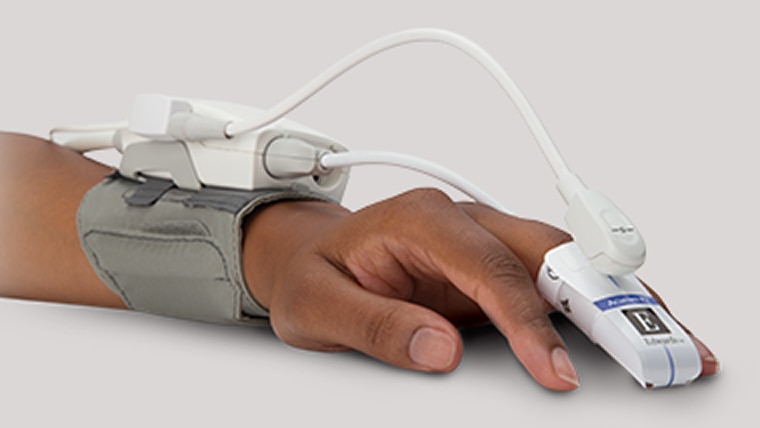
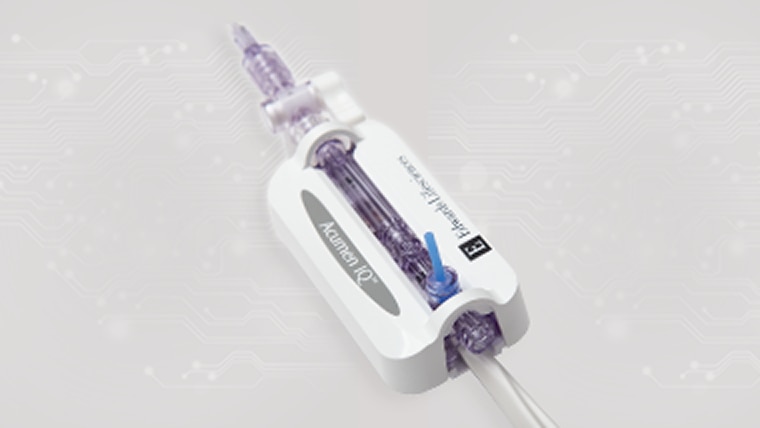
- Peñáz J. Photoelectric measurement of blood pressure, volume and flow in the finger. 1973; Dresden 1973. p. 104
- Wesseling KH, Wit B, Hoeven GMA, Goudoever J, Settels JJ. Physiocal, calibrating finger vascular physiology for Finapres. Homeostasis. 1995;36:67-82.
- Gizdulich P, Prentza A, Wesseling KH. Models of brachial to finger pulse wave distortion and pressure decrement. Cardiovasc Res. 1997;33:698-705. doi: 10.1016/S0008-6363(97)00003-5
- Truijen J, van Lieshout JJ, Wesselink WA, Westerhof BE. Noninvasive continuous hemodynamic monitoring. J Clin Monit.Comput. 2012 Jun 14.
false


Literature
Access our extensive collection of informative product and educational resources, designed to keep you informed and help you achieve excellence.
Learn more

Learning
BD Advanced Patient Monitoring is here to help you stay on top of the latest clinical challenges and make the most of hemodynamic monitoring solutions.
Explore Resources
true
true
true