

true

Support
Customer service and ordering

866 979 9408

Contact Us
Thank you for contacting our sales team!
A sales representative will contact you shortly.

- Overview
- Products & Accessories
- Resources
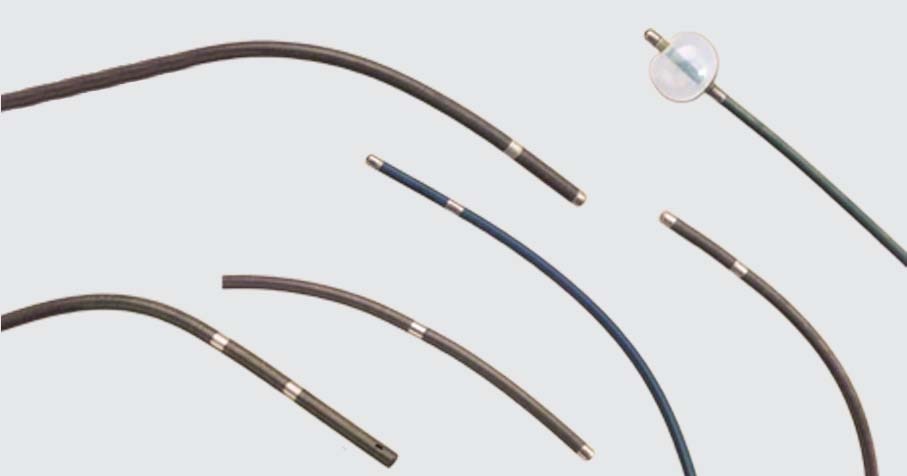
Temporary Pacing Catheters, when connected to an external pulse generator, aid in temporary resolution of cardiac pacing abnormalities. Temporary Pacing Electrode Catheters, when connected to a monitoring device, aid in clinical management by allowing temporary cardiac monitoring. Temporary Pacing Catheters may provide these intended clinical benefits until the need for temporary cardiac pacing/monitoring resolves or until long-term therapy can be initiated.
- Constructed of a woven or extruded polyurethane shaft with stainless steel electrodes.
- Certain catheters may incorporate one or more lumens for balloon inflation.
- Some product may be packaged with accessories such as a needle cannula, safety lead adapter, an ECG adapter, or a balloon inflation syringe.


true

Literature
BD's collection of literature on industry and on our offerings gives you information you can use to continue striving for excellence.
Learn more

Events
BD supports the healthcare industry with market-leading products and services that aim to improve care while lowering costs. We host and take part in events that excel in advancing the world of health™.
Learn more

Training
The BD Learning Academy offers a centralized repository of BD product training, education, and the ability to connect courses to your LMS.
Learn More

Case Studies
We promote clinical excellence by providing various resources on best practices, clinical innovations and industry trends in healthcare.
Learn more
true
Indications for use: Temporary Pacing Electrode Catheters are designed to transmit an electrical signal from an external pulse generator to the heart or from the heart to a monitoring device.
Contraindications: None.
General Warnings
This warning applies to all Temporary Pacing Electrode (TPE) catheters.
- Inappropriate electrical connections, e.g. into a wall socket, may pose serious risk of adverse health consequences or death.
- Please ensure that the catheter is connected as recommended for pacing or measuring intracardiac electrograms.
- This device should be used only by or under the supervision of physicians trained in the techniques of transvenous intracardiac studies and temporary pacing.
- Reuse or resterilization can impair the structural integrity and/or performance of the catheter. Adverse patient reactions can also result from reuse.
- Reuse and/or repackaging may create a risk of patient or user infection, compromise the structural integrity and/or essential material and design characteristics of the device, which may lead to device failure, and/or lead to injury, illness or death of the patient.
- The risks of using temporary pacing catheters include those risks related to heart catheterization, such as thromboembolism, perforation, tamponade, and infection. The induction of an unintended arrhythmia is a known complication.
- After initial insertion of the needle, do not attempt to reinsert once partially or completely withdrawn.
- After use, this product may be a potential biohazard. Handle and dispose of in accordance with accepted medical practice and applicable local, state, and federal laws.
Warnings for balloon temporary pacing electrode catheters
- Do not inflate balloon beyond stated maximum inflation capacity of 1.5 ml. Balloon must be completely deflated before withdrawal of the electrode catheter.
- If the balloon catheter has been inflated in vivo for more than one minute, completely deflate the balloon and reinflate it to the recommended capacity of 1.5 ml. This is recommended because carbon dioxide diffuses through the latex balloon.
- This product contains Natural Rubber Latex which may cause allergic reactions.
Precautions
- Excessive bending, torquing, or kinking of the electrode catheter may cause damage to the catheter including damage to internal wires.
- When using a balloon catheter, use care when removing the protective sleeve from the distal portion of the catheter. Forced removal of this protective sleeve may result in damage to the balloon and the catheters structural integrity.
- When wiping down this catheter, use only sterile saline.
Please consult package insert for more detailed safety information and instructions for use.
BD, the BD logo, GEOTZ, and NBIH is a trademark of Becton, Dickinson, and Company or its affiliates. © BD 2025. All rights reserved.
true