
BD® PureWick™ System: Rethink
continence care
The non-invasive solution for urinary incontinence
- Overview
What challenges do you face when managing urinary incontinence in hospital settings?
- Female urinary incontinence in hospital is a significant problem with limited management options and frequent complications. 1,2
- Incontinence pads represent a high economic burden on hospitals 3
-

CAUTIs
Use of indwelling catheters increases the risk of catheter-associated urinary tract infections (CAUTIs) and prolongs hospital stays 4,5
-

IAD
Diaper use may lead to incontinenceassociated dermatitis (IAD) or pressure sores and frequent diaper changes represent a burden on nursing workload ⁶
-

In-hospital falls
Inpatients with urinary incontinence are more likely to experience inhospital falls ⁷
How can external urinary catheters help you face these challenges?
- Improve caregiver efficiency by saving time, reducing continence care tasks and requiring fewer caregivers per intervention⁸
- The PureWick™ System makes better sleep possible for patients
-

CAUTI reduction
PureWick™ Female and Male External Catheters may facilitate early indwelling catheter removal and thereby help reduce CAUTI risk
-

IAD prevention
Help keep skin dry to support IAD risk reduction
-

Prevent hospital falls
May help reduce nighttime bathroom trips and fall risk
The PureWick™ portfolio of external urinary catheters
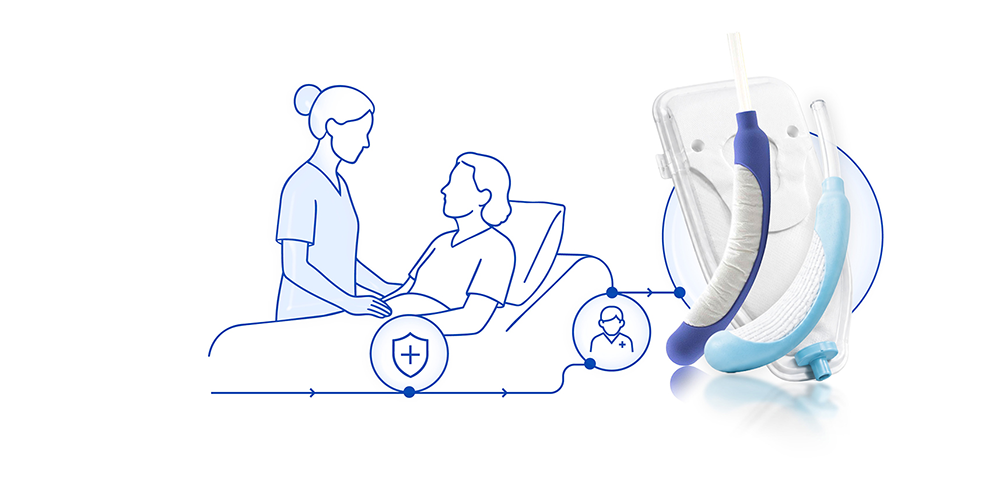
The PureWick™ portfolio is now expanded to include PureWick™ Male External Catheter and PureWick™ Flex Female External Catheter.
Find out more and book a demo today
- Loveday HP, Wilson JA, Pratt RJ, et al. epic3: national evidence-based guidelines for preventing healthcareassociated infections in NHS hospitals in England. J Hosp Infect. 2014;86 Suppl 1:S1-70. doi: 10.1016/ S0195-6701(13)60012-2
- King C, Garcia Alvarez L, Holmes A, Moore L, Galletly T, Aylin P. Risk factors for healthcare-associated urinary tract infection and their applications in surveillance using hospital administrative data: a systematic review. J Hosp Infect. 2012;82(4):219-26. doi: 10.1016/j.jhin.2012.05.004
- Corrado B, Giardulli B, Polito F, Aprea S, Lanzano M, Dodaro C. The Impact of Urinary Incontinence on Quality of Life: A Cross-Sectional Study in the Metropolitan City of Naples. Geriatrics (Basel). 2020;5(4):96. doi: 10.3390/ geriatrics5040096
- Pryor N, Wang J, Young J, et al. Clinical outcomes of female external urine wicking devices as alternatives to indwelling catheters: a systematic review and meta-analysis. Infect Control Hosp Epidemiol. 2024;45(9):1-9. doi: 0.1017/ice.2024.73
- Gad MH, AbdelAziz HH. Catheter-Associated Urinary Tract Infections in the Adult Patient Group: A Qualitative Systematic Review on the Adopted Preventative and Interventional Protocols From the Literature. Cureus. 2021;13(7):e16284. doi: 10.7759/cureus.16284
- Jung SY, Moon HW, Park DSM, Sung S, Jung H. Nurses' Burden of Elimination Care: Sequential Explanatory Mixed-Methods Design. Int J Gen Med. 2023;16:4067-4076. doi: 10.2147/IJGM.S424424
- Lee MJ, Seo BJ, Kim MY. Time-Varying Hazard of Patient Falls in Hospital: A Retrospective Case-Control Study. Healthcare (Basel). 2023;11(15):2194. doi: 10.3390/healthcare11152194
- Cooper J, Powell D - AN OBSERVATIONAL STUDY OF THE PUREWICK™ SYSTEM IN WOMEN WITH URINARY INCONTINENCE. Jour Nursing Home Res 2024;10:1-7
Published online June 6, 2024, doi:10.14283/jnhrs.2024.1
Please consult to product labels and instruction for use for indications, contraindications, hazards, warnings and precautions
Terre Bonne Park – A4, Route de Crassier 17, 1262 Eysins, Switzerland

