


Demonstrated in 10 peer-reviewed published studies to reduce catheter-related complications
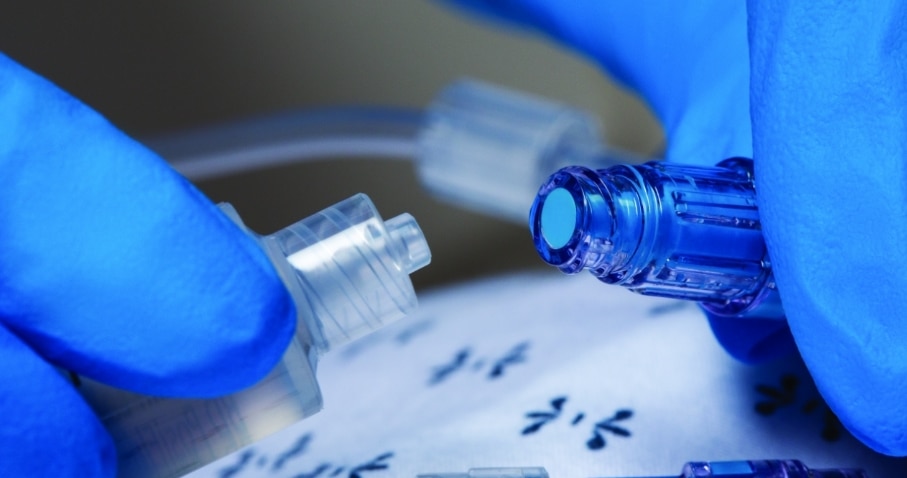

Meet your microbial gatekeeper3
You take every precaution to protect your patients—scrubbing the hub, flushing lines before and after access and following best practices at each step. But what if one of the biggest catheter infection risks was hiding in the smallest component of your vascular access bundle?
Fifty percent of catheter-related infections can be traced back to colonization of the needle-free connector itself.4 And guess what—those needle-free connectors are used on nearly every single IV line.
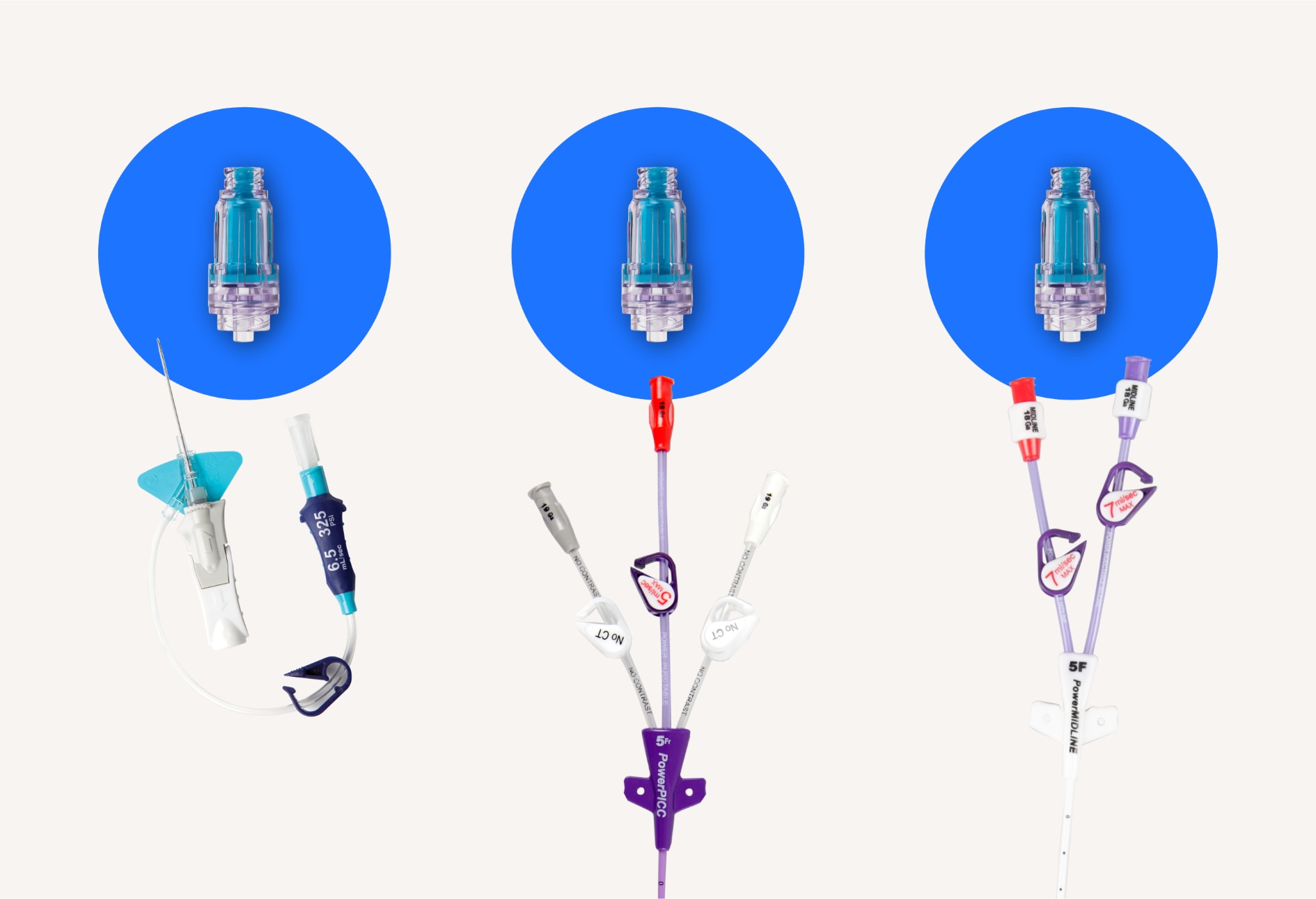
It’s time to recognize needle-free connectors as more than just an access point, but a critical component in patient safety.
Not all needle-free connectors are created equal
Here’s the challenge: while every needle-free connector allows IV access, not every connector is designed to help reduce the risk of infection.
A needle-free connector with a differentiated design may help to:
Choosing the right needle-free connector isn’t just important—it’s critical to your patients’ safety.
Choose the only needle-free connectors on the market today with a solid access surface—a feature associated with a 2x reduction in CLABSI*
MaxPlus™ Needle-free Connectors are the only connectors that feature positive displacement technology, which may help to reduce central line-associated bloodstream infections (CLABSIs).7 The MaxPlus™ Needle-free Connector and the MaxZero™ Needle-free Connector use the same fundamental technology: The Max Needle-free Connector technology.
*Compared to those without a solid external access surface
Not all connectors are created equal
Explore the design innovations that differentiate BD MaxPlus™ and BD MaxZero™ Needle-free Connector technology—and how they can help you reduce catheter-related complications, compared to other needle-free connector designs

The needle-free connector you choose impacts the rate of catheter-related complications in your facility.16,17 Refer to our clinical evidence compendium for real-world evidence of helping facilities reduce catheter-related complications.1-10 Explore the design innovations that differentiate BD MaxPlus™ and BD MaxZero™ Needle-free Connector technology—and how they can help you reduce catheter-related complications, compared to other needle-free connector designs.
Our powerful evidence-based assessments, with analytics and benchmarks, are the first phase of BD Vascular Access Management—and the first step on the path to help you reduce complications and improve patient care.

* Compared to the standard of care that included a standard peripheral catheter and three way stopcock among other elements.
BD-27572 (01/23)

Read more here: https://ijic.info/article/view/23731

when making product purchase decisions, focusing on risks, benefits and educational requirements.
Use a luer-lock mechanism to ensure a secure junction when attaching NC to a VAD or access site. Avoid three-way stopcocks as IV connection devices.
Explore the results and clinical studies below to learn more about the evidence supporting BD MaxPlus™ and BD MaxZero™ Needle-free Connector technology
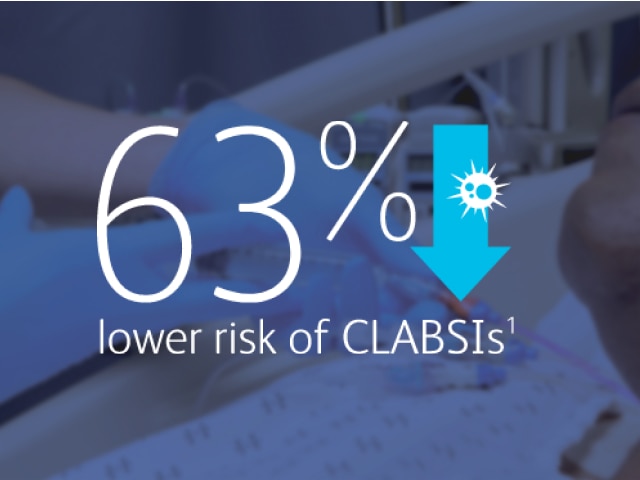
The BD MaxPlus™ Needle-free Connector was shown to reduce the risk of CLABSI by 63%, compared to other needle-free connectors, in a 2014 peer-reviewed meta-analysis reporting on 7 studies, published in the American Journal of Infection Control,1 and is associated with lower CLABSI risk, independent of seasonality, case mix index, infusion care and cleaning practices.1

A systematic review of 2013 CMS Hospital Compare data from 3,074 hospitals, accounting for nearly 11,000 CLABSIs associated with nearly 10 million catheter days, shows that hospitals using the BD MaxPlus™ Needle-free Connector had lower unadjusted CLABSI rates, as well as lower standardized infection ratios, compared to hospitals not using the BD MaxPlus™ Needle-free Connector.1
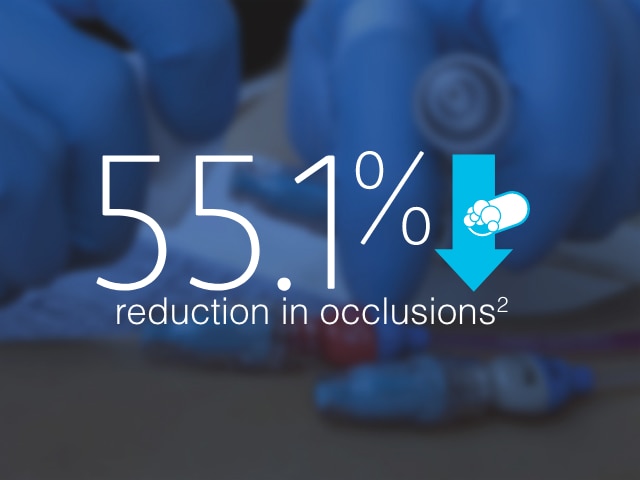
In a retrospective observational study of 720 home infusion patients, the BD MaxZero™ Needle-free Connector reduced PICC occlusion rates by 55.1% (p=0.001), compared to a leading neutral displacement connector.2 There was a 55.1% reduction in the total number of nurse visits per 100 central line-days and a 56.4% reduction in Alteplase use and associated cost, after patients were switched to the BD MaxZero™ Needle-free Connectors.2
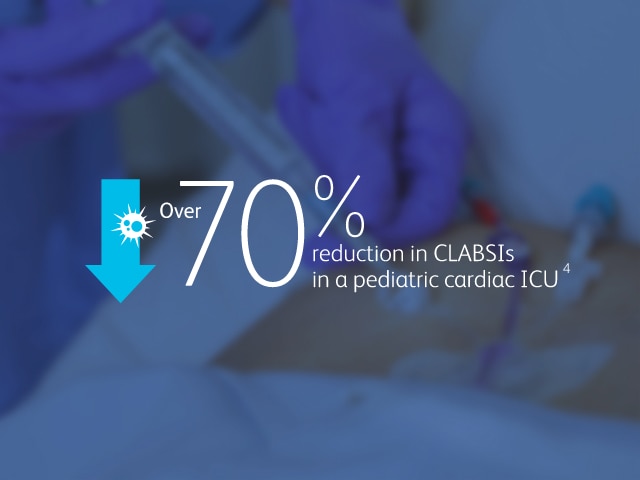
A multidisciplinary evidence-based initiative consisting of a CVL insertion, access and maintenance bundle, including implementation of the BD MaxPlus™ Needle-free Connector, resulted in a reduction in CLABSIs from an estimated 7.8 CLABSIs per 1000 catheter days to 2.3 CLABSIs per 1000 catheter days.4
An ICU in a suburban Baltimore hospital reduced CLABSI rates to zero in 2012, by revising its CVAD policies and initiatives and implementing a bundled approach, including the use of BD MaxPlus™ Needle-free Connectors.5
* Compared to the standard of care that included a standard peripheral catheter and three way stopcock among other elements.

BD's collection of literature on our infusion offerings gives you information you can use to continue striving for excellence.


