

- Overview
- Clinical Application
- EIFU & Resources
Proven Solution for Real-Time Flow Insights
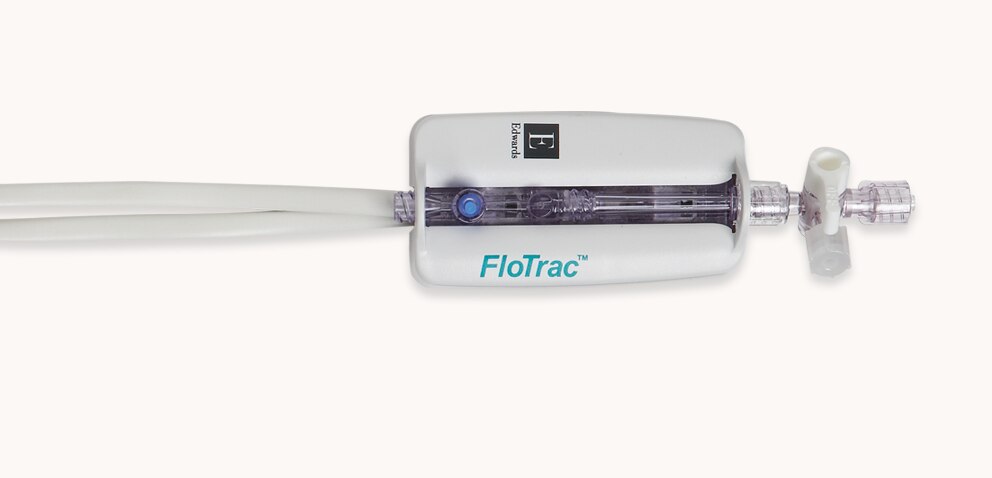
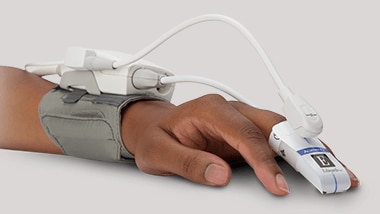
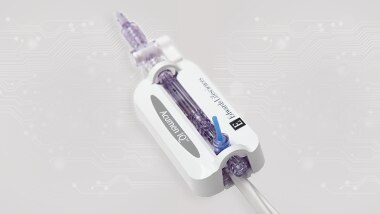
The minimally-invasive FloTrac™ Sensor is a proven solution for advanced haemodynamic monitoring that automatically calculates key flow parameters every 20 seconds. Continuous clarity provided by the FloTrac™ Sensor offers proactive decision support to manage haemodynamic instability and help you ensure adequate patient perfusion.
FloTrac™ System
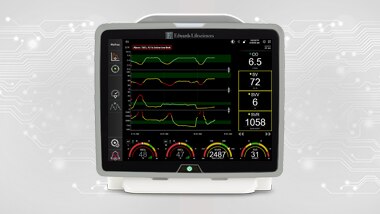
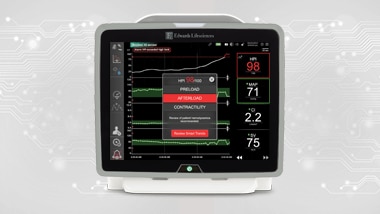
The FloTrac™ Sensor parameters displayed on the HemoSphere™ Monitor show patient status at a glance, for visual clinical support and increased clarity in volume administration.
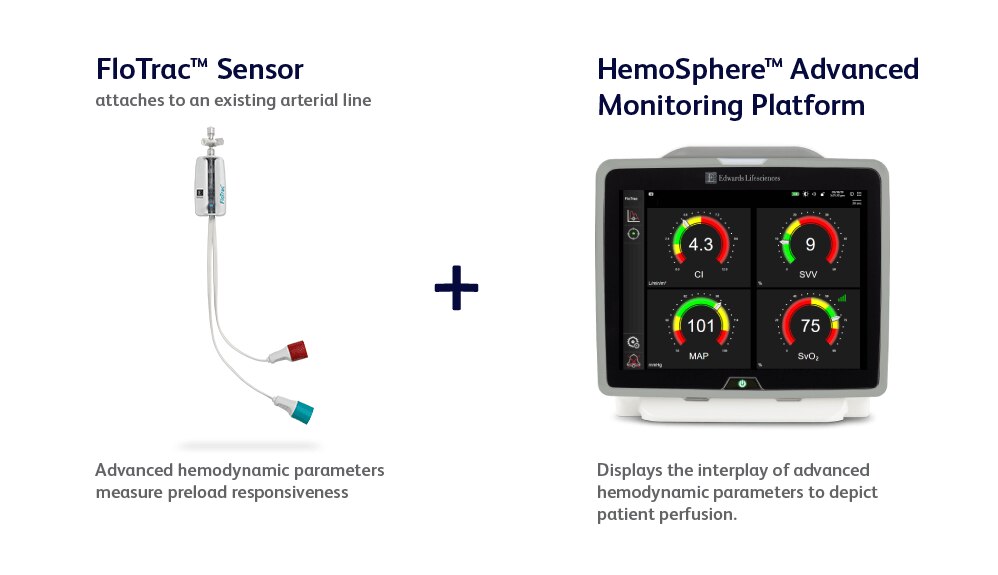
Proactive decision support offered by the FloTrac™ Sensor helps guide individualized treatment decisions for your moderate- to high-risk surgery patients, and can be utilized perioperatively to proactively manage your patient’s physiological status in rapidly changing clinical situations in acute care settings.
Advanced haemodynamic parameters that update every 20 seconds
- Stroke Volume (SV)
- Stroke Volume Variation (SVV)
- Mean Arterial Pressure (MAP)
- Systemic Vascular Resistance (SVR)
- Cardiac Output (CO)

Chosen to monitor over 6.6 million patients*

89 Countries.* Used by clinicians worldwide for minimally-invasive volume management.

Referenced in over 300+ clinical studies* spanning the OR and ICU
*Data on File

Provides a clear haemodynamic picture across various patient conditions and surgical procedures
FloTrac™ Sensor algorithm provides clarity in various patient conditions and procedures
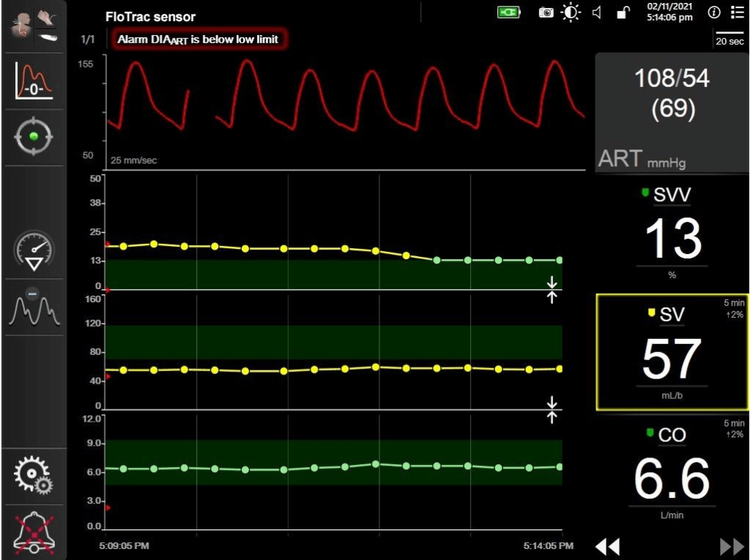
FloTrac™ Sensor validated algorithm
Offers specific monitoring of a broad range of changing patient conditions
The FloTrac™ Sensor algorithm is based on the principle that aortic pulse pressure (PP) is proportional to stroke volume (SV) and inversely related to aortic compliance. The algorithm compensates for the effects of compliance on PP based on age, gender, and body surface area (BSA).
Through continuous beat detection and analysis, the FloTrac™ Sensor algorithm allows for the ongoing use of Stroke Volume Variation. The FloTrac™ Sensor algorithm enables the display and use of SVV in patients with multiple premature atrial or ventricular contractions and allows you to guide volume resuscitation despite most arrhythmias.1,2,3
The SVVxtra algorithm restores the respiratory component of the arterial pressure curve so that SVV continues to reflect the physiological effects of mechanical ventilation on the heart.1
Model | Description | Length | Unit of Measure |
MHD6R | FloTrac™ Sensor | 152 cm | 1 |
MHD6AZR | FloTrac™ Sensor with VAMP™ Adult System | 152 cm | 1 |
MHD8R | FloTrac™ Sensor | 213 cm | 1 |
MHD6R5 | FloTrac™ Sensor | 152 cm | 5 |
MHD6AZR5 | FloTrac™ Sensor with VAMP™ Adult System | 152 cm | 5 |
MHD8R5 | FloTrac™ Sensor | 213 cm | 5 |

- Patent WO 2011/094487 A2, Elimination of the Effects of Irregular Cardiac Cycles in the Determination of Cardiovascular Parameters
- Biais M, Ouattara A, Janvier G, Sztark F. Case scenario: respiratory variations in arterial pressure for guiding fluid management in mechanically ventilated patients. Anesthesiology. 2012;116(6):1354-61
- Monnet X, Marik PE, Teboul JL. Prediction of fluid responsiveness: an update. Ann Intensive Care. 2016;6:111.
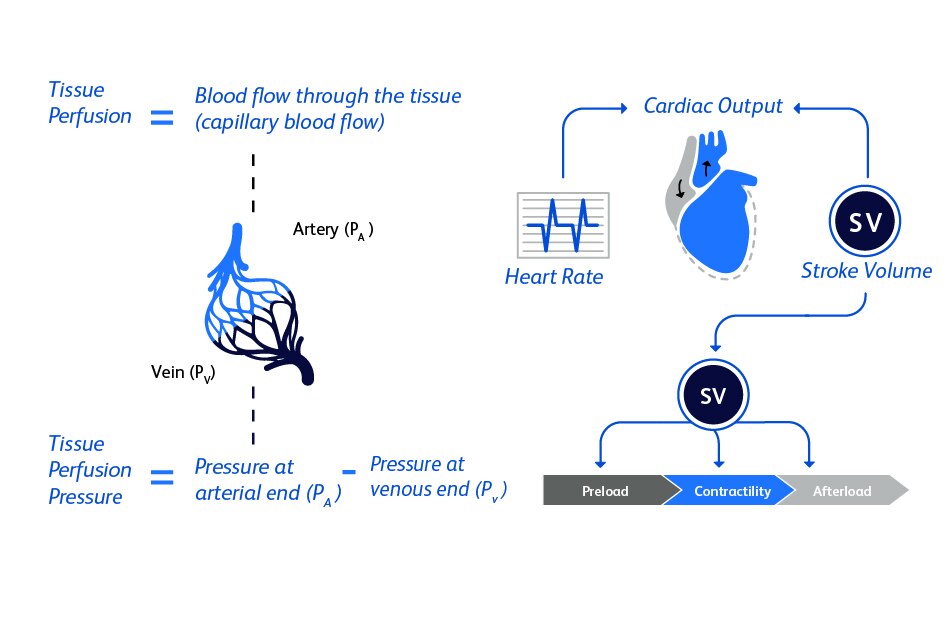
Proactively manage pressure and flow components of perfusion
The minimally-invasive FloTrac™ Sensor offers continuous clinical decision support to enable proactive clinical decisions.
The FloTrac™ Sensor provides access to advanced haemodynamic parameters allowing you to evaluate haemodynamic instability and guide appropriate treatment.
Studies show associations between intraoperative hypotension and increased risk of acute kidney injury (AKI) and myocardial injury - the leading cause of post-operative mortality within 30 days after surgery.
Advanced haemodynamic monitoring parameters CO, SV, SVV, SVR, and MAP provided by the FloTrac™ Sensor can help you determine the cause of instability.
If the underlying cause of haemodynamic instability is related to flow generation, continuous parameters provided by the FloTrac™ Sensor can help you determine appropriate fluid therapy.
Continuous assessment of pressure and flow parameters offers decision support to help manage the duration and severity of intraoperative hypotension episodes.
Guide individualized fluid management
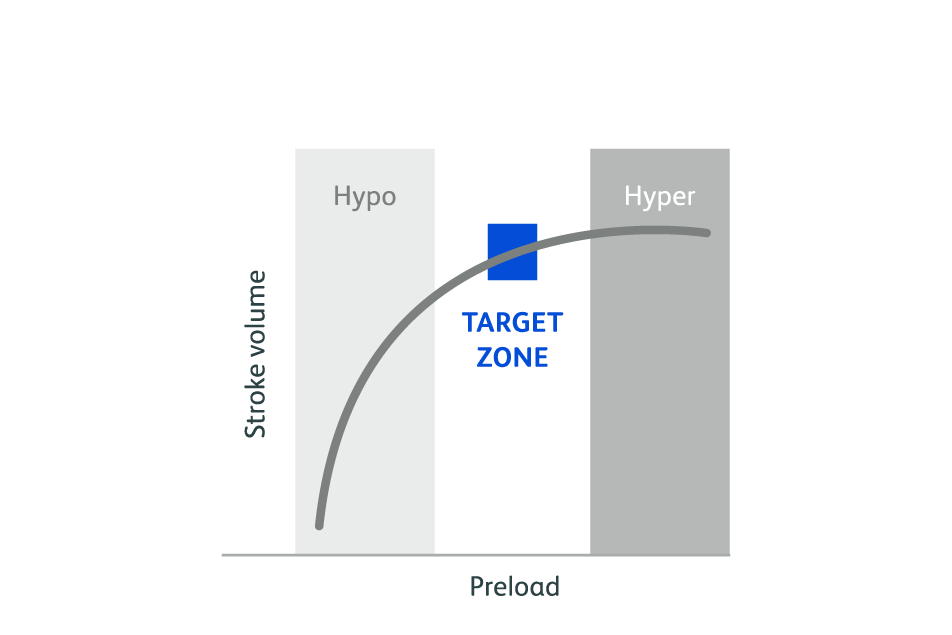
When managing perfusion, stroke volume can be optimized using the patient’s own Frank-Starling curve – a plot of SV vs. preload. The patient’s location on the curve can be determined by measuring changes in SV in response to change in preload using a fluid bolus challenge or passive leg raise (PLR).
Dynamic, flow-based parameters are more informative than conventional parameters in determining fluid responsiveness and may help guide individualized volume administration in patients and help you avoid excessive and insufficient volume administration.1-2
Additionally, stroke volume variation (SVV) has been proven to be a highly sensitive and specific indicator for preload responsiveness when managing volume. As a dynamic parameter, SVV has been shown to be an accurate predictor of fluid responsiveness in loading conditions induced by mechanical ventilation.3-4

- Cannesson, M. (2010). Arterial pressure variation and goal-directed fluid therapy. Journal of Cardiothoracic and Vascular Anesthesia, 24(3), 487-97.
- Benes, et al. (2014). Effects of GDFT based on dynamic parameters on post surgical outcome. Critical Care, 18:584.
- McGee, WT. (2009). A simple physiologic algorithm for managing hemodymanics using stroke volume and and stroke volume variation. Physiologic optimization program. J Intensive Care Med. 24(6):352-60.
- McGee, WT., et al. (2013). Physiologic Goal- Directed therapy in the perioperative period. J Cardiothoracic and Vascular Anesthesia. 27(6):1079-1086.


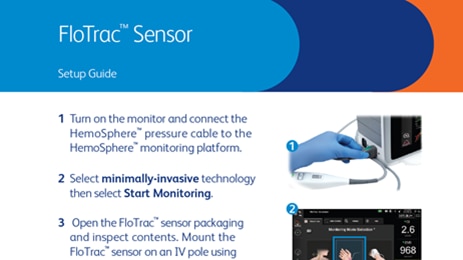

Access our extensive collection of informative product and educational resources, designed to keep you informed and help you achieve excellence.

BD Advanced Patient Monitoring is here to help you stay on top of the latest clinical challenges and make the most of haemodynamic monitoring solutions.

