
true

Contact Us
Sales

Thank you for contacting our sales team!
A sales representive will get in touch with you shortly.
Customer Care

0800 917 8776

BDUK_customerservice@bd.com
BD® Insyte™ Autoguard™ BC Shielded IV Catheter with Blood Control Technology
Confidently keep blood in its place — away from you and your patients.

- Overview
- Products & Accessories
- EIFU & Resources
IV catheter placement is the most common invasive hospital procedure worldwide.1,2 Up to 90% of hospitalised patients require IV therapy, over 95% of these devices are Peripheral Intravenous Catheters (PIVC).2 With every PIVC insertion attempt, Healthcare Workers (HCWs) risk exposure to patient blood.3-5
Needlestick injuries (NSIs) and blood leakage may expose HCWs to more than 30 dangerous pathogens that can be present in human blood, including hepatitis B, C and HIV.6
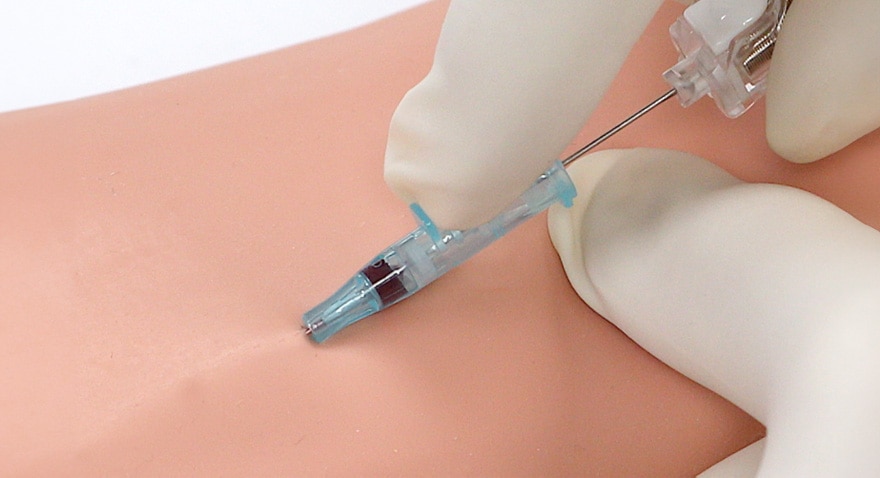
The Insyte™ Autoguard™ BC Shielded IV Catheter with Blood Control Technology is designed to provide HCWs with protection from needlestick injuries and blood exposure.
true

How can IV insertion be performed without venous compression?
There is no need to apply venous compression during insertion when using Insyte™ Autoguard™ BC Shielded IV Catheters. The Insyte™ Autoguard™ BC Shielded IV Catheter with Blood Control Technology is designed to stop blood flow from the catheter hub until the initial luer connection is secured, removing the need for venous compression during insertion.

How can blood exposure risk be reduced during IV access?
The Insyte™ Autoguard™ BC Shielded IV Catheter with Blood Control Technology has demonstrated a 95% reduction in the risk of blood exposure.7*† helping protect healthcare workers during IV insertion.

How can clinicians feel more confident during IV insertion?
In a healthy human study, 98.7% of clinicians indicated they felt no risk of blood exposure during insertion when using Insyte™ Autoguard™ BC Shielded IV Catheter with Blood Control Technology.7*‡

How can first-attempt IV insertion success be improved?
The Insyte™ Autoguard™ BC Shielded IV Catheter incorporating BD® Instaflash™ Needle Technology, with a notched needle, which was clinically demonstrated to improve first-attempt insertion success.8-9
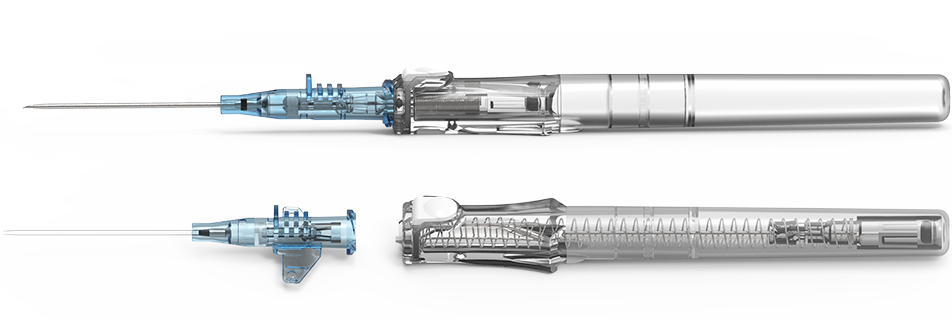
What are the Insyte™ Autoguard™ BC Shielded IV Catheter product features?
Together, we all play a part in preventing vascular access complications.
BD Vascular Access Management assessments
Our powerful evidence-based assessments, with analytics and benchmarks, are the first phase of BD Vascular Access Management—and the first step on the path to enhance patient safety, workflow efficiency and cost-effectiveness across the entire patient journey.

Please note, not all products, services, claims or features of products may be available or valid in your local area. Please check with your local BD Representative.
Please consult BD product labels and inserts relevant to your geography for any indications, contraindications, hazards, warnings, cautions and instructions for use. Any discussion and/or content regarding BD products is limited to this information and instructions for use.

Notes
* Compared to a nonblood control IV catheter
† Compared to a nonsafety IV catheter
‡ Compared to a Fluorinated Ethylene Propylene (FEP) catheter
§ Compared to PUR: 32%; compared to FEP: 69%
References
- Helm RE, Klausner JD, Klemperer JD, et al. Accepted but unacceptable: peripheral IV catheter failure: Infus Nurs Society. 2015;38(3):189-203.
- iData Research Inc. Global Market Report Suite for Vascular Access Devices and Accessories. 2020.
- Tarantola A, Abiteboul D, Rachline A. Infection risks following accidental exposure to blood or body fluids in health care workers: a review of pathogens transmitted in published cases. Am J Infect Control. 2006:34:367-375.
- Haeseler G, Hildebrand M, Fritscher J. Efficacy and ease of use of an intravenous catheter designed to prevent blood leakage: a prospective observational trial. JVA. 2015;16(3):233-236. doi: 10.5301/jva.5000334.
- Jagger J Perry J, Parker G, et al. Survey results: Blood exposure risk during peripheral IV catheter insertion and removal. Nursing. 2011;41(12):45-49. doi:10.1097/01.NURSE.0000407678.81635.62.
- European Biosafety Network. Prevention of Sharps Injuries in the Hospital and Healthcare Sector. European Biosafety Network Implementation Guidance Toolkit for EU Council Directive. 2010/32/EU. January 2013. Available at www.europeansafetynetwork.eu (accessed May 2017).
- Onia R, Eshun-Wilson I, Arce C, et al. Evaluation of a new safety peripheral IV catheter designed to reduce mucocutaneous blood exposure. CMRO. 2011;27(7):1339-1346.
- van Loon FHJ, Timmerman R, den Brok GPH, Korsten EHM, Dierick-van Daele ATM, Bouwman ARA. The impact of a notched peripheral intravenous catheter on the first attempt success rate in hospitalized adults: block-randomized trial. JVA. 2021 doi: 10.1177/1129729821990217.
- Seetharam AM, Raju U, Suresh K. A randomized controlled study to compare first stick success with Instaflash technology: The FIRSST study. JVA. 2022 doi:10.1177/11297298221080369.
true

true

Literature
BD's collection of literature on industry and on our offerings gives you information you can use to continue striving for excellence.
Learn more

Training
BD offers training resources to help improve your clinical practices as part of our goal of advancing the world of health.
Learn more
true
true