true
Icon to close the modal
Contact Us
Sales
Modal Close Icon
Icon to close thank you modal
Thank you for contacting our sales team!
A sales representive will get in touch with you shortly.
Customer Care
Phone Icon
0800 917 8776
BDUK_customerservice@bd.com

BD® HD Check System

Providing life-saving treatments can put your staff at risk

Contact Us
hd-check-banner_2
Loading

Overview

Healthcare workers – pharmacists, technicians, nurses – work every day to improve patients’ health. However, exposure to the same hazardous drugs they prepare, handle and administer to patients may put their own health at risk.¹ 

Despite well-established safety standards and guidelines from organisations such as the United States Pharmacopeia (USP),2 Institute for Occupational Safety and Health (NIOSH)1 and the Occupational Safety and Health Administration (OSHA),3 hazardous drug contamination remains a persistent challenge. It continues to occur frequently and can easily spread throughout healthcare institution.4

The recent EU Directive 2022/4315 on protecting workers from exposure to carcinogens or mutagens in the workplace requires the implementation of appropriate procedures to monitor these substances. This includes ensuring early detection of abnormal exposure – particularly in the event of unforeseen incidents or accidents – through established measurement protocols. 

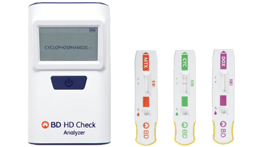
The BD® HD Check System is a breakthrough in hazardous drug detection*, offering the first rapid testing solution that delivers results in under 10 minutes.6,7 Designed for routine monitoring, it enables immediate corrective action when contamination is detected.8 Easy to use and fast-acting, the BD® HD Check System helps healthcare institutions enhance safety with confidence.9,10

*The BD® HD Check System tests for select hazardous drugs - cyclophosphamide, doxorubicin and methotrexate. Surfaces with contamination at or above the limits of detection have 95% specificity and sensitivity.
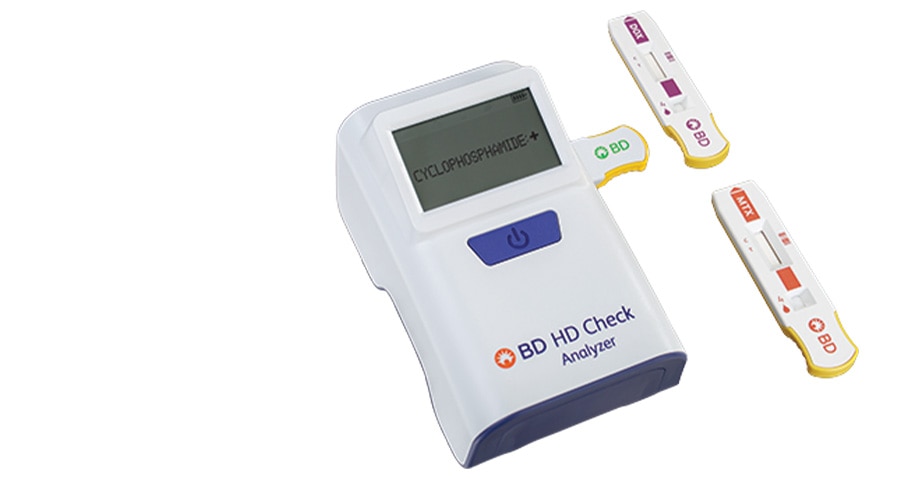
true

Potential Risks

In the European Union, approximately 1.8 million workers are exposed to hazardous medicinal products (HMPs) – with nurses accounting for 40% of those affected and pharmacists representing 9%.11

  • Double-Helix_Lightblue_solid_64x64.svg

    Detrimental effect on DNA

    Pharmacists and nurses who handle antineoplastic drugs show a 2.5-fold increase in total chromosomal aberrations (CAs), with up to a 5-fold increase in certain CA types12,13

  • Ribbon_Lightblue_outline_32x32.svg

    Increased rates of cancer

    This includes relative risk of leukaemia increases for oncology nurses,14 a 2.8-times increase in non-melanoma skin cancer and a 3.7-times increase in non-Hodgkin’s lymphoma in pharmacy techs15

  • Organ_Lightblue_outline_64x64.svg

    Damage to internal organs

    Three consecutive head nurses handling cytostatic agents over time had liver damage16

  • child-3-line-32x32.svg

    Reproductive issues


    Staff handling antineoplastic drugs during pregnancy may face a 1.5 to 2.3 times higher risk of miscarriage, and exposure has been associated with malformations in offspring17,18

Exposure can occur at any point in the journey of a hazardous drug at your facility1

    Guideline-Based Recommendations for Routine Monitoring

    Key guidelines recommend sampling surfaces routinely to help improve environmental quality.

    Monitoring of environmental contamination is recommended at least yearly; however, it is important to refer to institutional procedures. It is also recommended a month after there are any major changes in the area where cytotoxic drugs are prepared or administered.

    2022 ISOPP Standards for the Safe Handling of Cytotoxics – Cytotoxic drug contamination monitoring19

    "To be efficient, any surface contamination monitoring plan should include an assessment of the contamination risk present in the different sections of the hospital pharmacy departments’ (HPD) compounding area. This is essential to determine where to sample and establish a suitable monitoring frequency. [...]"

    2021 SEFH practice guidelines20

    Explore other high-touch work surfaces that could be contaminated:

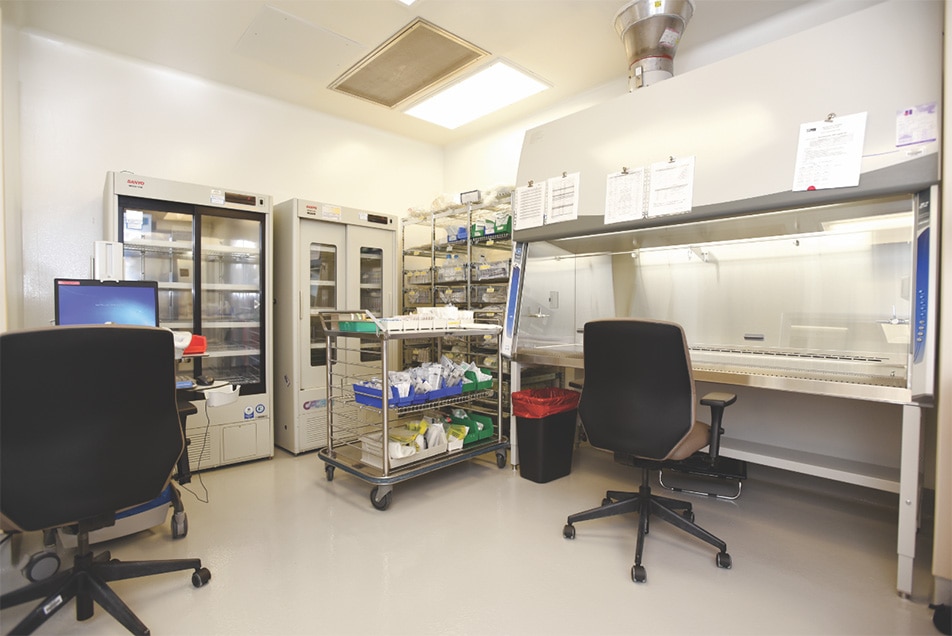
    Pharmacy or Preparation areas

    Pharmacy Areas

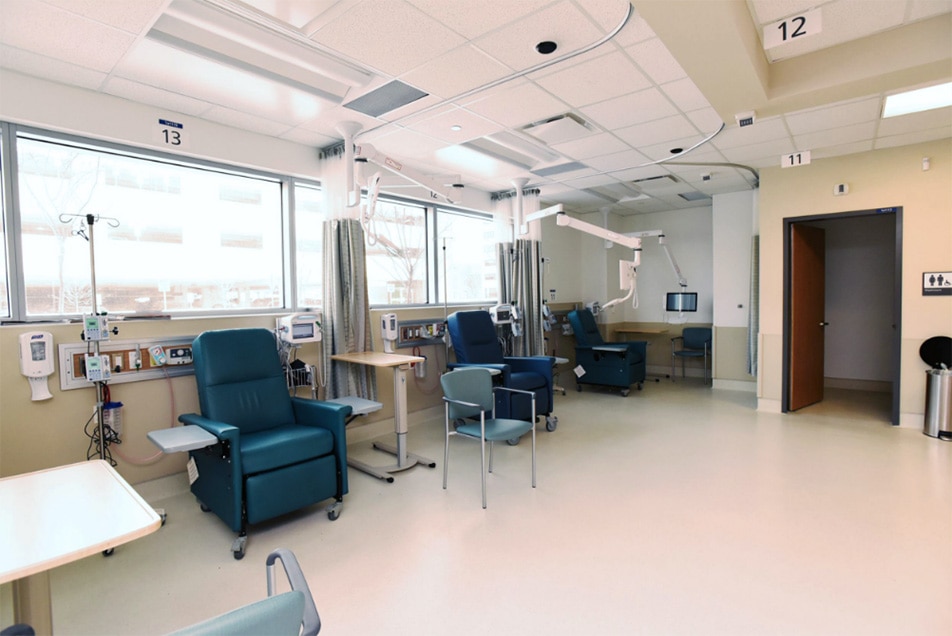
      Nursing Areas

      test the section description text

      Image Alt Text

        Other products you may be interested in

        References
        1. National Institute for Occupational Safety and Health (NIOSH). NIOSH alert 2004: Preventing occupational exposures to antineoplastic and other hazardous drugs in health care settings. http://www.cdc.gov/niosh/docs/2004-165/pdfs/2004-165.pdf. Accessed June 19, 2025.

        2. United States Pharmacopeial Convention. USP General Chapter <800> Hazardous Drugs—Handling in Healthcare Settings. https://www.usp.org/compounding/general-chapter-hazardous-drugs-handling-healthcare. Published February 1, 2016. Accessed June 19, 2025.

        3. Occupational Safety and Health Administration (OSHA). Controlling Occupational Exposure to Hazardous Drugs (2016).  Available at: https://www.osha.gov/hazardous-drugs/controlling-occex Accessed June 19, 2025.

        4. Kiffmeyer TK, Tuerk J, Hahn M, et al. Application and assessment of a regular environmental monitoring of the antineoplastic drug contamination level in pharmacies – The MEWIP Project. Ann Occup Hyg. 2013 May;57(4):444–455.

        5. Directive (EU) 2022/431 of the European Parliament and of the Council of 9 March 2022 amending Directive 2004/37/EC on the protection of workers from the risks related to exposure to carcinogens or mutagens at work. https://eur-lex.europa.eu/eli/dir/2022/431/oj/eng. Accessed June 19, 2025.

        6. Valero García S, Centelles-Oria M, Palanques-Pastor T, Vila Clérigues N, López-Briz E, Poveda Andrés JL. Analysis of chemical contamination by hazardous drugs with BD HD Check® system in a tertiary hospital. J Oncol Pharm Pract. 2021;10781552211038518. doi: 10 .1177 / 10781552211038518.

        7. Gabay M., Johnson P., Fenikos J. et al. Report on 2020 Safe to Touch consensus conference on hazardous drug surface contamination. Am J Health-Syst Pharm 2021;78.17:1568-1575.

        8. Connor TH, Smith JP. New approaches to wipe sampling methods for antineoplastic and other hazardous drugs in healthcare settings. Pharm Technol Hosp Pharm. 2016;1 (3 ):107-114. 13.

        9. Data on File: Project DARK System-level DV Report. 17982 rev01. October 2017.

        10. Data on File: Project DARK Pre-Validation Formative Study 1, June 2017.

        11. Jespersen MS, Wähler LC, Lassen C, et al. Study supporting the assessment of different options concerning the protection of workers from exposure to hazardous medicinal products, including cytotoxic medicinal products. In: COWI, IOM, editors. European Commission; 2021.

        12. Cavallo D, Ursini CL, Perniconi B, et al. Evaluation of genotoxic effects induced by exposure to antineoplastic drugs in lymphocytes and exfoliated buccal cells of oncology nurses and pharmacy employees. Mutat Res. 2005; 587 (1-2): 45-51.

        13. McDiarmid MA, Oliver MS, Roth TS, Rogers B, Escalante C. Chromosome 5 and 7 abnormalities in oncology personnel handling anticancer drugs. J Occup Environ Med. 2010; 52 (10): 1028-34.

        14. Skov T, Maarup B, Olsen J, Rørth M, Winthereik H, Lynge E. Leukaemia and reproductive outcome among nurses handling antineoplastic drugs. Br J Ind Med. 1992; 49 (12): 855-861.

        15. Hansen J, Olsen JH. Cancer morbidity among Danish female pharmacy technicians. Scand J Work Environ Health. 1994; 20(1): 22-26.

        16. Sotaniemi EA, Sutinen S, Arranto AJ, et al. Liver damage in nurses handling cytostatic agents. Acta Med Scand. 1983; 214(3): 181-189.

        17. Environmental Working Group (EWG). Nurses' Health, A Survey on Health and Chemical Exposures. Environmental Working Group website. http://www.ewg.org/research/nurses-health. Published December 11, 2007. Accessed September 3, 2025.

        18. Hemminki K, Kyronen P, Lindbohm ML. Spontaneous abortions and malformations in the offspring of nurses exposed to anesthetic gases, cytostatic drugs, and other potential hazards in hospitals, based on registered information of outcome. J Epidemiol Community Health. 1985; 39(2): 141–147.

        19. Nabhani-Gebara S, Chan A, Kerr K, et al. ISOPP Standards for the safe handling of cytotoxics. Journal of Oncology Pharmacy Practice. 2022; 28(3_suppl): S1-S126.

        20. Valero-García S, González-Haba E, Gorgas-Torner MQ, et al. Monitoring contamination of hazardous drug compounding surfaces at hospital pharmacy departments. A consensus Statement. Practice guidelines of the Spanish Society of Hospital Pharmacists (SEFH). Farm Hosp. 2021; 45(2): 96-107.

        Global Standards and Recommendations for Hazardous Drugs (HD) Surface Monitoring

        Several international, United States and European organisations and governmental agencies have developed guidelines for the management of HDs which include recommendations regarding HD surface monitoring, including but not limited to:

        • US National Institute of Occupational Safety and Health (NIOSH)1
        • International Society of Oncology Pharmacy Practitioners (ISOPP)2
        • Practice guidelines of the Spanish Society of Hospital Pharmacists (SEFH)3
        • United States Pharmacopeia (USP)4
        • American Society of Health-System Pharmacists (ASHP)5
        • US Oncology Nursing Society (ONS)6
        • European Agency for Safety and Health at Work (EU-OSHA)7
        • Health Service of Castile-La Mancha in Spain (SESCAM)8
        Routine monitoring can reduce contamination and even help to prevent it

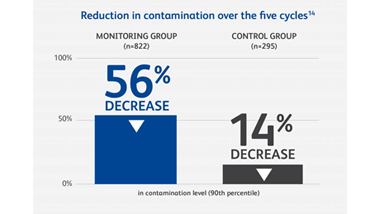
        A surface wipe sample study N=1.269 demonstrated a 56% decrease in contamination levels when monitoring occurred at regular intervals.9

        "[…] Monitoring is beneficial in recognizing and correcting practices that lead to hazardous drug surface exposures, preventing future contamination from occurring."10

        The BD® HD Check System

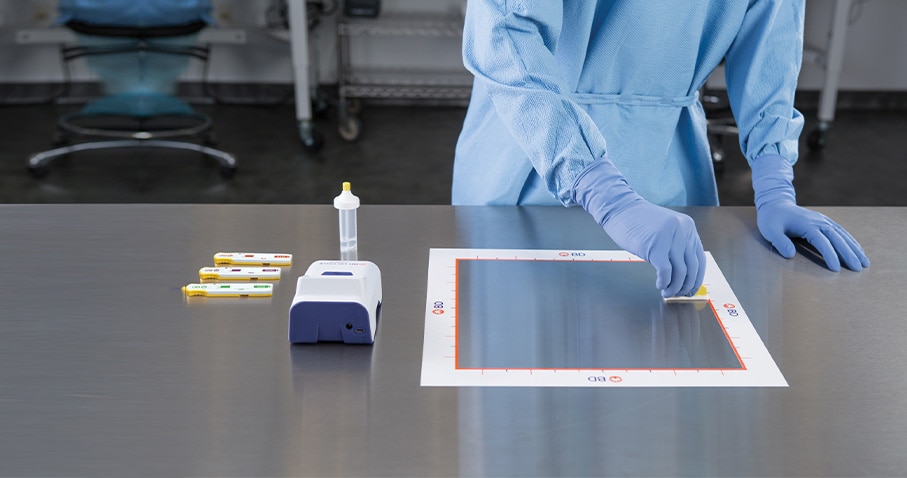
        The BD® HD Check System can help facilitate routine monitoring, enabling immediate corrective action to be taken. 

        Reliably detects* surface contamination:11

        • On multiple surfaces
        • Gives easy-to-read results
        • In less than 10 minutes


        The BD® HD Check System currently tests for three commonly used HDs: cyclophosphamide, methotrexate and doxorubicin.

        *Tests for select hazardous drugs. Surfaces with contamination at or above the limits of detection have 95% specificity and sensitivity.

        EU Directive 2022/431 requires measurement of HDs using existing methods

        "…use of existing appropriate procedures for the measurement of carcinogens, mutagens or reprotoxic substances, in particular for the early detection of abnormal exposures resulting from an unforeseeable event or an accident”12

        HD experts recommend the BD® HD Check System to rapidly test for contamination11

        quote-icon

        Qualitative testing is recommended when rapid results are needed in order to determine the presence or absence of an HD.
         

        Currently, there is only 1 commercially available qualitative system (BD® HD Check, BD, Franklin Lakes, NJ), which offers 3 HDs that can be tested.

        2020 Safe to Touch Consensus Conference on Hazardous Drug Surface Contamination11


        quote-icon

        On-site qualitative point-of-care testing can be used in conjunction with quantitative analysis to provide a timelier, rapid assessment of hazardous drugs contamination.13

        Brechtelsbauer E. Identification and reduction of hazardous drug surface contamination through the use of a novel dosed-system transfer device coupled with a point-of-care hazardous drug detection system; American Journal of Health-System Pharmacy, 2023.¹³

        Practice guidelines recommend assessing what, where and when to test for HD
        quote-icon

        To be efficient, any surface contamination monitoring plan should include an assessment of the contamination risk present in the different sections of the Hazardous Product/Drug (HPD)'s compounding area.3

        This is essential to determine where to sample and establish a suitable monitoring frequency. 

        Here are some of their recommendations: 

        Frequency of testing: Conducting custom assessment to determine which areas carry high, medium or low contamination risk is recommended.3 It should be noticed that there is no evidence regarding how frequently routine sampling should occur.2 The minimum frequency of testing that is recommended varies.2,3,4,7,8,11

        For example the EU-OSHA Guidance for the safe management of hazardous medicinal products at work suggests at least once a year,7 while USP <800>4 and more recent publications recommend at least every six months.3,8 However, it is important to refer to institutional procedures.2

        Drugs to test for: The first step should be an analysis of the most widely used drugs in the preparation and administration areas. It has been recommended to monitor at least cyclophosphamide as a contamination marker drug both in the preparation as well as in the administration areas.3

        Facilities are already seeing results of tracking HD surface contamination

        “Negative results today do not mean that tomorrow will be safe. [...] I find the BD® HD Check System fast, easy and reliable to use”.


        It takes about 10 minutes to set up the device initially. After that, it takes less than 10 minutes to process a sample. This is a significant improvement over traditional wipe sampling kits that may take up to two weeks or longer to give a result, during which time HD residue may be spread to other locations. 

        Fred Massoomi, RPh, PharmD, FASHP¹⁴


        Performing surface monitoring at selected locations in their tertiary hospital, Silvia Valero Garcia and colleagues found that the BD® HD Check System offered multiple advantages, the primary being speed and immediacy in obtaining results.


        This allowed them to take immediate corrective measures when contamination was detected, and to quickly assess the effectiveness of containment and control measures. 

        The first known published study to use a qualitative technique to detect HDs on surfaces¹⁵

        Silvia Valero García and colleagues evaluated the suitability of using the BD® HD Check System to routinely monitor surfaces at select locations in their tertiary hospital. Their in-use study was published in the Journal of Oncology Pharmacy Practice (JOPP) in 2021.

        Read more here about how the benefits of routine qualitative testing of surfaces for HDs can help your facility recognize and correct practices that lead to HD surface contamination.15
        BD's end-to-end programme can help you implement sustainable monitoring

        You can set up, customise and sustain HD surface monitoring in your facility, step by step

          Our four-step program enables to set up, customise and sustain a contamination monitoring programme to assess the potential for HD surface contamination.

          Each facility needs to tailor a surface contamination monitoring programme to address its specific needs. Our tools, such as an assessment app, customisable procedure templates, the BD® HD Check System and the BD® HD Check Analytics are designed to help in the implementation of a sustainable programme.

          References
          1. ALERT, NIOSH. Preventing occupational exposures to antineoplastic and other hazardous drugs in health care settings. NIOSH, Pub. 2004, 2004-165.
          2. Nabhani-Gebara S, Chan A, Kerr, et al. ISOPP Standards for the safe handling of cytotoxics. Journal of Oncology Phamarcy Practice. 2022;28(3_suppl):S1-S126.
          3. Valero-García S, González-Haba E, Gorgas-Torner MQ, et al. Monitoring contamination of hazardous drug compounding surfaces at hospital pharmacy departments. A consensus Statement. Practice guidelines of the Spanish Society of Hospital Pharmacists (SEFH). Farm Hosp. 2021;45(2):96–107.
          4. United States Pharmacopeial Convention. USP General Chapter <800> Hazardous Drugs—Handling in Healthcare Settings.https://www.usp.org/compounding/general-chapter-hazardous-drugs-handling-healthcare . Published February 1, 2016. Accessed June 19, 2025
          5. Power LA, Coyne JW.  ASHP Guidelines on Handling Hazardous Drugs.  Am J Health-Syst Pharm. 2018 Dec 15; 75(24):1996-2031.
          6. Polovich M, Olsen MM, eds.  Safe Handling of Hazardous Drugs, 3rd ed.  2018.  Pittsburgh, PA: Oncology Nursing Society. 
          7. European Commission. "Guidance for the Safe Management of Hazardous Medicinal Products at Work." (2023).
          8. Guía actuación frente al riesgo de exposición a medicamentos peligrosos SESCAM Servicio de Salud de Castilla-La Mancha; Feb 2022. ISBN: 978-84-09-45731-1.
          9. Kiffmeyer TK, Tuerk J, Hahn M, et al. Application and assessment of a regular environmental monitoring of the antineoplastic drug contamination level in pharmacies–the MEWIP project. Ann Occup Hyg. 2013;57(4):444–455. doi:10.1093/annhyg/mes081.
          10. Salch SA, Zamboni WC, Zamboni BA, Eckel SF. Patterns and characteristics associated with surface contamination of hazardous drugs in hospital pharmacies. Am J Health Syst Pharm. 2019;76(9):591-598. doi:10.1093/ajhp/zxz033.
          11. Gabay M., Johnson P., Fenikos J. et al. Report on 2020 Safe to Touch consensus conference on hazardous drug surface contamination. Am J Health-Syst Pharm 2021;78.17:1568-1575.
          12. Directive 2022/431 of the European Parliament and of the Council on the protection of workers from the risks related to exposure to carcinogens, mutagens or reprotoxic substances at work. Official Journal L 88/1 (2022).
          13. Erich Brechtelsbauer, Identification and reduction of hazardous drug surface contamination through the use of a novel dosed-system transfer device coupled with a point-of-care hazardous drug detection system. American Journal of Health-System Pharmacy. Volume 80, Issue 7, 1 April 2023. Pages 435 - 444. https:/fdoi.org/10.1093/aJhp/zxac336.
          14. Massoomi F. HD Check-In An interview with HD safety expert Fred Massoomi, RPh, PharmD, FASHP. BD-7875. 2018.
          15. Valero García S, Centelles-Oria M, Palanques-Pastor T, Vila Clérigues N, López-Briz E, Poveda Andrés JL. Analysis of chemical contamination by hazardous drugs with BD HD Check® system in a tertiary hospital. J Oncol Pharm Pract. 2021;10781552211038518. doi: 10.1177/ 10781552211038518.
          EIFUs
          Resources
          true
          BD® HD Check system BD Not applicable BD® HD Check System ,

          Monitoring of environmental contamination is recommended at least yearly; however, it is important to refer to institutional procedures. It is also recommended a month after there are any major changes in the area where cytotoxic drugs are prepared or administered.

          2022 ISOPP Standards for the Safe Handling of Cytotoxics – Cytotoxic drug contamination monitoring19

          ,,

          "To be efficient, any surface contamination monitoring plan should include an assessment of the contamination risk present in the different sections of the hospital pharmacy departments’ (HPD) compounding area. This is essential to determine where to sample and establish a suitable monitoring frequency. [...]"

          2021 SEFH practice guidelines20

          ,,

          A surface wipe sample study N=1.269 demonstrated a 56% decrease in contamination levels when monitoring occurred at regular intervals.9

          ,,

          "[…] Monitoring is beneficial in recognizing and correcting practices that lead to hazardous drug surface exposures, preventing future contamination from occurring."10

          /content/dam/bd-assets/bd-com/en-us/logos/bd/header-bd-logo.svg

          Providing life-saving treatments can put your staff at risk

          515033 BD® HD Check Hazardous Drug Collection Kit II 515031 Cyclophosphamide Assay Cartridges - CYC Kit 20 test (BD® HD Check system) 515029 Methotrexate Assay Cartridges - MTX Kit 20 TEST (BD® HD Check system) 515025 Doxorubicin Assay Cartridges - DOX Kit 20 TEST (BD® HD Check system) 515020 BD® HD Check Analyzer