
Acumen Hypotension Prediction Index™ Software
Address the potential root cause of haemodynamic instability sooner with AI-guided predictive decision support

- Overview
- Software Features
- Clinical Evidence
- EIFU & Resources
You have the power to prevent hypotension.
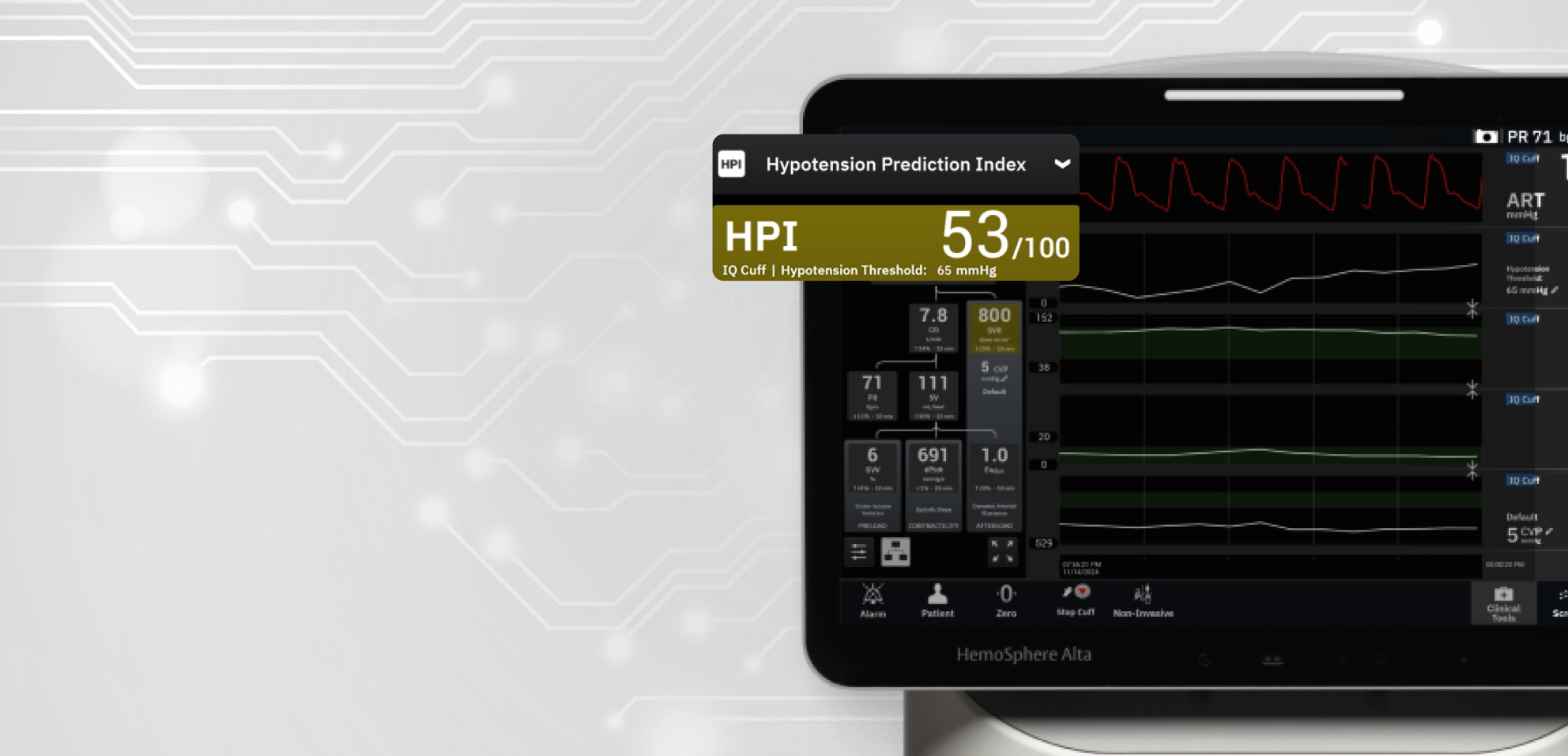
Acumen Hypotension Prediction Index™ (HPI™) Software provides earlier warnings, deeper insights and more time to act. With advanced predictive intelligence, it’s a smarter way to monitor and personalise care for your patient’s needs.
-

Predictive Haemodynamic Monitoring
Predicts hypotension up to 15 minutes in advance, enabling you to proactively treat haemodynamic instability.
-

Personalised insights for your patient
Provides AI-guided predictive decision support to help clinicians respond faster with targeted interventions.
-

The right access for the right patient
Tailor monitoring to each patient’s level of acuity with minimally-invasive and noninvasive solutions.
Clinically proven to reduce the burden of intraoperative hypotension
Backed by extensive clinical evidence, Acumen HPI™ Software has been rigorously studied for accuracy and efficacy compared to the standard of care.1 The EU HYPROTECT study demonstrated that patients monitored with Acumen HPI™ Software experienced a low incidence, duration and severity of hypotension.*2
-

Low incidence of hypotension
41% of patients avoided hypotension when monitored with Acumen HPI™ Software, compared to 12% of patients in another large multicentre study where Acumen HPI™ Software was not used.*2,3
-

Brief duration of hypotension
Patients in this study experienced a median of 2 minutes of hypotension, or 1% of surgery time, when Acumen HPI™ Software was used compared with 28 minutes in another large multicentre study where Acumen HPI™ Software was not used.*2,3
-

Low severity of hypotension
Patients monitored with Acumen HPI™ Software experienced a very low time-weighted average (TWA) MAP <65 mmHg at 0.03. The TWA MAP <60 mmHg was 0.*2
Intraoperative hypotension (IOH) is common. The consequences may be severe. Even low-risk surgical patients may face serious consequences.

- Solares G, Garcia D. The value of the Hypotension Prediction Index as a tool for treatment of haemodynamic instability: a clinical review. Anesth Clin Res. 2024;15(6):1–8.
- Kouz K, Garcia MIM, Cerutti E, et al. Intraoperative hypotension when using hypotension prediction index software during major noncardiac surgery: a European multicentre prospective observational registry (EU HYPROTECT). BJA Open. 2023;6:100140.
- Shah N, Mentz G, Kheterpal S, et al. The incidence of intraoperative hypotension in moderate to high risk patients undergoing non-cardiac surgery: a retrospective multicenter observational analysis. J Clin Anesth. 2020;66:1-12.
Treat the root cause of haemodynamic instability
Acumen HPI™ Software doesn’t just sound an alarm — it provides AI-guided predictive decision support to help you drill down to the potential root cause of haemodynamic instability and intervene sooner.
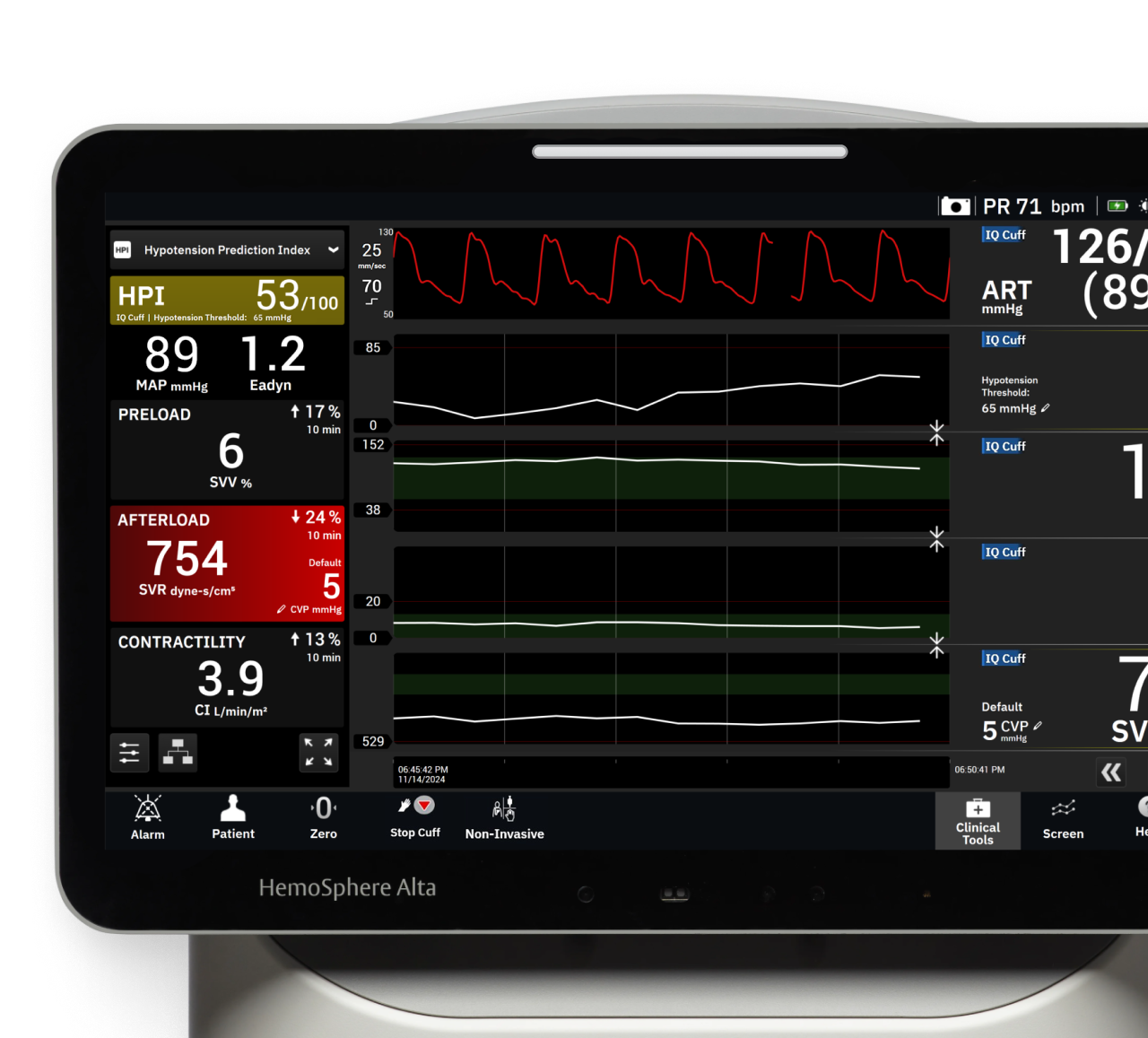
Smart Alerts and Trends
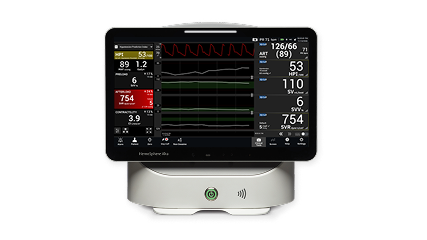
When haemodynamic instability is detected, HPI™ Smart Alerts and Trends provide you with a focused view of the potential targets for intervention, such as preload, afterload and contractility.
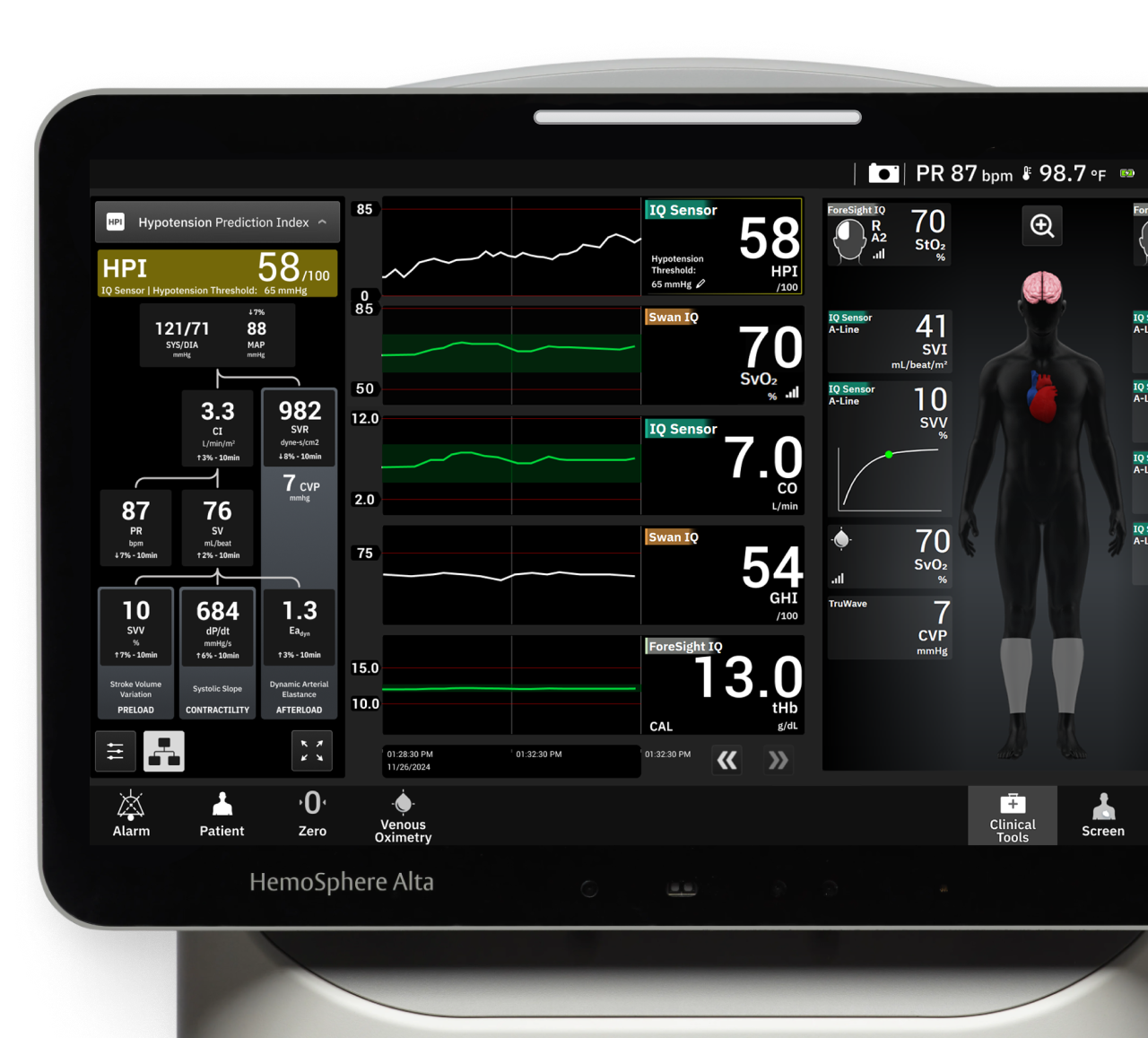
Relationship View
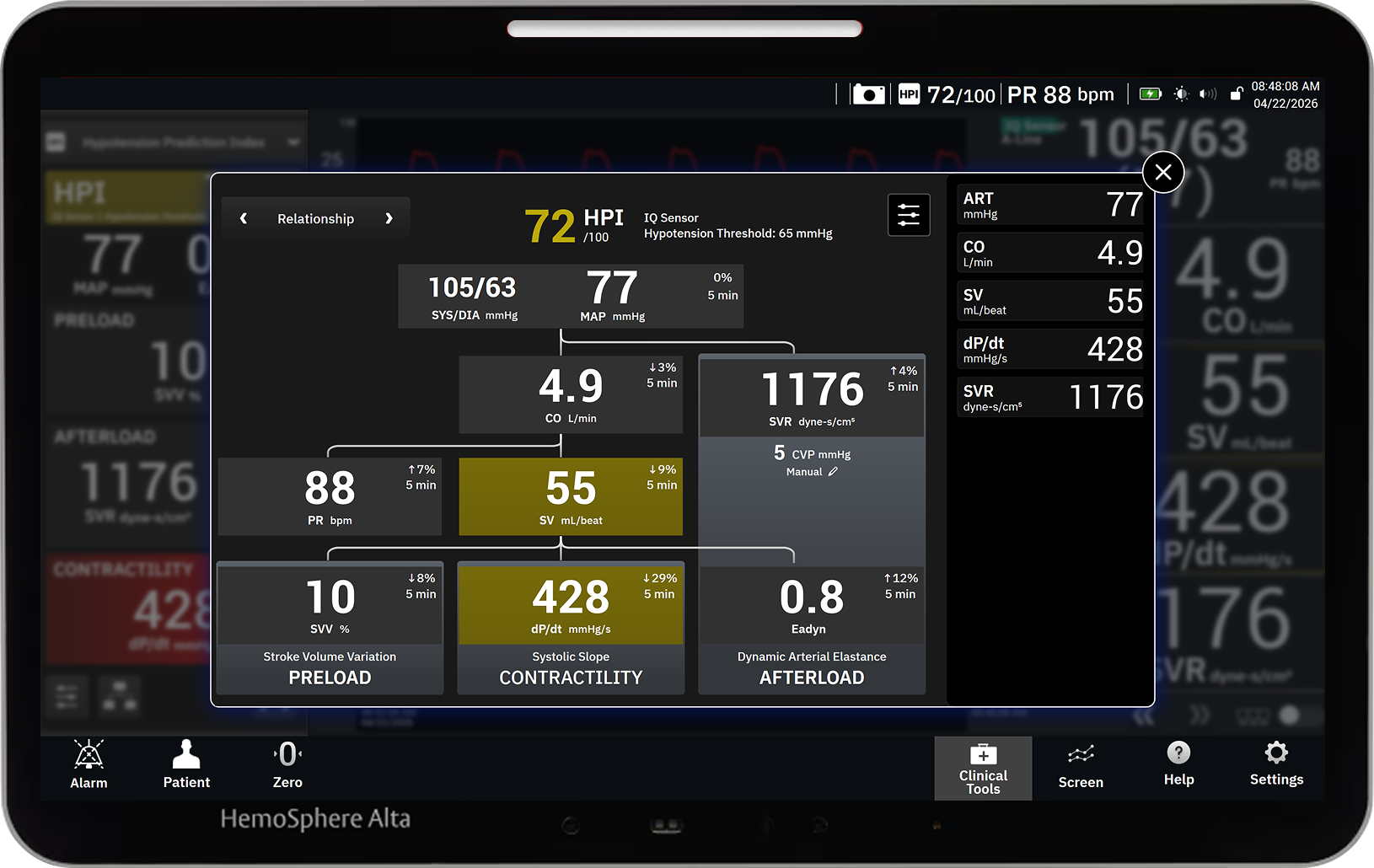
The Relationship View screen provides a simplified, focused view of a patient's haemodynamic status, with red and yellow indicators to guide you towards the potential root cause of haemodynamic instability.
Beyond blood pressure
Blood pressure alone does not reflect perfusion. Acumen HPI™ Software provides continuous insights into haemodynamic trends that can help clinicians detect instability and identify the potential root cause. Additional advanced parameters, dP/dt and Eadyn, provide deeper insights into the underlying cause of haemodynamic instability, supporting targeted interventions.
Detect haemodynamic instability and unlock comprehensive insights into preload, contractility and afterload:

The EU HYPROTECT study demonstrated that patients monitored with Acumen HPI™ Software experienced a low incidence, duration and severity of hypotension.*1
The multicentre, prospective, observational study of over 700 noncardiac surgery patients demonstrated:
- Low incidence of hypotension
41% of patients avoided hypotension when monitored with Acumen HPI™ Software, compared to 12% of patients in another large multicentre study where Acumen HPI™ Software was not used. *1,2 - Brief duration of hypotension
Patients in this study experienced approximately 2 minutes of hypotension, or 1% of surgery time, compared with 28 minutes in another large multicentre study where Acumen HPI™ Software was not used.*1,2 - Low severity of hypotension
Patients monitored with Acumen HPI™ Software experienced a very low TWA MAP <65 mmHg at 0.03. The TWA MAP <60 mmHg was 0.*1

*Multicentre, prospective, observational study of patients across 5 EU countries monitored with Acumen IQ™ Arterial Line Sensor where hypotension was defined as >1 min below MAP 65 mmHg
Highlighted clinical evidence for Acumen HPI™ Software
Wijnberge M, et al. J Amer Med Assoc. 2020
Effect of a Machine Learning–Derived Early Warning System for Intraoperative Hypotension Versus Standard Care on Depth and Duration of Intraoperative Hypotension During Elective Noncardiac Surgery: The HYPE Randomized Clinical Trial*
This study demonstrated that Acumen HPI™ Software combined with a treatment protocol achieved a statistically significant reduction in hypotension versus standard of care. Elective, noncardiac surgery patients monitored with Acumen HPI™ Software had a median time of hypotension per patient of 8 minutes compared with 32.7 minutes in the control group.3
Schneck et al. J Clin Monit Comput. 2019
Hypotension Prediction Index Based Protocolized Haemodynamic Management Reduces the Incidence and Duration of Intraoperative Hypotension in Primary Total Hip Arthroplasty: A Single Centre Feasibility Randomised Blinded Prospective Interventional Trial*
In this single centre randomised blinded prospective feasibility study, Acumen HPI™ Software combined with protocolized treatment was shown to reduce the incidence and duration—both absolute and relative—of hypotensive events in patients undergoing primary total hip arthroplasty, when compared with historical and prospective control groups receiving routine care.7
Highlighted validation studies for Acumen HPI™ Software
Davies et al. Anesth Analg. 2019
Ability of an Arterial Waveform Analysis–Derived Hypotension Prediction Index to Predict Future Hypotensive Events in Surgical Patients*
In this 255 patient, 2-centre retrospective analysis study, Acumen HPI™ Software showed a high predictive performance at 5 and 10 minutes before hypotension.8
Hatib et al. Anesthesiology. 2019
Machine-learning Algorithm to Predict Hypotension Based on High-fidelity Arterial Pressure Waveform Analysis**
Acumen HPI™ Software demonstrated high accuracy in predicting hypotensive events (MAP< 65 mmHg for at least 1 min).
An internal validation of 350 surgical patient demonstrated that Acumen HPI™ Software predicted hypotensive events 15 minutes before they occurred with a sensitivity and specificity o 88% and 87%, respectively, and an AUC of 0.95 (CI 95%).9
*Studies conducted with arterial line monitoring.

Kouz K, Garcia MIM, Cerutti E, et al. Intraoperative hypotension when using Hypotension Prediction Index Software during major noncardiac surgery: a European multicentre prospective observational registry (EU HYPROTECT). BJA Open. 2023;6:100140.
Shah N, Mentz G, Kheterpal S, et al. The incidence of intraoperative hypotension in moderate to high risk patients undergoing non-cardiac surgery: a retrospective multicenter observational analysis. J Clin Anesth. 2020;66:1-12.
Wijnberge M, Geerts BF, Hol L, et al. Effect of a machine learning-derived early warning system for intraoperative hypotension vs standard care on depth and duration of intraoperative hypotension during elective noncardiac surgery: The HYPE Randomized Clinical Trial. JAMA. 2020;323(11):1052-1060.
Maheshwari K, Shimada T, Yang D, et al. Hypotension Prediction Index for prevention of hypotension during moderate- to high-risk noncardiac surgery. Anesthesiology. 2020;133(6):1214-1222.
Tsoumpa M, Kyttari A, Matiatou S, et al. The use of the Hypotension Prediction Index integrated in an algorithm of goal-directed hemodynamic treatment during moderate- and high-risk surgery. J Clin Med. 2021;10(24):5884.
Grundmann CD, Wischermann JM, Fassbender P, et al. Hemodynamic monitoring with Hypotension Prediction Index versus arterial waveform analysis alone and incidence of perioperative hypotension. Acta Anaesthesiol Scand. 2021;65(10):1404-1412.
Schneck E, Schulte D, Habig L, et al. Hypotension Prediction Index based protocolized haemodynamic management reduces the incidence and duration of intraoperative hypotension in primary total hip arthroplasty: a single centre feasibility randomised blinded prospective interventional trial. J Clin Monit Comput. 2020;34(6):1149-1158.
Davies SJ, Vistisen ST, Jian Z, et al. Ability of an arterial waveform analysis-derived hypotension prediction index to predict future hypotensive events in surgical patients. Anesth Analg. 2020;130(2):352-359.
Hatib F, Jian Z, Buddi S, et al. Machine-learning algorithm to predict hypotension based on high-fidelity arterial pressure waveform analysis. Anesthesiology. 2018;129(4):663-674.
The right access for the right patient
Acumen HPI™ Software can be unlocked with a noninvasive Acumen IQ™ Plus Finger Cuff or a minimally-invasive Acumen IQ™ Arterial Line Sensor. This allows you to select the best monitoring solution for each patient’s level of acuity—ensuring that advanced insights never come at the cost of unnecessary invasiveness.
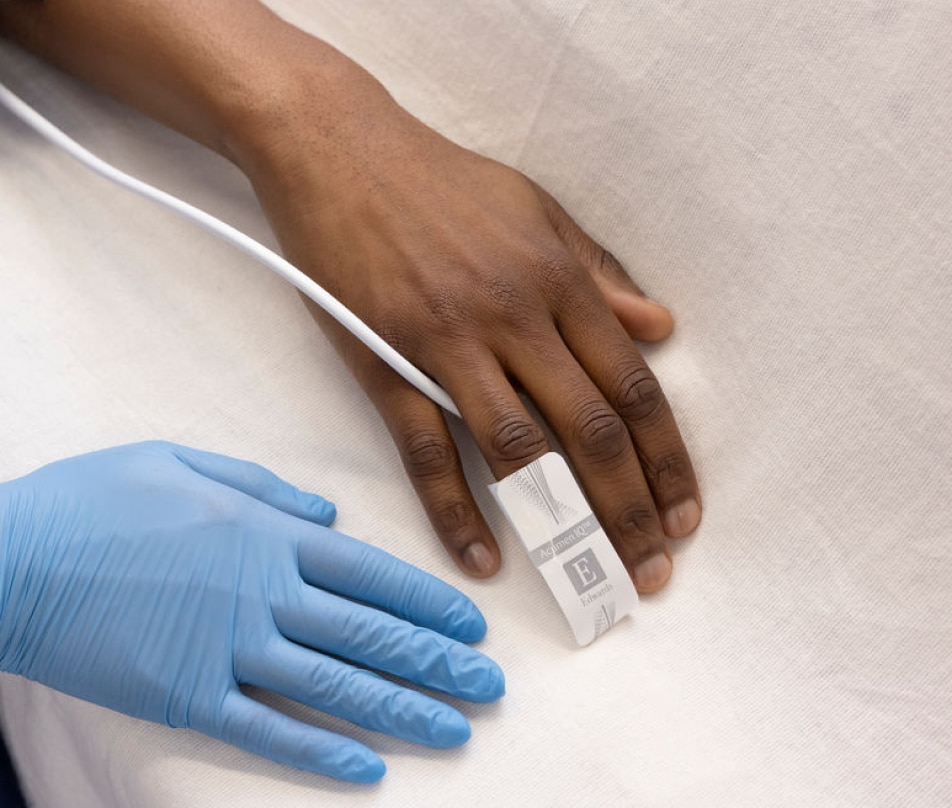
Acumen IQ™ Plus Finger Cuff
For patients who don't otherwise require an arterial line, unlock beat-to-beat blood pressure with accuracy comparable to a radial arterial line and predictive haemodynamic monitoring noninvasively.
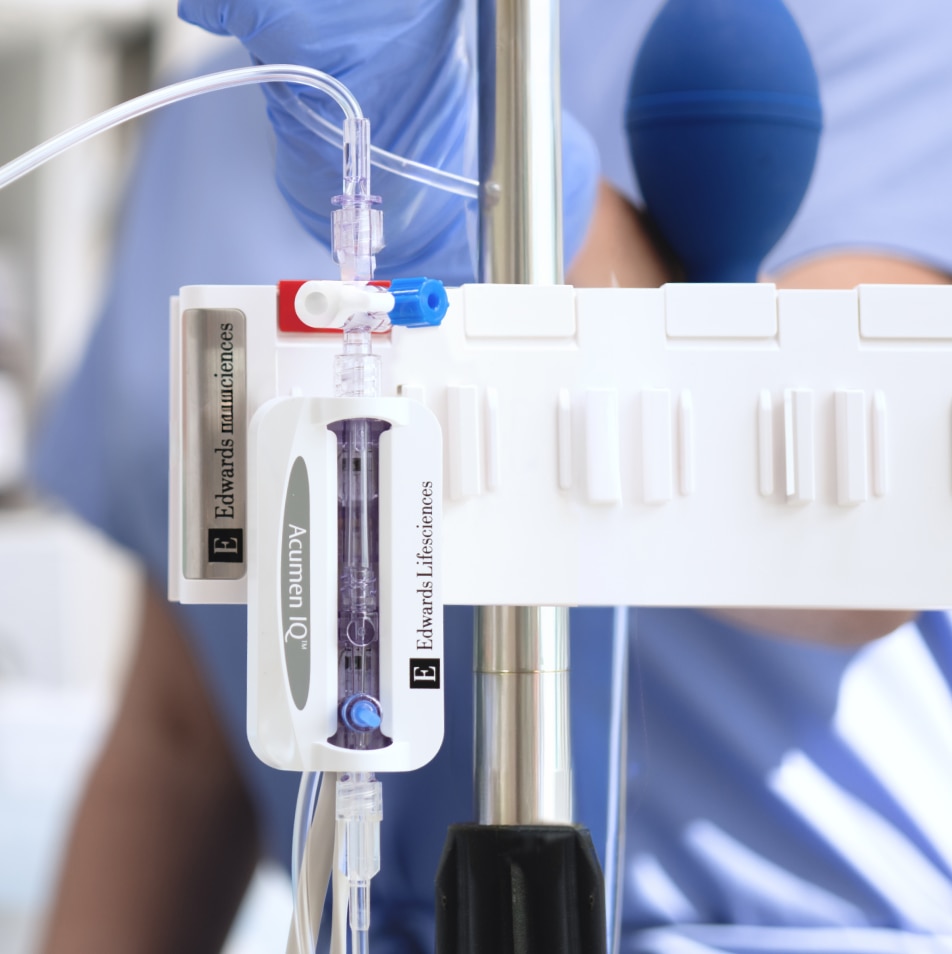
Acumen IQ™ Sensor
For patients with an arterial line, Acumen IQ™ Sensor unlocks advanced predictive decision support to help you optimise pressure and flow.


Access our extensive collection of informative product and educational resources, designed to keep you informed and help you achieve excellence.

BD Advanced Patient Monitoring is here to help you stay on top of the latest clinical challenges and make the most of haemodynamic monitoring solutions.

