

true
BD® Power-Trialysis™ Short-Term Triple-Lumen Dialysis Catheter
The power of three: utility, reliability, flexibility
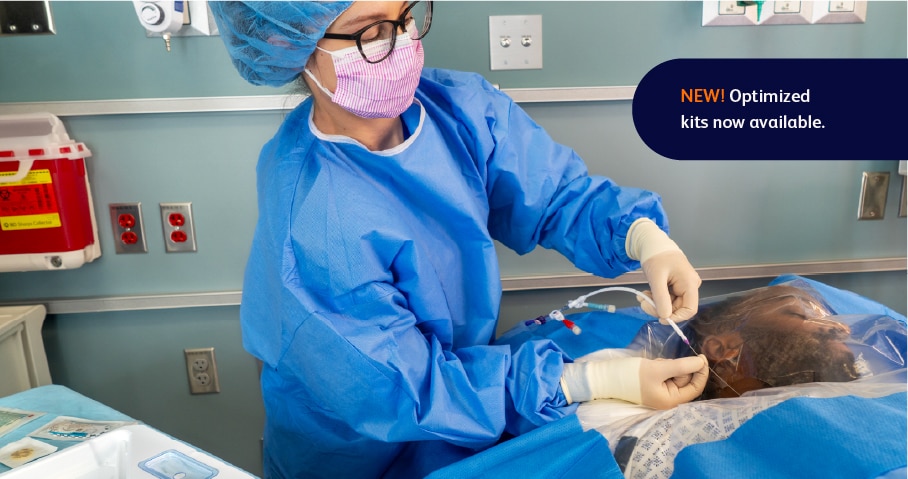

- Overview
- Optimized Kits
- Products & Accessories
- FAQ
- EIFU & Resources
Critically ill patients can’t afford interruptions to therapy
For ICU patients suffering from acute kidney injury, dialysis efficiency can directly influence an already fragile clinical picture. Differences in dialysis catheter performance may influence CRRT delivery, with potential implications for patient outcomes and healthcare costs.1

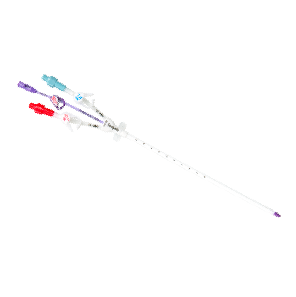
The BD® Power-Trialysis™ Short-Term Triple-Lumen Dialysis Catheter is designed for the realities of acute dialysis care, delivering reliable flow rates, demonstrated kink resistance and a completely independent 17-gauge third lumen to support central line-related care needs.
-
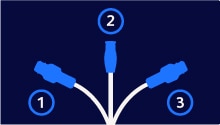
A third 17-gauge power-injectable lumen provides additional access for multiple therapies
-
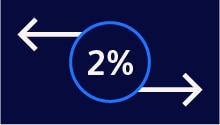
Symmetrical tip allows for 2% recirculation on average in both forward and reverse flows2
-

Oval catheter design resists kinking2
In two US hospitals (n=1,037), switching to Power-Trialysis™* resulted in improvement in several factors known to impact dialysis efficiency1:
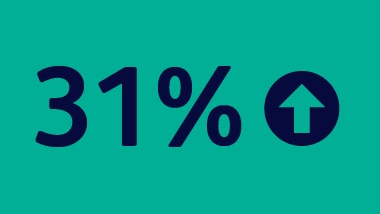
31% increase in circuit life†

20% decrease in vascular access-related interruptions†
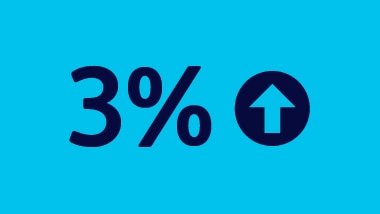
3% increase in blood flow rate†
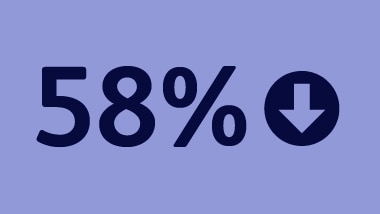
58% decrease in non-elective treatment terminations†
*Before the switch, the hospitals used: Mahurkar Elite IC Catheter Kit, 12 Fr x 13 cm, Curved, 3-Lumen Medtronic, Fridley, MN; Covidien Mahurkar Elite 12F Dual Lumen Catheter 16cm, curved, Kit Medtronic, Fridley, MN; High-Pressure Triple Lumen Acute Dialysis Catheter IC Tray, 20 cm, Curved Extensions, 12 Fr, Cardinal Health, Dublin, OH. Post-switch the hospitals utilized a single catheter: BD Power-Trialysis Short-Term Curved Extension Dialysis Catheter in full procedure trays, 15 cm and 20 cm Insertion lengths.1
†p<0.05
One catheter. Three critical advantages.

A third completely independent 17-gauge lumen provides additional access for infusion therapy, blood draws, central venous pressure monitoring and power injection of contrast media, helping clinicians manage multiple needs without additional lines.
- BD® Power-Trialysis™ Slim-Cath™ Catheter 12 Fr and Power-Trialysis™ Catheter 13 Fr available in multiple catheter insertion lengths of 12.5 cm, 15 cm, 20 cm, 24 cm and 30 cm (lengths vary per catheter configuration)
- Straight, curved and BD® Alphacurve™ Catheter configurations
- Standard kit and full max barrier tray options

The Power-Trialysis™ Catheter demonstrated a reliable flow rate up to 400 mL/min and recirculation of 2% in both forward and reverse flows through simulated testing.**
**As demonstrated through simulated testing. Results may not be indicative of actual clinical performance. Different tests may yield different results.

The oval catheter shaft design demonstrated better kink resistance than competitive triple-lumen dialysis catheters.‡,2
- A thermosensitive polyurethane catheter shaft provides stiffness during insertion, but softens at body temperature
- The Power-Trialysis™ Slim-Cath™ Catheter 12 Fr demonstrated ~46% smaller kink diameter than a competitor‡,2
‡As demonstrated through simulated testing. Bench test results may not necessarily be indicative of clinical performance.
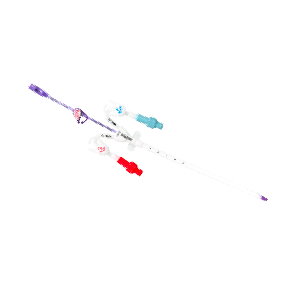
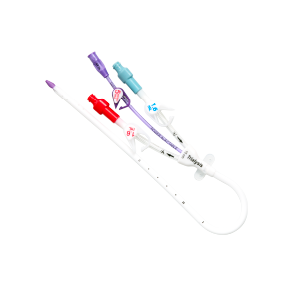
Gravity flow rate of the central lumen
Straight catheter and curved extension legs | Alphacurve™ Catheter | Slim-Cath™ Catheter | |||
Insertion length | Gravity flow rate | Insertion length | Gravity flow rate | Insertion length | Gravity flow rate |
30 cm | 2258 mL/hr | -- | -- | 30 cm | 2376 mL/hr |
| 24 cm | 2634 mL/hr | 24 cm | 2149 mL/hr | 24 cm | 2773 mL/hr |
| 20 cm | 2830 mL/hr | 20 cm | 2387 mL/hr | 20 cm | 3081 mL/hr |
| 15 cm | 3333 mL/hr | 15 cm | 2539 mL/hr | 15 cm | 3656 mL/hr |
| 12.5 cm | 3721 mL/hr | 12.5 cm | 3092 mL/hr | 12.5 cm | 3922 mL/hr |
- Gilmore NT, Alsbrooks K, Hoerauf K. The Association Between Catheter Type and Dialysis Treatment: A Retrospective Data Analysis at Two U.S.-Based ICUs. Crit Care Explor. 2023;5(1):e0795. Published 2023 Jan 6. doi:10.1097/CCE.0000000000000795.
- BD data on file.
Built around the realities of acute dialysis care

With updated components and a sequentially ordered format, the optimized BD® Power-Trialysis™ Max Barrier Plus dialysis kits are designed to help support streamlined workflows in acute dialysis care.
Standard insertion kits and full max barrier tray configurations are also available to support varying clinical preferences and procedural needs.
The components clinicians rely on, together in one place

- Our full max max barrier trays and max barrier plus kits were designed with INS CVAD insertion practice guidance1 in mind, and include components needed to insert a CVAD using maximal barrier precautions
- Enables clinicians to facilitate compliance with federal regulations and guidelines
Power-Trialysis™ Short-Term Dialysis Catheter (Max Barrier Plus Kit Contents)
Qty | Component | Qty | Component |
1 | Power-Trialysis™ Short-Term Dialysis Catheter | 1 | Needle, safety hypodermic 23 G (0.6 mm OD x 38 mm length) |
| 1 | Bouffant cap | 1 | Needle, safety hypodermic 23 G 1.5" |
| 1 | Suture 3.0, silk | 1 | Safety scalpel |
| 3 | End Cap | 1 | Introducer Safety Needle, 18 G (1.3 mm OD, 1.0 mm ID) x 70 mm |
| 3 | Sodium Chloride (saline) 0.9%, 10 mL pre-filled syringe | 1 | Syringe, 5mL, luer lock |
| 8 | Gauze, 10 cm x 10 cm (4 in. x 4 in.) | 1 | Adhesive Dressing with CHG* |
| 2 | Mask | 1 | BD® GuardIVa™ Antimicrobial Hemostatic IV Dressing* |
| 1 | Needle holder | 1 | BIOPATCH™ Antimicrobial Disk* |
| 1 | Dualator Dilator, 12–14F (4.7 mm OD, 1.0 mm ID, 21 cm length) | 1 | Probe cover bundle: 48 in. (122 cm) probe cover, elastic bands, and conductive gel (sterilized by irradiation) |
| 1 | Dualator Dilator, 11–13F (4.4 mm OD, 1.0 mm ID, 15 cm length) | 1 | Temporary sharps holder |
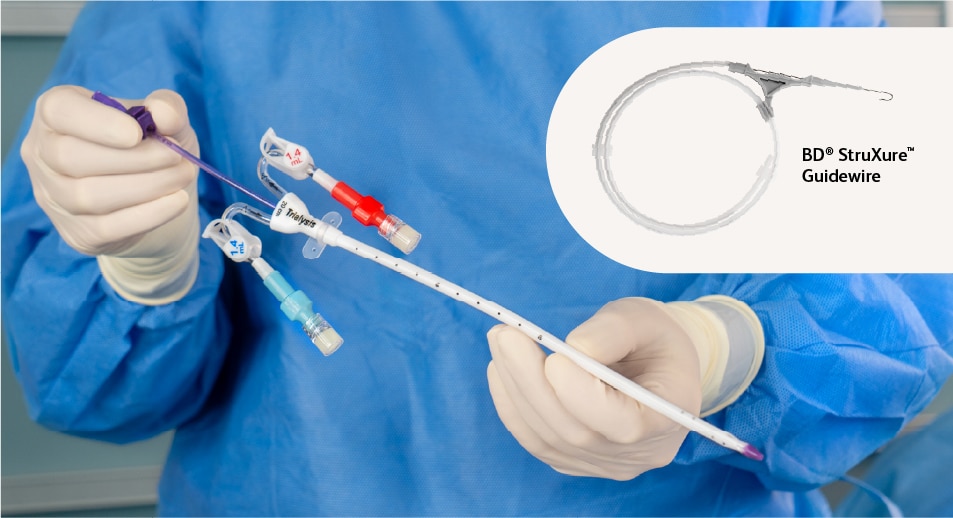
| 1 | BD® StruXure™ Guidewire, "J" Tip (3 mm Radius), 0.88 mm (0.035 in.) OD x 70 cm | 2 | BD® ChloraPrep™ Solution One-Step Applicator (Tinted), 3 mL, pouched |
| 1 | Gown | 1 | Extension Set 21 in. length |
| 1 | Gloves (1 pair) | 1 | Aspiration device |
| 1 | Drape, fenestrated | 1 | Lidocaine HCl 1%, 5 mL Ampule |
| 1 | Needle, safety hypodermic 25 G (0.5 mm OD x 16 mm length) | 1 | Attachable Suture Wing |
*select configurations only
- Nickel B, Gorski L, Kleidon T, et al. Infusion Therapy Standards of Practice, 9th Edition. J Infus Nurs. 2024;47(1S Suppl 1):S1-S285. doi:10.1097/NAN.0000000000000532.
Sort by:


Sort by:


A surgical gown.
Contrast-induced nephropathy is most commonly defined as an elevation of serum creatinine of more than 25% or greater than or equal to 0.5mg/dl from baseline within 48 hours.
The rate of recirculation is less than 2% on average in both forward and reverse directions, when tested in-vitro. *
*As demonstrated through simulated testing. Results may not be indicative of actual clinical performance. Different tests may yield different results.
Power-Trialysis comes in straight curved and alpha curved configurations.
The extension legs are polyurethane. The catheter shaft and tip are made from thermosensitive bodysoft polyurethane which softens at body temperature.
Power-Trialysis and Power-Trialysis Slim-Cath flow rate is 400 mL/min. for both straight and curved. The Power-Trialysis Alphacurve® flow rate is 350mL/min.
No, there are no repair kits for Power-Trialysis catheters.
Each Power-Trialysis kit and tray includes a 11-13 Fr. and a 12-14 Fr. dualator vessel dilator. Two dilators are provided to progressively help widen the insertion site.
The Power-Trialysis catheter luer-lock connector and exit site are compatible with povidone iodine, chlorhexidine gluconate 2% solution, chlorhexidine gluconate 4% solution, 0.55% sodium hypochlorite solution, hydrogen peroxide, chlorhexidine patches, and bacitracin zinc ointments in petrolatum bases. Refer to the instructions for use for a detailed list of warnings.
The catheter tip must be in the lower superior vena cava for optimal performance. If placed femorally, the catheter tip should be placed in the inferior vena cava to minimize recirculation. Catheters greater than 24 cm are intended for femoral vein insertion. CAUTION: For jugular and subclavian insertion, the catheter tip should not be located in the right atrium. WARNING: Verification of the catheter tip location must be confirmed by x-ray.
The physician will determine this based on the patients needs. The third lumen Power-Trialysis catheter can be used for other therapies concurrent with dialysis. The third lumen is completely independent from the two dialysis lumens and is indicated for power injection of contrast media, and central venous pressure monitoring, and can be used for blood draws and medication delivery without the need for separate access.
The third lumen should be locked per hospital protocol for central lines. The priming volume is printed on the extension leg. WARNING: Alcohol should not be used to lock, soak or declot polyurethane Dialysis Catheters because alcohol is known to degrade polyurethane catheters over time with repeated and prolonged exposure.
The largest guidewire that may be used is a 0.035 in (0.89 mm).
The catheter shaft is oval for two reasons. First, the oval shaft improves the catheter’s kink resistance. Second, the oval shape allows for the internal kidney-shaped lumen design which provides high flow rates of 400 mL/min.

true

Literature
Our collection of literature on industries and on our offerings gives you information you can use to continue striving for excellence.
Learn more
true
true