


*BD data on file. Data generated in a head-to-head preclinical model. Data may not correlate to performance in humans.
true

Support
Sales

1.844.8.BD.LIFE (1.844.823.5433)
Thank you for contacting our sales team!
A sales representative will get in touch with you shortly.
Ordering
1.800.556.6756

BDISurgery@bd.com
Onsite Visiting

100 Crossings Boulevard Warwick, Rhode Island 02886 United States
Customer Service
1.844.8.BD.LIFE (1.844.823.5433)
Monday to Friday 8:15 AM to 6:00 PM EST

1.800.531.4124
Custserv.davol@bd.com
Shipping a Product Back
100 Crossings Boulevard, Warwick, Rhode Island 02886, United States


- Overview
- EIFU & Resources
Delivering the power of collagen with the performance of a flowable

Only Avitene™ Flowable combines the unique properties of collagen with the convenience of a flowable format, offering reliable performance, simplified preparation and economic value that align with your system’s needs, all in one efficient solution.

Collagen-driven hemostasis
Directly activates platelets, promotes platelet aggregation and adhesion and supports fibrin formation to create a stable clot, without the need for thrombin

Performance where it matters
Achieves equivalent time to hemostasis as FLOSEAL® and SURGIFLO®*

Stays where it should
Adequate tissue adherence and no migration or swelling while achieving hemostasis in uneven and hard-to-reach areas*

Economically efficient by design
Helps reduce procedural spend and supports value-driven decision-making across surgical specialties
Collagen doesn’t just support hemostasis—it actively drives it
Avitene™ Flowable harnesses the unique properties of Avitene™ Microfibrillar Collagen Hemostat (MCH) to accelerate clot formation across a broad spectrum of surgical specialties, without the need for thrombin.
How collagen differs from gelatin
Unlike gelatin-based hemostats, which act as delivery mechanisms for thrombin, Avitene™ MCH triggers both primary and secondary hemostasis, actively playing a role in the coagulation cascade.
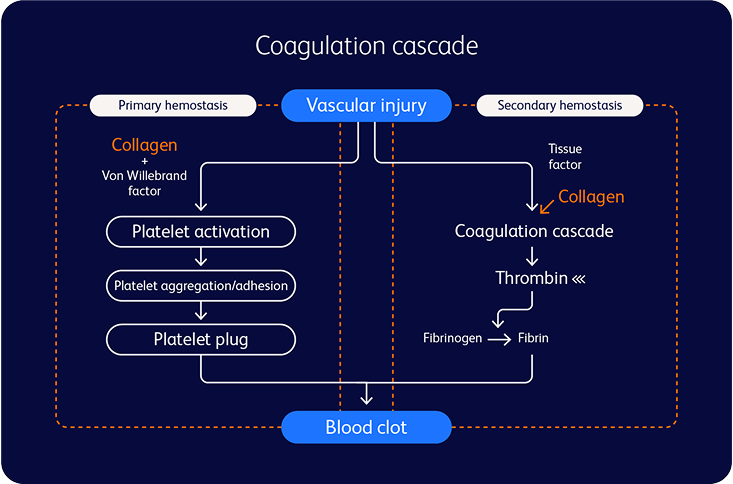
- Primary: Collagen binds to and directly activates platelets and serves as a scaffolding for platelet aggregation and adhesion
- Secondary: Collagen binds to and activates factor XII, which is necessary for thrombin activation to help form a stable fibrin clot
Demonstrated performance in preclinical studies

Equivalent hemostasis

Safe and effective

Favorable healing
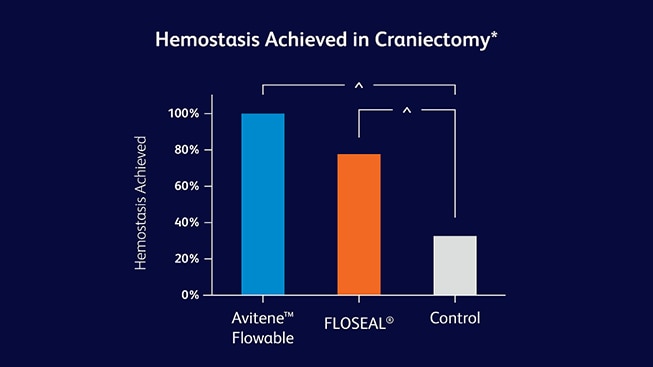
Shown to achieve equivalent hemostasis as FLOSEAL®*
*BD data on file. Data generated in a head-to-head preclinical model. Data may not correlate to performance in humans.
^ p-value Avitene™ Flowable vs. Control <0.0001
^ p-value FLOSEAL® vs. Control 0.0176
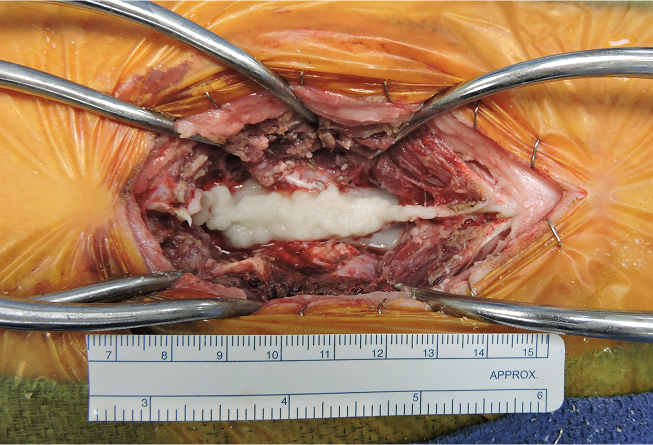
Demonstrated to be safe and effective when in direct contact with the spinal cord*
*BD data on file. Data generated in a head-to-head preclinical model. Data may not correlate to performance in humans.
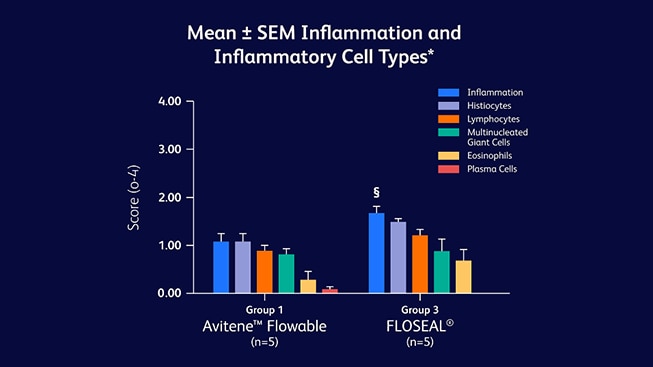
Associated with favorable tissue response by demonstrating a lower inflammatory response compared to FLOSEAL® in a cardiovascular model, and is not a nidus for infection*
*BD data on file. Data generated in a head-to-head preclinical model. Data may not correlate to performance in humans.

§ = Statistically significant (p < 0.05) when compared to Group 1
From prep to placement, Avitene™ Flowable delivers efficiency and precision, even in hard-to-reach anatomy and uneven anatomical surfaces

From prep...
- Ready to use immediately after mixing
- ~60% faster preparation time compared to FLOSEAL®*
- No thrombin required

To placement
- Does not swell1
- Designed to be used in difficult to access areas
- Flexible applicator tip designed to enable precise delivery
- Provides complete coverage of rough, uneven or irregular wound surfaces
- Shown not to migrate†
Sort by:
-

Avitene™ Microfibrillar Collagen Hemostat 5 g
Avitene™ Microfibrillar Collagen Hemostat 5g aids the process of bleeding control, adheres to irregular spaces, and is available in various sizes.
-
Avitene™ Microfibrillar Collagen Hemostat 1 g
Avitene™ Microfibrillar Collagen Hemostat 1g aids the process of bleeding control, adheres to irregular spaces, and is available in various sizes.
-
Avitene™ Microfibrillar Collagen Hemostat 0.5 g
Avitene™ Microfibrillar Collagen Hemostat 0.5g aids the process of bleeding control, adheres to irregular spaces, and is available in various sizes.
-
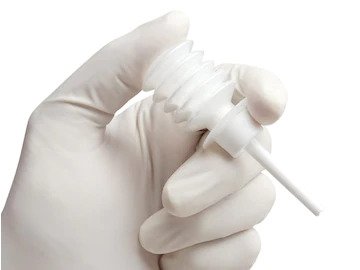
Absorbable Hemostatic Particles
-

BD hemostats come in various forms that all help accelerate natural clot formation in many surgical applications. They facilitate use with features such as preloaded applicators and ready-to-use designs.
-
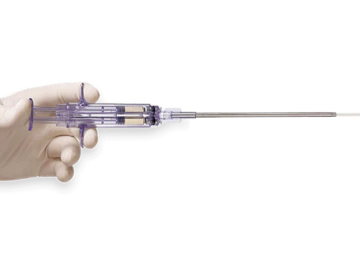
BD sealants are designed to meet the needs of clinicians in thoracic and aortic surgery
-
We offer a full portfolio of surgical products
Indications:
Avitene™ Microfibrillar Collagen Hemostat (MCH) and Avitene™ UltraFoam™ sponge are indicated in surgical procedures as an adjunct to hemostasis when control of bleeding by ligature or conventional procedures is ineffective or impractical.
Contraindications:
- Avitene™ MCH and Avitene™ UltraFoam™ sponge should not be used in the closure of skin incisions as they may interfere with the healing of the skin edges. This is due to simple mechanical interposition of dry collagen and not to any intrinsic interference with wound healing.
- It has been reported with other collagen hemostatic agents, that by filling porosities of cancellous bone, they may significantly reduce the bond strength of methylmethacrylate adhesives. Avitene™ MCH and Avitene™ UltraFoam™ sponge should not, therefore, be employed on bone surfaces to which prosthetic materials are to be attached with methylmethacrylate adhesives.
Warnings:
- Avitene™ MCH and Avitene™ UltraFoam™ are inactivated by autoclaving.
- Ethylene oxide reacts with bound hydrochloric acid to form ethylene chlorohydrin.
- These devices have been designed for single use only. Reuse, reprocessing, resterilization or repackaging may compromise the structural integrity and/or essential material and design characteristics that are critical to the overall performance of the devices and may lead to device failure which may result in injury to the patient. Reuse, reprocessing, resterilization or repackaging may also create a risk of contamination of the device and/or cause patient infection or cross infection, including, but not limited to, the transmission of infectious diseases from one patient to another. Contamination of the devices may lead to injury, illness or death of the patient or end user. Opened, unused product should be discarded.
- Moistening Avitene™ MCH or wetting with saline or thrombin impairs its hemostatic efficacy. It should be used dry.
- As with any foreign substance, use of Avitene™ MCH and Avitene™ UltraFoam™ in contaminated wounds may enhance infection.
- Avitene™ UltraFoam™ sponge should not be used in instances of pumping arterial hemorrhage.
- Avitene™ UltraFoam™ should not be used where blood or other fluids have pooled, or in cases where the point of hemorrhage is submerged as it may mask an underlying source of bleeding, resulting in hematoma.
- Avitene™ UltraFoam™ sponge will not act as a tampon or plug in a bleeding site, nor will it close off an area of blood collecting behind a tampon.
- Avitene™ UltraFoam™ sponge is not intended to treat systemic coagulation disorders.
- Avitene™ MCH and Avitene™ UltraFoam™ are not for injection, intraocular or intravascular use.
Adverse Reactions:
- The most serious adverse reaction reported which may be related to the use of Avitene™ MCH or other collagen products are potentiation of infection including abscess formation, hematoma, wound dehiscence and mediastinitis.
- Other reported adverse reactions possibly related are adhesion formation, allergic reaction, foreign body reaction and subgaleal seroma (report of a single case) and increased incidence of alveolalgia when used for packing of dental extraction sockets.
- Transient laryngospasm due to aspiration of dry material has been reported following use of Avitene™ MCH in tonsillectomy.
Please consult package insert for more detailed safety information and instructions for use.
true

true

Literature
Our collection of literature on industries and on our offerings gives you information you can use to continue striving for excellence.
Learn more

Events
We support the healthcare industry with market-leading products and services that aim to improve care while lowering costs. We host and take part in events that excel in advancing the world of health™.
Learn more

Training
The BD Learning Academy offers a centralized repository of BD product training, education, and the ability to connect courses to your LMS.
Learn More

Case Studies
We promote clinical excellence by providing various resources on best practices, clinical innovations and industry trends in healthcare.
Learn more
true
Indications:
Avitene™ Microfibrillar Collagen Hemostat (MCH) and Avitene™ UltraFoam™ sponge are indicated in surgical procedures as an adjunct to hemostasis when control of bleeding by ligature or conventional procedures is ineffective or impractical.
Contraindications:
- Avitene™ MCH and Avitene™ UltraFoam™ sponge should not be used in the closure of skin incisions as they may interfere with the healing of the skin edges. This is due to simple mechanical interposition of dry collagen and not to any intrinsic interference with wound healing.
- It has been reported with other collagen hemostatic agents, that by filling porosities of cancellous bone, they may significantly reduce the bond strength of methylmethacrylate adhesives. Avitene™ MCH and Avitene™ UltraFoam™ sponge should not, therefore, be employed on bone surfaces to which prosthetic materials are to be attached with methylmethacrylate adhesives.
Warnings:
- Avitene™ MCH and Avitene™ UltraFoam™ are inactivated by autoclaving.
- Ethylene oxide reacts with bound hydrochloric acid to form ethylene chlorohydrin.
- These devices have been designed for single use only. Reuse, reprocessing, resterilization or repackaging may compromise the structural integrity and/or essential material and design characteristics that are critical to the overall performance of the devices and may lead to device failure which may result in injury to the patient. Reuse, reprocessing, resterilization or repackaging may also create a risk of contamination of the device and/or cause patient infection or cross infection, including, but not limited to, the transmission of infectious diseases from one patient to another. Contamination of the devices may lead to injury, illness or death of the patient or end user. Opened, unused product should be discarded.
- Moistening Avitene™ MCH or wetting with saline or thrombin impairs its hemostatic efficacy. It should be used dry.
- As with any foreign substance, use of Avitene™ MCH and Avitene™ UltraFoam™ in contaminated wounds may enhance infection.
- Avitene™ UltraFoam™ sponge should not be used in instances of pumping arterial hemorrhage.
- Avitene™ UltraFoam™ should not be used where blood or other fluids have pooled, or in cases where the point of hemorrhage is submerged as it may mask an underlying source of bleeding, resulting in hematoma.
- Avitene™ UltraFoam™ sponge will not act as a tampon or plug in a bleeding site, nor will it close off an area of blood collecting behind a tampon.
- Avitene™ UltraFoam™ sponge is not intended to treat systemic coagulation disorders.
- Avitene™ MCH and Avitene™ UltraFoam™ are not for injection, intraocular or intravascular use.
Adverse Reactions:
- The most serious adverse reaction reported which may be related to the use of Avitene™ MCH or other collagen products are potentiation of infection including abscess formation, hematoma, wound dehiscence and mediastinitis.
- Other reported adverse reactions possibly related are adhesion formation, allergic reaction, foreign body reaction and subgaleal seroma (report of a single case) and increased incidence of alveolalgia when used for packing of dental extraction sockets.
- Transient laryngospasm due to aspiration of dry material has been reported following use of Avitene™ MCH in tonsillectomy.
Please consult package insert for more detailed safety information and instructions for use.
true
Indications for Use: Avitene™ Flowable Collagen Hemostat is used in surgical procedures (other than ophthalmic and urological) as an adjunct to hemostasis when control of bleeding by ligature or conventional procedures is ineffective or impractical.
Contraindications: Avitene™ Flowable Collagen Hemostat should not be used in the closure of skin incisions as it may interfere with the healing of the skin edges. This is due to simple mechanical interposition of collagen and not to any intrinsic interference with wound healing. Do not use Avitene™ Flowable Collagen Hemostat in intravascular compartments because of the risk of embolization. Do not use Avitene™ Flowable Collagen Hemostat in patients with known allergies to materials of bovine origin. It has been reported with other collagen hemostatic agents, that by filling porosities of cancellous bone, they may significantly reduce the bond strength of methylmethacrylate adhesives. Avitene™ Flowable Collagen Hemostat should not, therefore, be employed on bone surfaces to which prosthetic materials are to be attached with methylmethacrylate adhesives.
Warnings: Do not inject or compress Avitene™ Flowable Collagen Hemostat into blood vessels. Avitene™ Flowable Collagen Hemostat is not for intraocular use. Having not been studied, the safety and effectiveness of Avitene™ Flowable Collagen Hemostat in urological procedures has not been established. Having not been studied, the safety and effectiveness of Avitene™ Flowable Collagen Hemostat when used in conjunction with thrombin has not been established. As with any foreign substance, use in contaminated wounds may enhance infection. The safety and effectiveness of Avitene™ Flowable Collagen Hemostat has not been established in infants, children, pregnant and/or breastfeeding women. Avitene™ Flowable Collagen Hemostat should not be used for the primary treatment of coagulation disorders. Avitene™ Flowable Collagen Hemostat is for single use only. Reuse, resterilization, reprocessing and/or repackaging may compromise the essential material and design characteristics that are critical to the overall performance of the device and may lead to device failure, which may result in injury to the patient. Reuse, reprocessing, resterilization, or repackaging may also create a risk of contamination of the device and/or cause patient infection or cross infection, including, but not limited to, the transmission of infectious diseases from one patient to another. Contamination of the device may lead to injury, illness, or death of the patient or end user.
Precautions: Only the minimum amount of Avitene™ Flowable Collagen Hemostat needed to achieve hemostasis should be used. Once hemostasis is achieved, any excess Avitene™ Flowable Collagen Hemostat should be carefully removed. Failure to remove excess Avitene™ Flowable Collagen Hemostat may result in bowel adhesion or mechanical pressure sufficient to compromise the ureter. Avitene™ Flowable Collagen Hemostat contains a low, but detectable, level of intercalated bovine serum protein which reacts immunologically as does bovine serum albumin (BSA). Increases in anti-BSA titer have been observed following treatment with other collagen hemostatic agents. About two-thirds of individuals exhibit antibody titers because of ingestion of food products of bovine origin. The risk with respect to transmissible spongiform encephalopathies (TSE) has been minimized in accordance with regulatory guidelines. Intradermal skin tests have occasionally shown a weak positive reaction to BSA or MCH, but these have not been correlated with lgG titers to BSA. Tests have failed to demonstrate clinically significant elicitation of antibodies of the lgG class against BSA following MCH therapy. Care should be exercised to avoid spillage on nonbleeding surfaces, particularly in abdominal or thoracic viscera. Avitene™ Flowable Collagen Hemostat should not be used in conjunction with autologous blood salvage circuits, as Avitene™ Flowable Collagen Hemostat may pass through the filters of such systems. Therefore the reintroduction of blood from operative sites treated with Avitene™ Flowable Collagen Hemostat should be avoided. Avoid packing Avitene™ Flowable Collagen Hemostat tightly in cavities, especially within the bony enclosure of the central nervous system or within other relatively rigid cavities where swelling may interfere with normal function or possibly cause necrosis. Only physicians qualified in the appropriate surgical techniques should use this device. Do not cut the malleable tip, as tissue injury from sharp edges may result. After use, this product may be a potential biohazard. Handle and dispose of in accordance with accepted medical practice and applicable local, state and federal laws and regulations.
Adverse Reactions: Any excess Avitene™ Flowable Collagen Hemostat not removed at the time of surgery may lead to a foreign body reaction that may present with or without clinical signs and symptoms, such as a recurring mass, space-occupying lesion or postoperative abscess formation upon imaging. Imaging may initially not be capable of distinguishing the difference, resulting in needless reoperation or invasive diagnostic procedures. These mass-like foreign body reactions may result in obstruction of cerebral spinal fluid aqueducts, resulting in hydrocephalus, clogging of drains, embolization, and obstruction of other tube-like anatomic structures including blood vessels, bile ducts, and/or lymphatic vessels in addition to the ureter. Removal of excess material, ideally performed upon conclusion of the initial procedure, typically resolves all signs and symptoms. The most serious adverse reactions reported that may be related to the use of Avitene™ MCH are potentiation of infection including abscess formation, hematoma, wound dehiscence and mediastinitis. Other reported adverse reactions possibly related are adhesion formation, allergic reaction, foreign body reaction and subgaleal seroma (report of a single case). The use of Avitene™ MCH in dental extraction sockets has been reported to increase the incidence of alveolalgia.
true