

ForeSight Jr™ Sensor
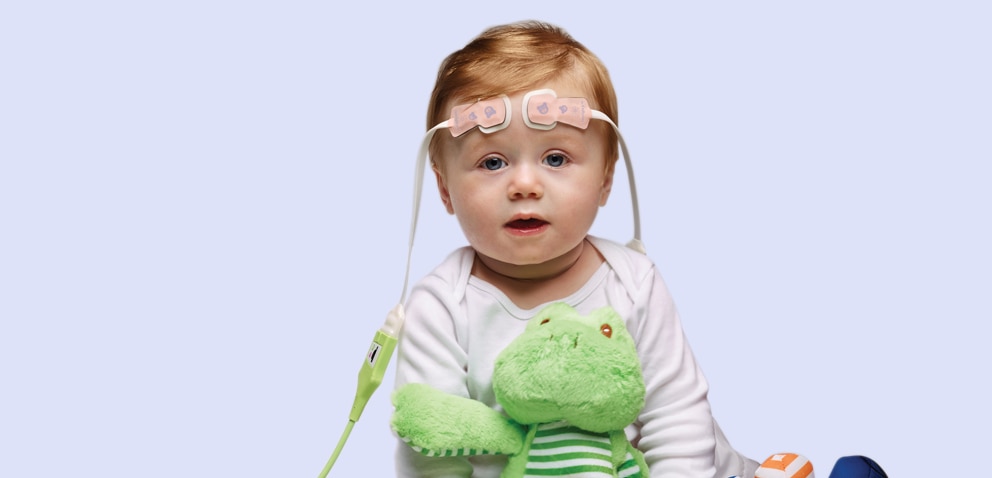
Every detail designed for pediatric patients from neonates to teenagers


- Overview
- Validated Accuracy
- EIFU & Resources
Helping you protect a lifetime of potential
When pediatric patients are in your care, you know that StO2 monitoring can have lifelong implications. You need a tissue oximetry sensor you can depend on.

Site-specific algorithm allows for monitoring flexibility*
ForeSight Jr™ Sensor is powered by a site-specific algorithm, enabling accurate values for cerebral and somatic monitoring.
- Cerebral StO2 calibrated and validated to jugular bulb samples (SjvO2)
- Somatic StO2 calibrated and validated to central venous samples (ScvO2)
- Monitor up to 4 simultaneous sensor locations, each with a site-specific algorithm
- While some competing systems can only trend somatic StO₂ in neonates, ForeSight Jr™ Small Sensor is validated to provide absolute StO₂ measurements on somatic sites
Fast, absolute readings for the dynamic needs of pediatrics
*When used with compatible monitor.

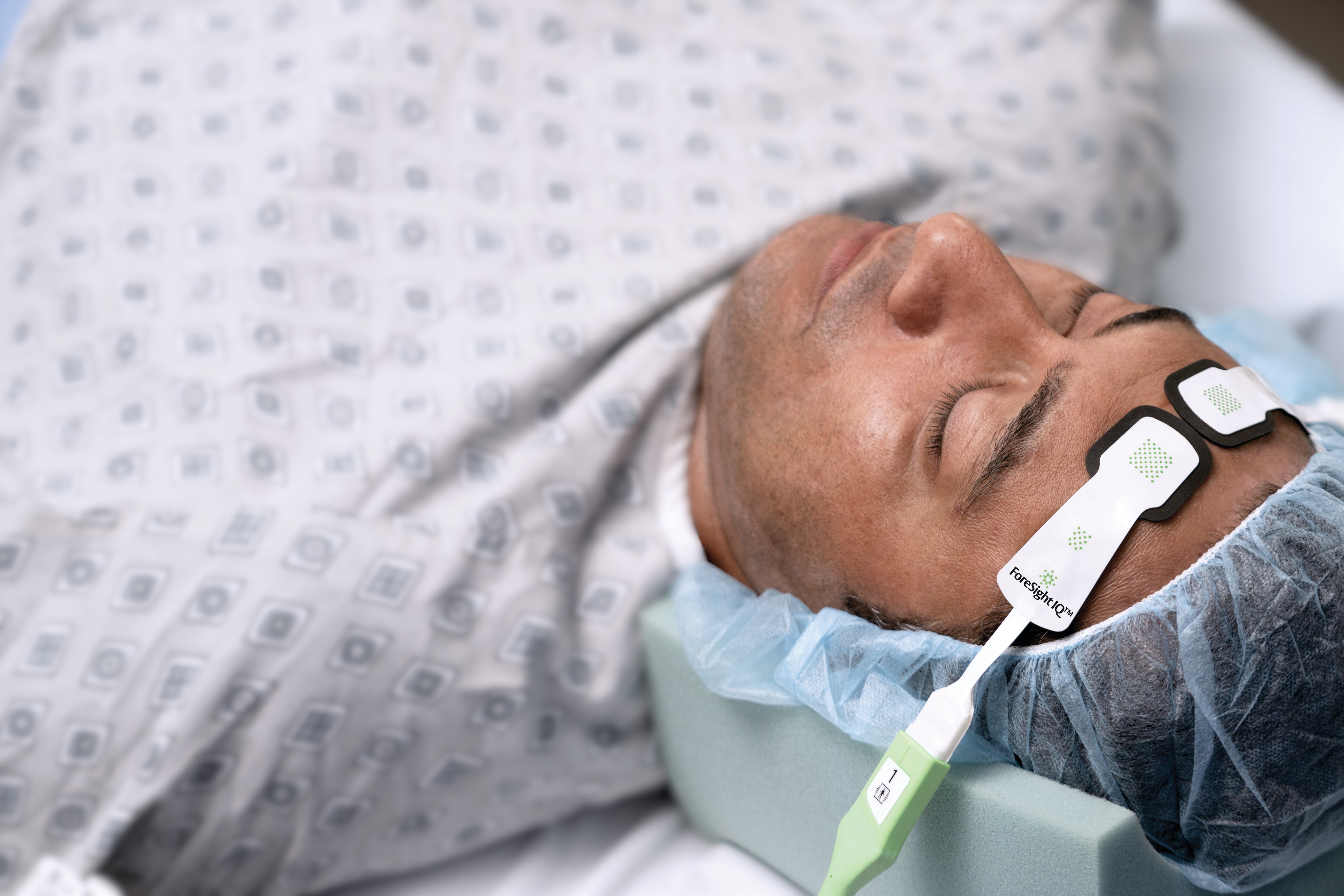
ForeSight Jr™ Sensor has been thoughtfully and specifically designed to provide reliable accuracy for pediatric patients
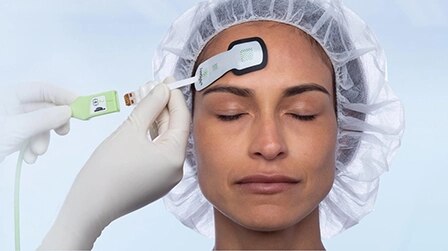
- Continuously monitor tissue oxygen saturation noninvasively in pediatric patients
- Uniquely compensates for bilirubin and meconium
- Compensates for darker skin tones
- Engineered for accuracy in pediatric patients with small and medium sizes

Designed with delicate infant skin in mind to minimize heat, pressure and adhesive impact
- Designed to minimize thermal energy, helping ensure patient comfort during monitoring.
- Patented cushioning layer is designed to soften surface contact and mitigate pressure points.
- In a controlled testing of both small and medium pediatric NIRS sensor, ForeSight Jr™ Sensors demonstrated the lowest sensor-to-skin temperature rise compared with all three competitor sensors.1

A unique nonadhesive solution is available with ForeSight Jr™ Sensor
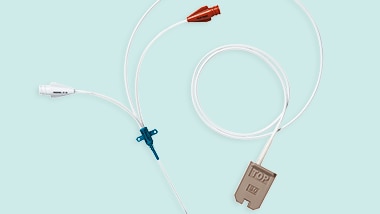
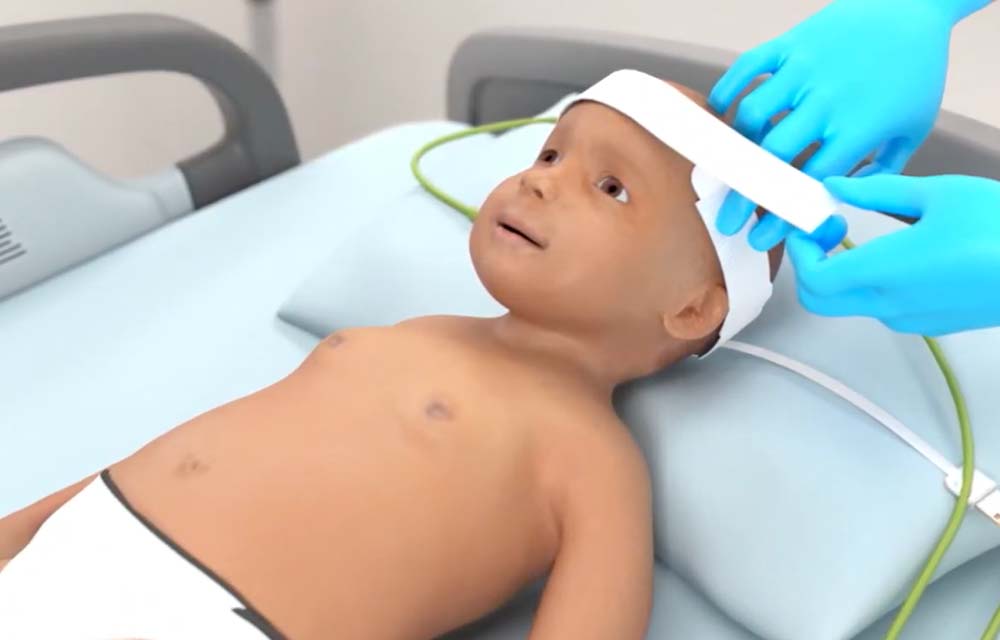
The small sensor is embedded into a customizable band designed for cerebral and somatic (abdomen, flank) applications, enabling nonadhesive StO2 monitoring for neonatal patients with fragile skin.
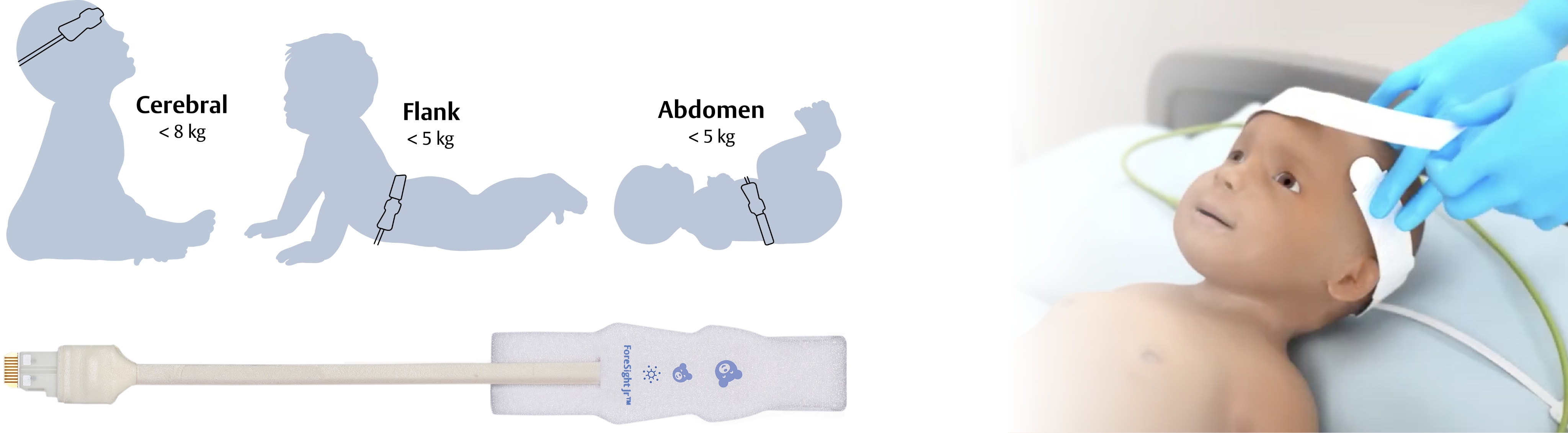
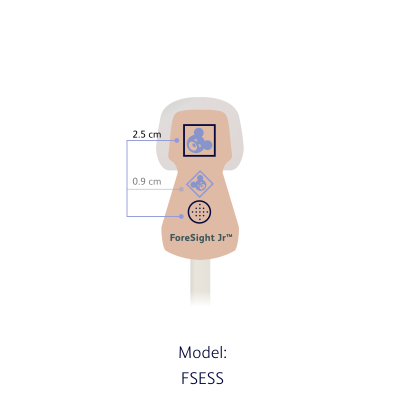
Cerebral: Patients <8 kg
Noncerebral: Patients <5 kg
Depth of penetration: 1.25 cm
20 sensors/box
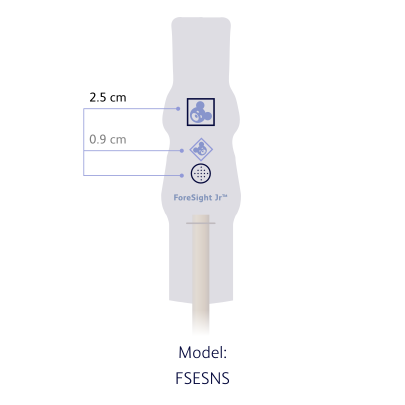
Cerebral: Patients <8 kg
Noncerebral: Patients <5 kg
Depth of penetration: 1.25 cm
10 sensors/box
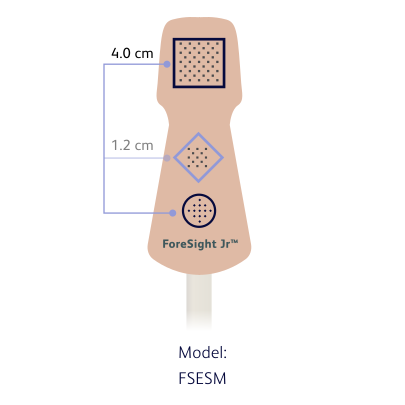
Cerebral:
Patients ≥3kg up to 18 y/o
Noncerebral: Patients ≥3kg
Depth of penetration: 2 cm
20 sensors/box

- Data on file. Bench testing conducted in a controlled environment on behalf of BD. These results may not fully reflect clinical performance.
Validated for fast, trusted accuracy for the unique needs of pediatric patients
The accuracy of some NIRS devices can be impacted by darker skin tones. For pediatric patients, the presence of bilirubin and meconium add additional challenges. ForeSight Jr™ Sensor has added a fifth wavelength of near-infrared light that compensates for these patient differences.
- Not affected by hyperbilirubinemia as demonstrated in living donor liver transplantation children (compared to a 2-wavelength system)1
- The underlying technology has been demonstrated to effectively and accurately manage melanin2
- Compensates for the optical properties of meconium in neonates to yield accurate measures of abdominal tissue oxygen saturation3

A neonatal NIRS sensor validated for both cerebral and somatic absolute tissue oximetry
ForeSight Jr™ Small Sensor is validated to provide absolute StO2 on somatic sites for neonates, while some competing systems limit somatic monitoring to trending.
| Cerebral | Small Sensor | Medium Sensor |
| Wt. Range (IFU) | <8 kg | ≥3 kg |
| Accuracy (Bias ± Precision @1sd)* | -0.74±5.98 | 0.97±5.43, 1.21±5.63†, 1.27±4.93‡ |
| StO2 Test Range | 44 to 90% | 44 to 91% |
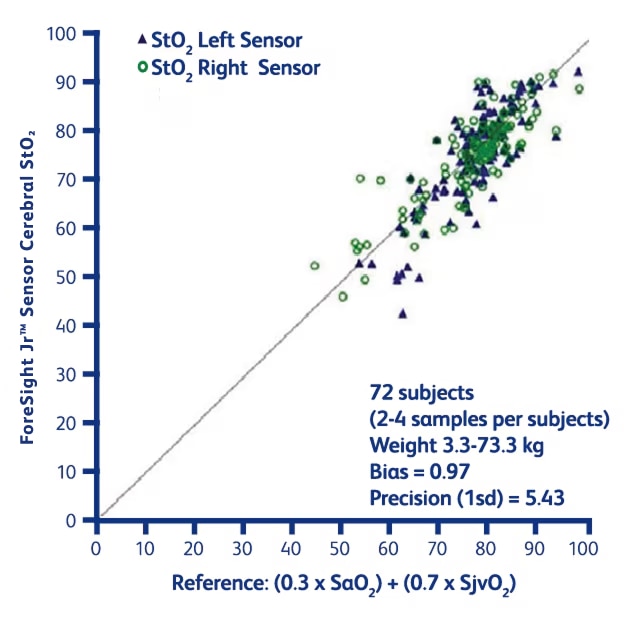
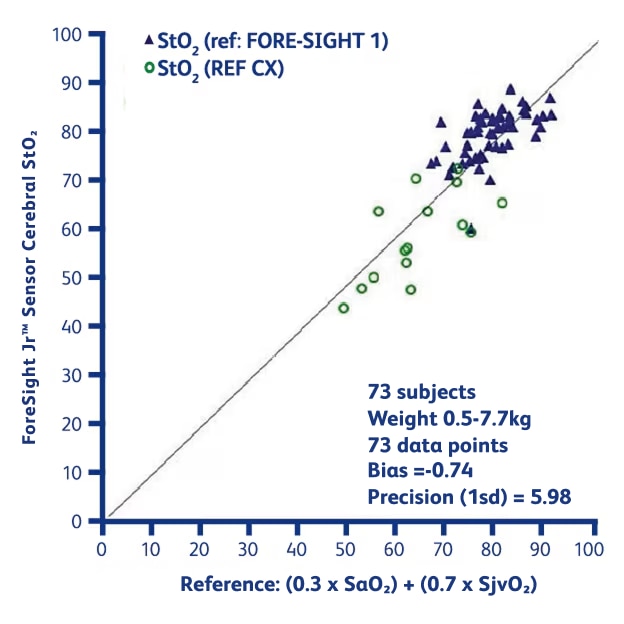
*Accuracy (Bias ± Precision) not determined outside of the listed ranges
†Dependent Data Bland-Altman
‡Brain StO2 values averaged versus REF CX Bias and Precisions
| Somatic | Small Sensor | Medium Sensor |
| Wt. Range (IFU) | <5 kg | ≥3 kg |
| Accuracy (Bias ± Precision @1sd)* | 2.35±5.25 | -0.14±5.75 |
| StO2 Test Range | 66 to 96% | 52 to 88% |
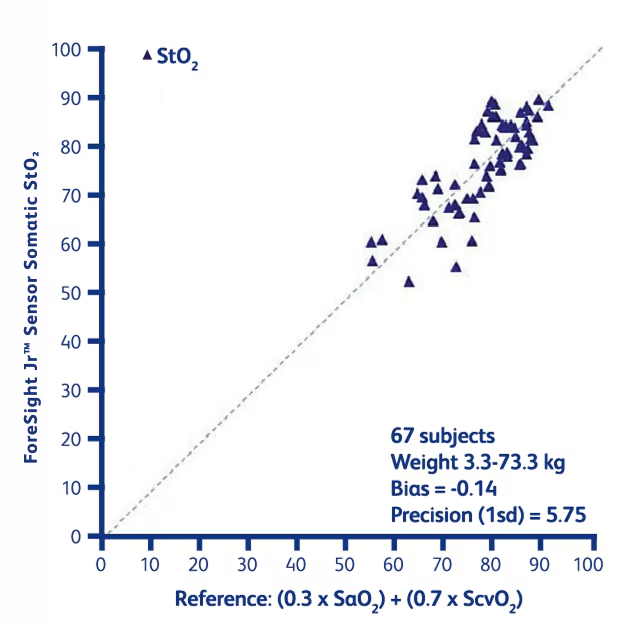
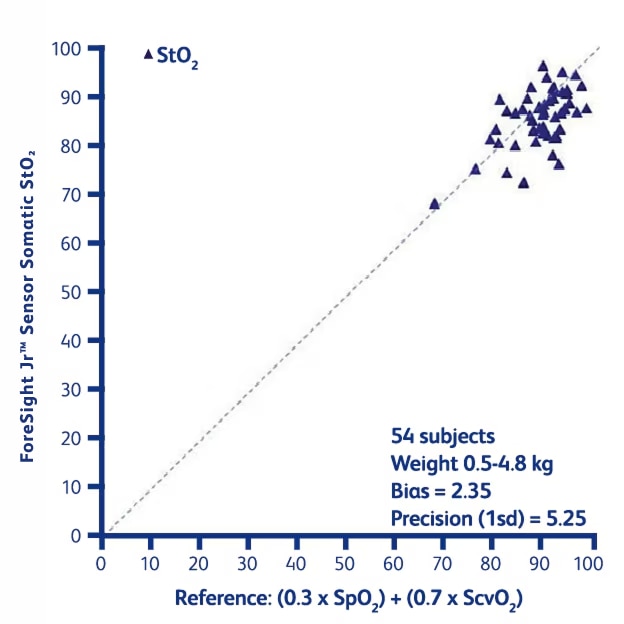
*Accuracy (Bias ± Precision) not determined outside of the listed ranges
†Dependent Data Bland-Altman
‡Brain StO2 values averaged versus REF CX Bias and Precisions
- Magasich-Airola NP, Momeni M, Sanchez Torres C, et al. Regional oxygen saturation measured by two different oximetry monitors in infants and children undergoing living donor liver transplantation with bilirubin measurements: A prospective observational study. Pediatr Anesth. 2023;33(2):201-210.
- Stannard B, Levin MA, Lin H, Weiner MM. Regional cerebral oximetry is consistent across self-reported racial groups and predicts 30-day mortality in cardiac surgery: a retrospective analysis. J Clin Monit Comput. 2020. https://doi.org/10.1007/s10877-020-00487-x
- Said MM, Niforatos N, Rais-Bahrami K. Validation of near infrared spectroscopy to measure abdominal somatic tissue oxygen saturation in neonates. J Neonatal Perinatal Med. 2013;6(1):23-30.



Access our extensive collection of informative product and educational resources, designed to keep you informed and help you achieve excellence.

BD Advanced Patient Monitoring is here to help you stay on top of the latest clinical challenges and make the most of hemodynamic monitoring solutions.
CAUTION: Federal (United States) law restricts this device to sale by or on the order of a physician.
See instructions for use for full prescribing information, including indications, contraindications, warnings, precautions and adverse events.