

- Exceptional performance
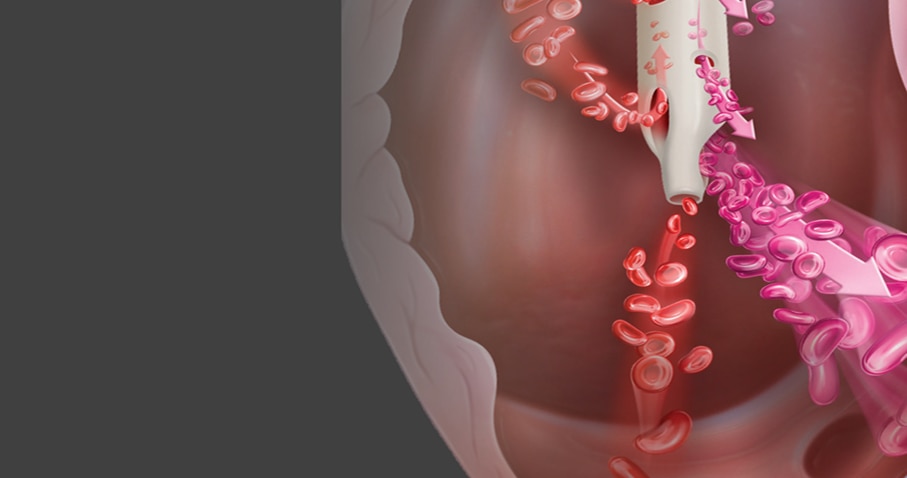
- Smooth tapered tip
- Tip designed to resist positional occlusion
- Improved inner lumen design
- Ease of Placement
- AirGuard™ Valved Introducer
- Straight and AlphaCurve™ configurations
true
GlidePath™ Long-Term Hemodialysis Catheters
Vascular access for hemodialysis, hemoperfusion or apheresis.

- Overview
- Performance
- Lumen Design
- Products & Accessories
- EIFU & Resources
Indicated for use in attaining short-term or long-term vascular access for hemodialysis, hemoperfusion or apheresis therapy.
We’ve taken the GlidePath™ catheter industry leading symmetric tip design and expanded the offering with a smaller French size and shorter lengths to serve patients more adequately.
- Designed to help achieve desired tip placement
- Catheter design has optimized lumens, which are designed to minimize deflection under pressure and improve flow performance
- AirGuard™ Valved Introducer helps reduce risk of air embolism
- One pre-loaded stylet to simplify over the-wire-placement
- Bifurcation hub is compatible with Statlock™ Stabilization Device to help stabilize catheter after placement

Features & Benefits
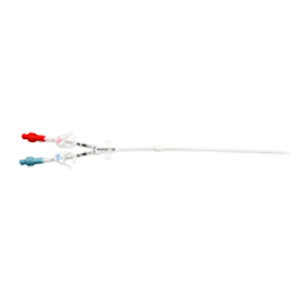
13F Straight
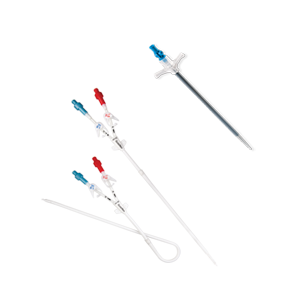
14.5F Alphacurve™ and 14.5 Straight
with AirGuard™ Valved Introducer
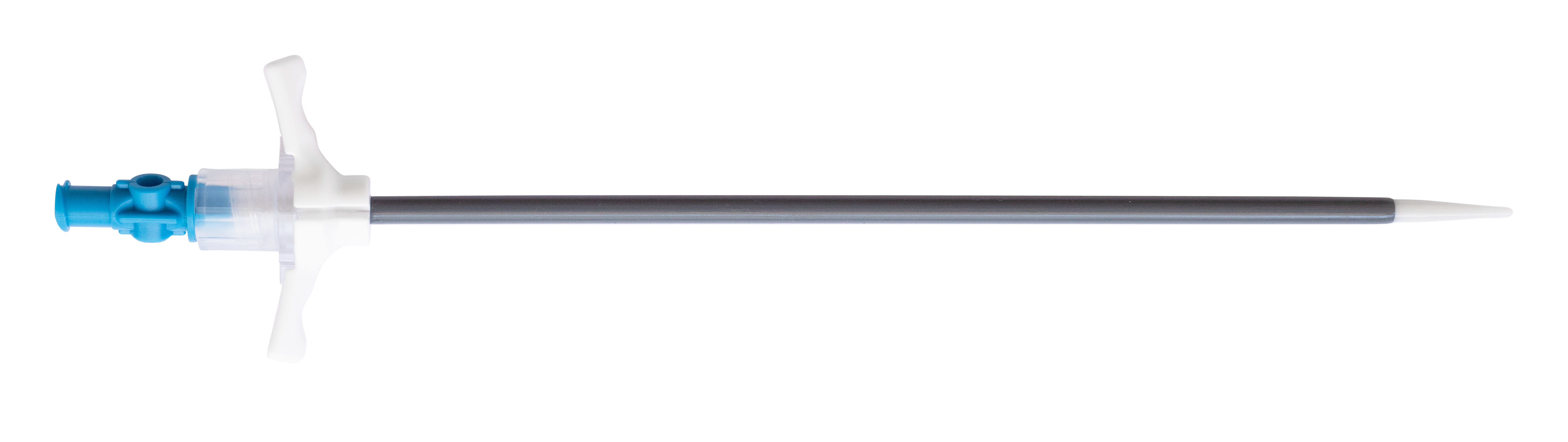
AirGuard™ Valved Introducer
The AirGuard™ Valved Introducer 13.5F sheath length is appropriately sized for small patient placement.
| Catheter Size | Introducer Size |
|---|---|
| 13F | 13.5F |
| 14.5F | 15F |
Higher Flow Rates, Lower Pressures
Average Max Flow Rate1
The GlidePath™ 13F and 14.5F hemodialysis catheters provide a full range of flow rates to meet the needs of patients on hemodialysis.

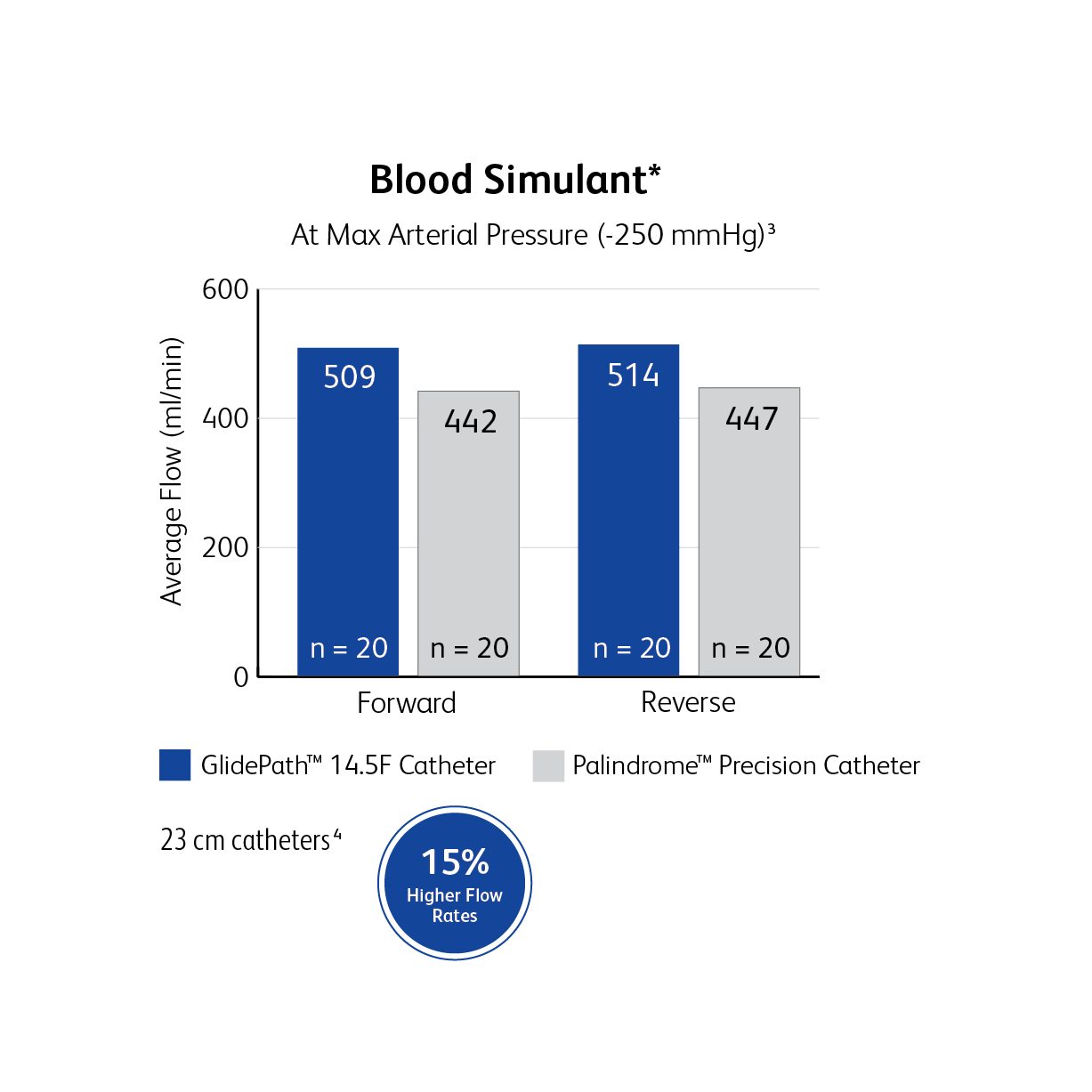
Higher flow rates
GlidePath™ 14.5F catheters demonstrated on average 15% higher flow rates in forward and reverse flow compared to Palindrome™ Precision catheters2
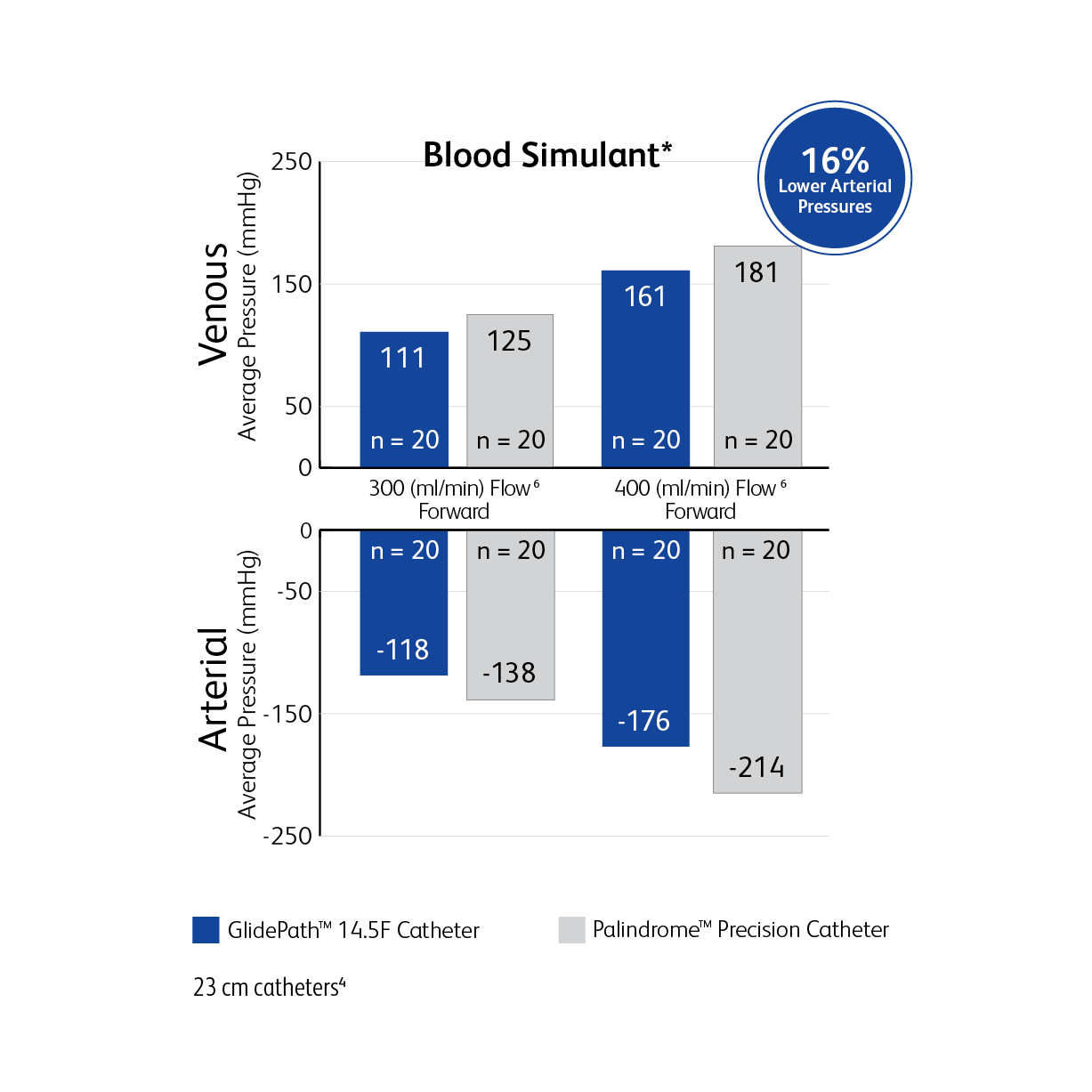
Lower pressures
GlidePath™ 14.5F catheters demonstrated 16% lower pressures in the arterial lumen compared to Palindrome™ Precision catheters5
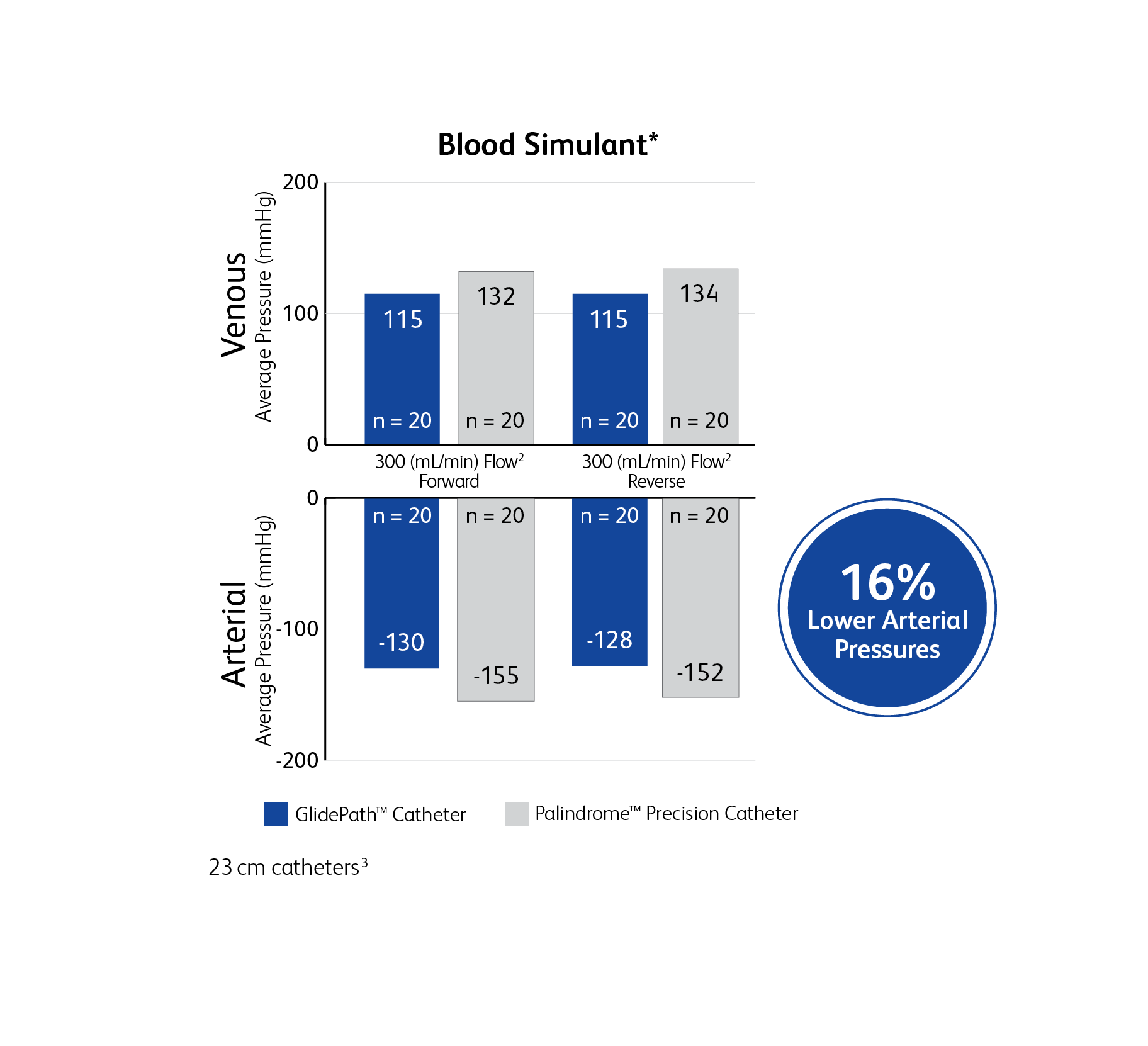
Flow-pressure under partial occlusion
GlidePath™ 14.5F demonstrated on average 16% lower arterial pressures compared to Palindrome™ Precision Catheters7
Lumen Design is the Difference
Computational Fluid Dynamic Model

Recirculation Rates
GlidePath™ 13F and 14.5F catheters have low recirculation rates
In forward and reverse, recirculation rates were found to be 1% or less.10,11

Kink Resistance
Smaller Kink Diameter12 is Better
The GlidePath™ 14.5F Catheter demonstrated on average up to 7% smaller kink diameter values when compared to the Palindrome™ Precision catheters13
The GlidePath™ 13F Catheter is 14% smaller when compared to Medcomp Hemo-Cath™ LT 12.5F catheter.14

Kink Diameter (Kd) = furthest distance achieved before kink occurs
| Average Kink Diameter (in.) | |
|---|---|
| Glidepath Catheter | 1.04 |
| Palindrome Precision Catheter | 1.12 |
Sort by:
-

GlidePath™ Long-Term Hemodialysis Catheter
Repair Kit
-

GlidePath™ Long-Term Hemodialysis Catheter
14.5F, Straight, Exchange Kit, 50cm
-
GlidePath™ Long-Term Hemodialysis Catheter
14.5F, Straight, Exchange Kit, 42cm
-
GlidePath™ Long-Term Hemodialysis Catheter
14.5F, Straight, Exchange Kit, 35cm
-
GlidePath™ Long-Term Hemodialysis Catheter
14.5F, Straight, Exchange Kit, 31cm
-
GlidePath™ Long-Term Hemodialysis Catheter
14.5F, Straight, Exchange Kit, 27cm
-
GlidePath™ Long-Term Hemodialysis Catheter
14.5F, Straight, Exchange Kit, 23cm
-
GlidePath™ Long-Term Hemodialysis Catheter
14.5F, Straight, Exchange Kit, 19cm
-
GlidePath™ Long-Term Hemodialysis Catheter
14.5F, Straight, Exchange Kit, 15cm
-

GlidePath™ Long-Term Hemodialysis Catheter
14.5F, AlphaCurve™, Standard Kit, 31cm
-
GlidePath™ Long-Term Hemodialysis Catheter
14.5F, AlphaCurve™, Standard Kit, 28cm
-
GlidePath™ Long-Term Hemodialysis Catheter
14.5F, AlphaCurve™, Standard Kit, 24cm
-
GlidePath™ Long-Term Hemodialysis Catheter
14.5F, AlphaCurve™, Standard Kit, 19cm
-
GlidePath™ Long-Term Hemodialysis Catheter
14.5F, Straight, Standard Kit, 50cm
-
GlidePath™ Long-Term Hemodialysis Catheter
14.5F, Straight, Standard Kit, 42cm
-
GlidePath™ Long-Term Hemodialysis Catheter
14.5F, Straight, Standard Kit, 35cm
-
GlidePath™ Long-Term Hemodialysis Catheter
14.5F, Straight, Standard Kit, 31cm
-
GlidePath™ Long-Term Hemodialysis Catheter
14.5F, Straight, Standard Kit, 27cm
-
GlidePath™ Long-Term Hemodialysis Catheter
14.5F, Straight, Standard Kit, 23cm
-
GlidePath™ Long-Term Hemodialysis Catheter
14.5F, Straight, Standard Kit, 19cm
-
GlidePath™ Long-Term Hemodialysis Catheter
14.5F, Straight, Standard Kit, 15cm
-

GlidePath™ Long-Term Hemodialysis Catheter
13F, Straight, Exchange Kit, 35cm
-
GlidePath™ Long-Term Hemodialysis Catheter
13F, Straight, Exchange Kit, 31cm
-
GlidePath™ Long-Term Hemodialysis Catheter
13F, Straight, Exchange Kit, 27cm
-
GlidePath™ Long-Term Hemodialysis Catheter
13F, Straight, Exchange Kit, 23cm
-
GlidePath™ Long-Term Hemodialysis Catheter
13F, Straight, Exchange Kit, 19cm
-
GlidePath™ Long-Term Hemodialysis Catheter
13F, Straight, Exchange Kit, 15cm
-
GlidePath™ Long-Term Hemodialysis Catheter
13F, Straight, Standard Kit, 35cm
-
GlidePath™ Long-Term Hemodialysis Catheter
13F, Straight, Standard Kit, 31cm
-
GlidePath™ Long-Term Hemodialysis Catheter
13F, Straight, Standard Kit, 27cm
-
GlidePath™ Long-Term Hemodialysis Catheter
13F, Straight, Standard Kit, 23cm
-
GlidePath™ Long-Term Hemodialysis Catheter
13F, Straight, Standard Kit, 19cm
-
GlidePath™ Long-Term Hemodialysis Catheter
13F, Straight, Standard Kit, 15cm

true

Literature
Our collection of literature on industries and on our offerings gives you information you can use to continue striving for excellence.
Learn more

Events
We support the healthcare industry with market-leading products and services that aim to improve care while lowering costs. We host and take part in events that excel in advancing the world of health™.
Learn more

Training
The BD Learning Academy offers a centralized repository of BD product training, education, and the ability to connect courses to your LMS.
Learn More

Case Studies
We promote clinical excellence by providing various resources on best practices, clinical innovations and industry trends in healthcare.
Learn more
true
* Bench data on file. May not necessarily correlate to clinical performance.
1Tested using blood simulant composed of glycerin and water and a 5% saline solution at a max arterial pressure of -250 mmHg. N = 40 for each size tested. The Max Flow Rate ranges are shown in forward for 15 – 35 cm for 13F and 15 – 50 cm for 14.5F. Bench data on file. May not necessarily correlate to clinical performance. Different test methods may yield different results.
2Groups found to be statistically different using an Unstacked ANOVA with p-value less than 0.05 at 95% confidence (0.000 for all comparative groups). Calculation of 15% Higher Flow Rate based upon the average of the maximum flow rate values in forward and reverse. Data on file. May not be representative of actual clinical experience.
3Flow rates were recorded once the maximum allowable pressure (-250 mmHg) was achieved in the arterial lumen. -250 mmHg is the maximum allowable arterial pressure established for hemodialysis based upon the KDOQI standard (Clinical Practice Guidelines and Clinical Practice Recommendations - 2006 Updates).
4Tested using 23 cm tip to cuff straight catheters for both groups. Flow test performed using blood simulant as flow media for both groups.
5Groups found to be statistically different using an Unstacked ANOVA with p-value less than 0.05 at 95% confidence (0.000 for all comparative groups). Calculation of 16% lower pressures based upon the average of the mean arterial pressure values. Data on file. May not be representative of actual clinical experience.
6The flow rate through the catheter was maintained at the specified values (300 and 400 mL/min respectively) and the corresponding pressures were recorded.
7Groups found to be statistically different using an Unstacked ANOVA with p-value less than 0.05 at 95% confidence (0.000 for all comparative groups). Calculation of 16% lower pressures based upon the average of the mean arterial pressure values. Data on file. May not be representative of actual clinical experience.
8300 mL/min flow was kept consistent during this test. This is the minimum flow rate established for hemodialysis by the National Kidney Foundation (Clinical Practice Guidelines and Clinical Practice Recommendations - 2006 updates).
9Represents catheter lumen wall and septum deflection when flowing at 400 ml/min and at max. allowable arterial pressure (when -250 mmHg is reached per KDOQI Standard). Fluid Structure Interaction Model was run using both catheter tubes as used in the straight catheter configuration. Data on file. May not be representative of actual clinical experience.
10Computational Fluid Dynamics Model was created for analyzing blood simulant recirculation at the catheter tip. Data on file. May not be representative of actual clinical experience.
11Tested using 35 cm tip to cuff straight catheters (GlidePath™ n = 40). Recirculation test performed using a blood stimulant composed of glycerin and water and a 5% saline solution as the recirculation media delivered at a blood flow rate of ~ 12 L/min and catheter flow rate of 300 mL/min. Bench data on file. May not necessarily correlate to clinical performance. Different test methods may yield different results.
12Tested using catheter shafts from 23 cm tip to cuff straight catheters (GlidePath n = 20, Palindrome Precision n = 20).
13Groups found to be statistically different using an Unstacked ANOVA with p-value less than 0.05 at 95% confidence (0.000 for all comparative groups). Calculation based upon the ratios of average kink diameter values. Data on file. May not be representative of actual clinical experience.
14Tested using 23 cm tip to cuff straight catheters (GlidePath n = 40, Hemo-Cath = 5). Calculations based upon the ratios of average kink diameter values of 0.475 in for GlidePath 13F and 0.555 in for Medcomp Hemo-Cath™ LT. Bench data on file. May not necessarily correlate to clinical performance. Different test methods may yield different results.
BD-35475v3
true