true


Indication for Use

The Lutonix™ 018 Drug Coated Balloon PTA catheter is indicated for percutaneous transluminal angioplasty, after appropriate vessel preparation, of de novo, restenotic, or in-stent restenotic lesions up to 300 mm in length in native superficial femoral or popliteal arteries with reference vessel diameters of 4-7 mm.

Contraindications

The Lutonix™ DCB Catheter is contraindicated for use in:

1) Patients who cannot receive recommended anti-platelet and/or anticoagulant therapy.

2) Women who are breastfeeding, pregnant or are intending to become pregnant or men intending to father children. It is unknown whether paclitaxel will be excreted in human milk and there is a potential for adverse reaction in nursing infants from paclitaxel exposure.

3) Patients judged to have a lesion that prevents complete inflation of an angioplasty balloon or proper placement of the delivery system.

Warnings

1) Contents supplied STERILE using ethylene oxide (EO) process. Do not use if sterile barrier is damaged or opened prior to intended use.

2) Do not useafter ‘Use by’ date.

3) Do not use if product damage is evident.

4) The Lutonix™ DCB Catheter is for usein one patient only; do not reuse in another patient, reprocess or resterilize. Risks of reuse in another patient, reprocessing, or resterilization include: – Compromising the structural integrity of the device and/or device failure which, in turn, may result in patient injury, illness or death. – Creating a risk of device contamination and/or patient infection or cross-infection, including, but not limited to, the transmission of infectious disease(s) from one patient to another. Contamination of the device may lead to patient injury, illness or death.

5) Do not exceed the Rated Burst Pressure (RBP) recommended for this device. Balloon rupture may occur if the RBP rating is exceeded. To prevent over-pressurization, use of a pressure monitoring device is recommended.

6) Use the recommended balloon inflation medium of contrast and sterile saline (=50% contrast). Never use air or any gaseous medium to inflate the balloon as this may cause air emboli in case of balloon burst.

7) This product should not be used in patients with known hypersensitivity to paclitaxel or structurally related compounds, as this may cause allergic reaction difficulty in breathing, skin rash, muscle pain.

Precautions

1) The Lutonix™ DCB Catheter should only be used by physicians trained in percutaneous interventional procedures.

2) Consideration should be given to the risks and benefits of use in patients with a history of non-controllable allergies to contrast agents.

3) The safety and effectiveness of the Lutonix™ DCB Catheter have not been established for treatment in cerebral, carotid, coronary, or renal vasculature.

4) For SFA application, the safety and effectiveness of using more than four Lutonix drug coated balloons or a maximum drug coating quantity of approximately 15.1 mg paclitaxel in a patient has not been clinically evaluated.

5) For AV Fistula application, the safety and effectiveness of using multiple Lutonix drug coated balloons that deliver greater than 7.6 mg paclitaxel in a patient has not been clinically evaluated.

Use in Conjunction with Other Procedures

The safety and effectiveness of the Lutonix™ DCB Catheter used in conjunction with drug eluting stents or other drug coated balloons in the same procedure or following treatment failure has not been evaluated.

Note: Use with stent graft/bare metal stents for bailout if needed in the same procedure following treatment with the Lutonix™ DCB Catheter is permitted.

Potential Adverse Events

Potential adverse events which may be associated with a peripheral balloon dilatation procedure include, but are not limited to the following: Additional intervention · Allergic reaction to drugs, excipients, or contrast medium · Amputation/loss of limb (SFA) · Aneurysm or pseudoaneurysm · Arrhythmias · Embolization · Hematoma · Hemorrhage, including bleeding at the puncture site · Hypotension/hypertension · Inflammation · Loss of permanent access (AVF) · Occlusion · Pain or tenderness · Pneumothorax or hemothorax (SFA) · Sepsis/infection · Shock · Steal Syndrome (AVF) · Stroke · Thrombosis · Vessel dissection, perforation, rupture, or spasm · Although systemic effects are not anticipated, refer to the Physicians’ Desk Reference for more information on the potential adverse events observed with paclitaxel. Potential adverse events, not described in the above source, which may be unique to the paclitaxel drug coating include: Allergic/immunologic reaction to the drug coating (paclitaxel) · Alopecia · Anemia · Blood product transfusion · Gastrointestinal symptoms · Hematologic dyscrasia (including leukopenia, neutropenia, thrombocytopenia) · Hepatic enzyme changes · Histologic changes in vessel wall, including inflammation, cellular damage, or necrosis · Myalgia/Arthralgia · Myelosuppression · Peripheral neuropathy
BD-45505v2


Indication for Use

The Lutonix™ 035 Drug Coated Balloon PTA catheter is indicated for percutaneous transluminal angioplasty, after appropriate vessel preparation, of de novo, restenotic, or in-stent restenotic lesions up to 300mm in length in native superficial femoral or popliteal arteries with reference vessel diameters of 4-7mm.

Contraindications

The Lutonix™ DCB Catheter is contraindicated for use in:

1) Patients who cannot receive recommended anti-platelet and/or anticoagulant therapy.

2) Women who are breastfeeding, pregnant or are intending to become pregnant or men intending to father children. It is unknown whether paclitaxel will be excreted in human milk and there is a potential for adverse reaction in nursing infants from paclitaxel exposure.

3) Patients judged to have a lesion that prevents complete inflation of an angioplasty balloon or proper placement of the delivery system.

Warnings

1)Contents supplied STERILE using ethylene oxide (EO) process. Do not use if sterile barrier is damaged or opened prior to intended use.

2) Do not use if product damage is evident.

3) The Lutonix™ DCB Catheter is for use in one patient only; do not reuse in another patient, reprocess or resterilize. Risks of reuse in another patient, reprocessing, or resterilization include: – Compromising the structural integrity of the device and/or device failure which, in turn, may result in patient injury, illness or death. – Creating a risk of device contamination and/or patient infection or cross-infection, including, but not limited to, the transmission of infectious disease(s) from one patient to another. Contamination of the device may lead to patient injury, illness or death.

4) Do not exceed the Rated Burst Pressure (RBP) recommended for this device. Balloon rupture may occur if the RBP rating is exceeded. To prevent over-pressurization, use of a pressure monitoring device is recommended.

5) Use the recommended balloon inflation medium of contrast and sterile saline (≤50% contrast). Never use air or any gaseous medium to inflate the balloon.

6) This product should not be used in patients with known hypersensitivity to paclitaxel or structurally related compounds.

7) The safety and effectiveness of the Lutonix™ Catheter have not been established for treatment in cerebral, carotid, coronary, or renal vasculature.

8) The safety and effectiveness of using more than four Lutonix™ drug coated balloons or a maximum drug coating quantity of approximately 15.1 mg paclitaxel in a patient has not been clinically evaluated.

Precautions

1) The Lutonix™ DCB Catheter should only be used by physicians trained in percutaneous interventional procedures.

2) Consideration should be given to the risks and benefits of use in patients with a history of non-controllable allergies to contrast agents.

Use in Conjunction with Other Procedures

The safety and effectiveness of the Lutonix™ Catheter used in conjunction with other drug eluting stents or drug coated balloons in the same procedure or following treatment failure has not been evaluated.

Note: Use with bare metal stents for bailout if needed in the same procedure following treatment with the Lutonix™ Catheter is permitted.

Potential Adverse Events

Potential adverse events which may be associated with a peripheral balloon dilatation procedure include: Additional intervention ∙ Allergic reaction to drugs, excipients, or contrast medium ∙ Amputation/loss of limb ∙ Aneurysm or pseudoaneurysm ∙ Arrhythmias ∙ Embolization ∙ Hematoma ∙ Hemorrhage, including bleeding at the puncture site ∙ Hypotension/hypertension ∙ Inflammation ∙ Occlusion ∙ Pain or tenderness ∙ Pneumothorax or hemothorax ∙ Sepsis/infection ∙ Shock ∙ Stroke ∙ Thrombosis ∙ Vessel dissection, perforation, rupture, or spasm ∙ Although systemic effects are not anticipated, refer to the Physicians’ Desk Reference for more information on the potential adverse events observed with paclitaxel. Potential adverse events, not described in the above source, which may be unique to the paclitaxel drug coating include: Allergic/immunologic reaction to the drug coating (paclitaxel) ∙ Alopecia ∙ Anemia ∙ Blood product transfusion ∙ Gastrointestinal symptoms ∙ Hematologic dyscrasia (including leukopenia, neutropenia, thrombocytopenia) ∙ Hepatic enzyme changes ∙ Histologic changes in vessel wall, including inflammation, cellular damage, or necrosis ∙ Myalgia/Arthralgia ∙ Myelosuppression ∙ Peripheral neuropathy

BD-45505v2


Indication for Use

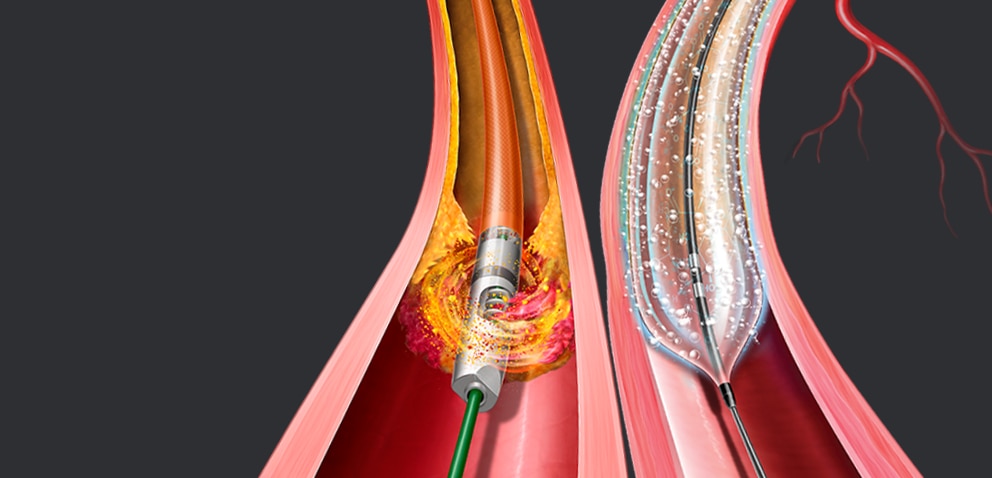
The Rotarex™ Atherectomy System is intended for use as an atherectomy device and to break up and remove thrombus from native peripheral arteries or peripheral arteries fitted with stents, stent grafts or native or artificial bypasses. 

Contraindications

 In patients not suitable for atherectomy/thrombectomy • In the cardiopulmonary, coronary, carotid, cerebral and renal vasculature • In vessels that are undersized for the particular device used • In the venous vasculature 


Warnings

Do not use in anatomical locations with persistent vasospasm • The Rotarex™ family of catheters may only be used with the BD supplied guidewire with which they are packaged • The catheter must always be guided via the supplied guidewire, which has been correctly positioned according to the instructions for use. Do not use the catheter without the supplied guidewire or over the supplied guidewire which is incorrectly placed • If the supplied guidewire is in a subintimal position of any length, reposition and ensure it is intraluminal before proceeding • Do not use the catheter if the supplied guidewire has become threaded or entangled in the wire mesh of a stent, stent graft or the lining of a stent graft • Position the flexible tip of the supplied guidewire as far distally as possible from the vessel occlusion being treated to avoid the tip being aspirated into the rotating helix. Recommended distance is at least 10 cm. Operators should take care that manipulations of the catheter do not alter the desired position of the supplied guidewire • Do not use this device at or near locations with pre-existing damage to the vessel wall from prior surgery, aneurysms, or other disease • Remove catheter and supplied guidewire from patient before employing magnetic resonance imaging (MRI) or using a defibrillator • Do not use Rotarex™ Atherectomy Catheters when product damage is evident, whose packaging is damaged, or where the sterilization expiration date has passed • This device is intended for use only by suitably qualified medical personnel experienced in the diagnosis and treatment of peripheral vascular disease by percutaneous methods • This device may only be used in conjunction with the Drive System
• This device is supplied sterile for single-use only. Do not reprocess or resterilize. Resterilization or reconditioning may severely impair the function of the device • Risk of distal embolization is greatly increased if the operator attempts to advance the catheter faster than the recommendations in these instructions, especially near the distal end of the occlusion • Failure to ensure sufficient blood flow to the catheter head could result in vessel collapse • Monitor the blood flow to the collecting bag continuously throughout the procedure • Do not operate near fractured areas of broken stents or stent grafts. If a protruding stent strut Continued the side window of the catheter head, the stent, stent graft or vessel may become severely damaged, destroyed and/or dislodged, or the catheter head may become entrapped in the stent or stent graft in such a manner that the catheter and the stent or stent graft must be surgically recovered • This device should only be used under adequate visual monitoring with suitable radiographic techniques

The helix rotates at a high rate of speed and may be at risk of failure when exposed to certain conditions. Improper device use may cause the helix to fracture or break, requiring retrieval of a broken catheter or device fragment. A helix facture or break could cause vessel injury and lead to severe bleeding or death. It is essential to follow all instructions and directions for use to reduce the risk of a helix fracture or break.

• Use a kink resistant, suitably reinforced sheath of the same size as the Rotarex™ Atherectomy Catheter, or 1 French size bigger. When choosing a contralateral approach this may also serve to facilitate a smooth transition across the aortic bifurcation.

• Do not use the device across a vessel bifurcation or curve that results in a curvature of the catheter shaft of <4 cm in diameter (Figure 1). Consider the use of ipsilateral access if contralateral access is expected to result in a catheter bend less than 4 cm in diameter.

• Maintain adequate blood flow through the catheter to reduce the risk of catheter overheating or blockage. Adequacy of blood flow can be assessed by observing continuous drainage into the collecting bag and listening for changes in the audible pitch of the motor.

• Maintain constant catheter movement to reduce fatigue stress on the inner helix in one location. Perform a smooth back and forth motion within the target lesion. Use a 10 mm forward motion (equivalent to one catheter head) for softer materials and 1 mm for denser lesions.

• Do not use the device in calcified vessel segments that exhibit radiopacities on both sides of the arterial wall and extend beyond 10 mm in length prior to contrast injection or digital subtraction angiography.

• Monitor the catheter closely for resistance to movement. Audible control unit alarms (i.e., intermittent beeping) or changes in tactile feel of the catheter, pitch sound of the motor, or LED bar illumination on the control unit (where the green light is no longer illuminated, leaving only the yellow/orange light illuminated) indicate the need to reduce catheter advancement from increments of 10 mm to 1 mm, stop, or flush the catheter.


Precautions

This device does not contain any parts that can be maintained or serviced by the end-user. Do not repair or change the configuration of the device • Use of the device through a kinked or damaged introducer or where the catheter itself has become kinked or bent, may cause erratic function and/or device failure • Catheters must not be allowed to operate “dry” and must be primed and flushed using heparinized saline before and during use per the instructions in this IFU. Throughout catheter use, always ensure there is a sufficient blood flow to the catheter head. Allowing the catheter to operate without heparinized saline solution priming and flushing or without adequate amounts of aspirated blood, will cause the device to operate erratically and/or cease functioning • Failure to manipulate the catheter slowly in a back and forth motion as described in these instructions may result in fracture of the helix and/or supplied guidewire • Insufficient blood flow through the catheter may result in intra-catheter clotting, slow or absent therapeutic function, fracture of the helix and/or supplied guidewire, and/or overheating of the catheter • The guidewire adaptor must be in the working position (pulled back) when the motor is active • When active, the handle of the Rotarex™ Catheter and the portion of the catheter outside the patient’s body must be kept at the same height as the introducer sheath and straight at all times with the outlet tube to the collecting bag hanging vertically below the motor in a straight line. Failure to position the catheter and outlet tube in this manner may result in catheter blockage, helix fracture and/or supplied guidewire fracture • If the supplied guidewire begins to rotate with the helix, which may occur if the helix and supplied guidewire become bonded with fibrin, the procedure must be immediately stopped; the catheter thoroughly flushed and the supplied guidewire changed 


Potential Adverse Events

Potential adverse events include, but are not limited to: • Embolization, especially distal embolization • Pulmonary embolisms of all degrees of severity • Thrombosis • Re-occlusion • Vessel wall injury • Vessel dissection / perforation / rupture • Perforation as a result of mural calcium being torn out of the vessel wall • Arteriovenous fistula / pseudo-aneurysm • Hematoma, bleeding, hemorrhage • Organ perforation • Implants such as stents / stent grafts / bypass grafts getting damaged, caught or dislodged • Disruption of the catheter: debris remaining in the body • Allergic reactions, including allergic reactions to device components • Infections or necrosis at the puncture site • Catheter-induced sepsis • Death


Please consult eIFU for more detailed safety information and instructions for use.

BD, the BD logo, and Rotarex are trademarks of Becton, Dickinson and Company or its affiliates. © 2025 BD. All rights reserved.


BD-145434

EXPECT MORE

Your devices should meet a variety of your needs.

Background Image

Contact Us

* For the Lutonix™ DCB Catheter, these indications include lesions up to 300 mm in length in native superficial femoral or popliteal arteries with reference vessel diameters of 4-7 mm.

Vessel preparation using only pre-dilatation was studied in the LEVANT 2 clinical study. Other methods of vessel preparation, such as atherectomy, have not been studied clinically with the Lutonix™ DCB Catheter. 

The products discussed herein do not share the exact same indication for use. Please consult respective product labels and instructions for use for indications, contraindications, hazards, warnings, and precautions. Lutonix™ DCB ℞ only

BD, the BD Logo, Lutonix, Rotarex and Xtract are trademarks of Becton, Dickinson and Company or its affiliates. © 2026 BD. All Rights Reserved.  

BD-179167

Explore The First Real-World Registry for the Rotarex™ Catheter System


Shape the Future of PAD Evidence

The XTRACT™ Registry is the first comprehensive real-world registry designed to evaluate the safety and effectiveness of the Rotarex™ Catheter System.

Designed as a prospective, multi-center registry, XTRACT includes patients with Acute Limb Ischemia (ALI) and Chronic Limb Ischemia (ChLI), reflecting the complexity and diversity of patients encountered in PAD.

Join a growing network of investigators committed to advancing clinical evidence and improving outcomes for patients being treated with the Rotarex™ Catheter System.

Discover the evidence behind
the Rotarex™ Catheter System and Lutonix™ DCB


Explore the clinical studies and real-world evidence that have helped shape the understanding of the Rotarex™ Catheter System performance across a broad range of peripheral arterial lesions and patient presentations.

Explore the clinical studies and real-world evidence that have helped shape the understanding of Lutonix performance in peripheral artery disease treatment.

Vessel preparation using only pre-dilatation was studied in the LEVANT 2 clinical study. Other methods of vessel preparation, such as atherectomy, have not been studied clinically with the Lutonix™ DCB Catheter.

The products discussed herein do not share the exact same indication for use. Please consult respective product labels and instructions for use for indications, contraindications, hazards, warnings, and precautions. Lutonix™ DCB ℞ only

BD, the BD Logo, Lutonix, Rotarex and Xtract are trademarks of Becton, Dickinson and Company or its affiliates. © 2026 BD. All Rights Reserved.  

BD-179167

The products discussed herein do not share the exact same indication for use. Please consult respective product labels and instructions for use for indications, contraindications, hazards, warnings, and precautions. Lutonix™ DCB ℞ only

BD, the BD Logo, Lutonix and Rotarex are trademarks of Becton, Dickinson and Company or its affiliates. © 2026 BD. All Rights Reserved.  

BD-179167

true
Expect More Thumbnail Image BD Xtract Registry, Lutonix, Rotarex, logo

Your devices should meet a variety of your needs.