

What if there was a better way to visibility with noninvasive, beat-to-beat blood pressure?
true
VitaWave™ Plus System
Noninvasive, continuous blood pressure monitoring for your bedside monitor

- Overview
- How It Works
- Compatibility
- Clinical Evidence
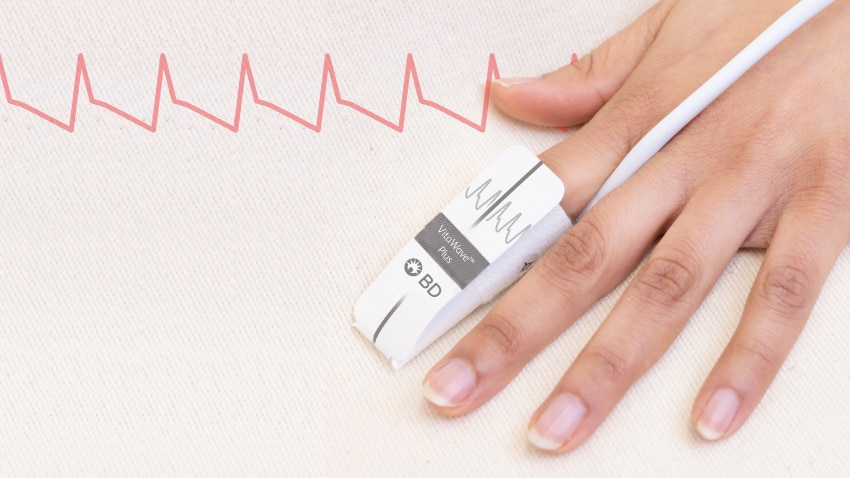
VitaWave™ Plus System. Designed for accuracy.
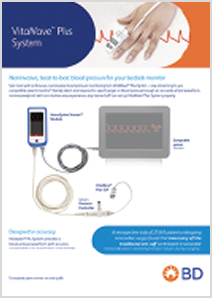
Ensure continuous monitoring never comes at the cost of unnecessary invasiveness. Access beat-to-beat blood pressure monitoring on a compatible patient monitor with VitaWave™ Plus System. The system is designed for accuracy—providing a continuous, noninvasive blood pressure waveform with accuracy comparable to a radial arterial line.
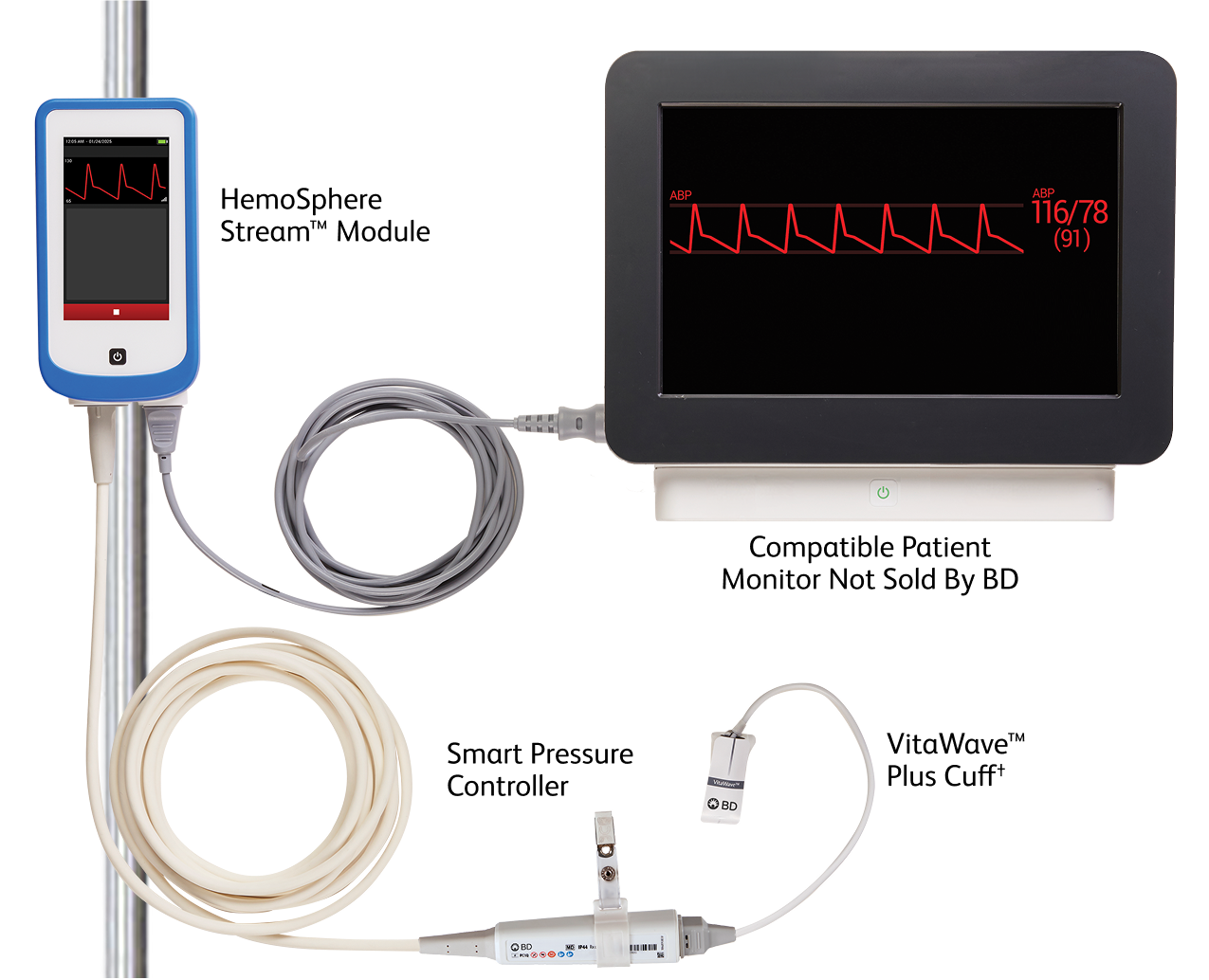
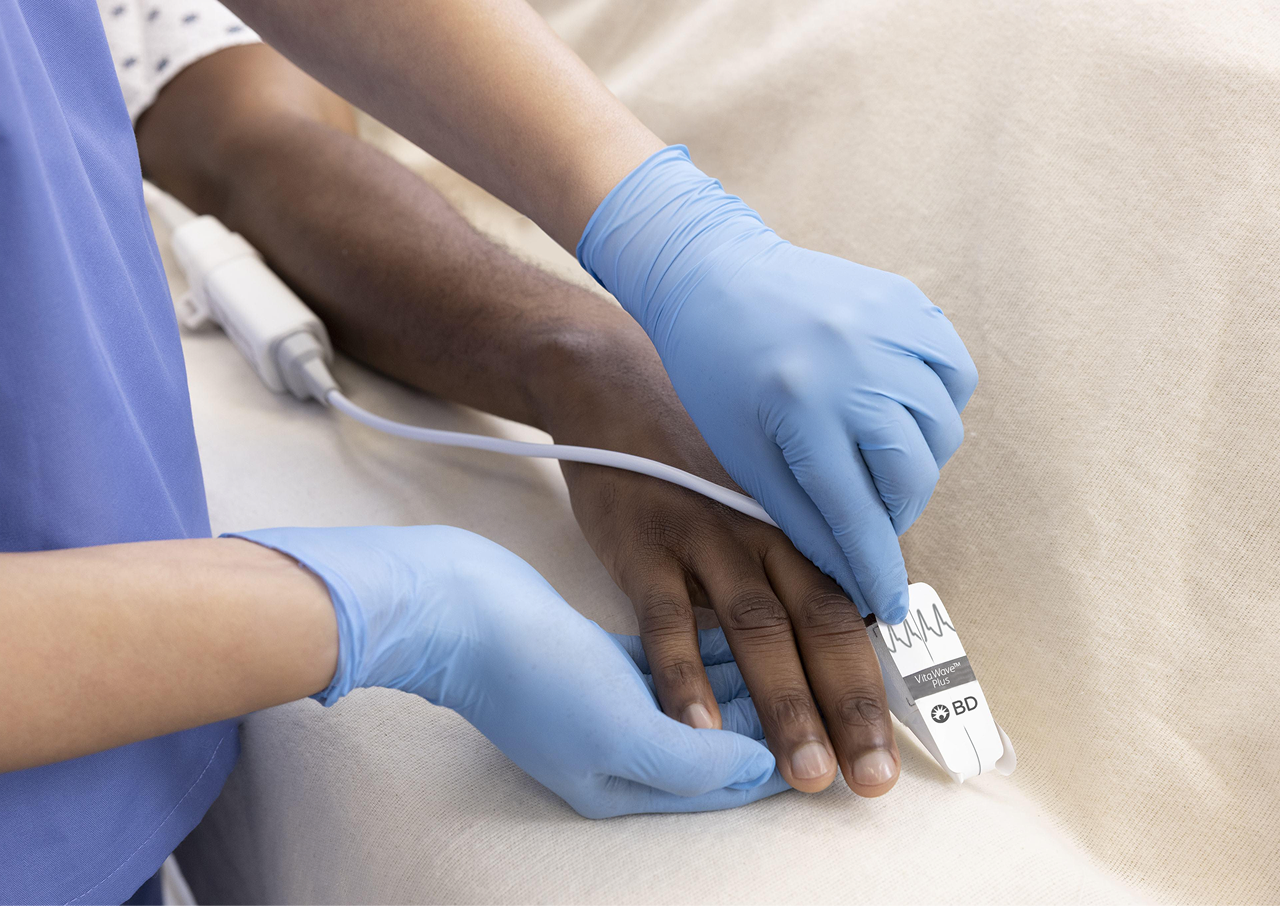
VitaWave™ Plus System consists of VitaWave™ Plus Finger Cuff, Smart Pressure Controller and HemoSphere Stream™ Module. The compact module mounts easily to an IV pole and serves as the interface that delivers continuous, noninvasive arterial blood pressure waveform data from VitaWave™ Plus Finger Cuff to compatible patient monitor.
*VitaWave™ Plus Cuff product label may differ.
Intermittent monitoring can mean that rapid changes in blood pressure go unseen.
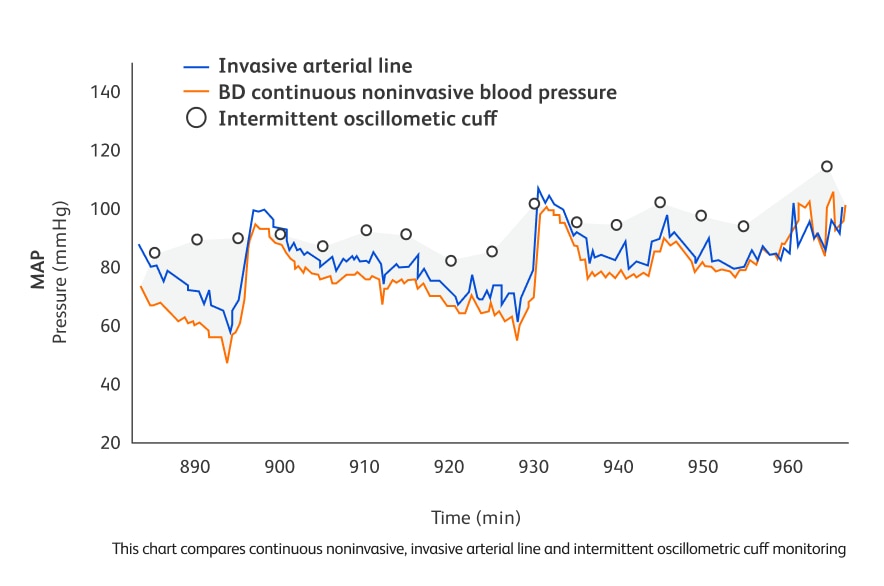
See real-time, continuous measurement
The Anesthesia Patient Safety Foundation recommendations on hemodynamic instability call for implementing continuous noninvasive monitoring.1 Further, the Anesthesia Patient Safety Foundation recommends monitors that provide real-time feedback on an intervention’s effectiveness.1
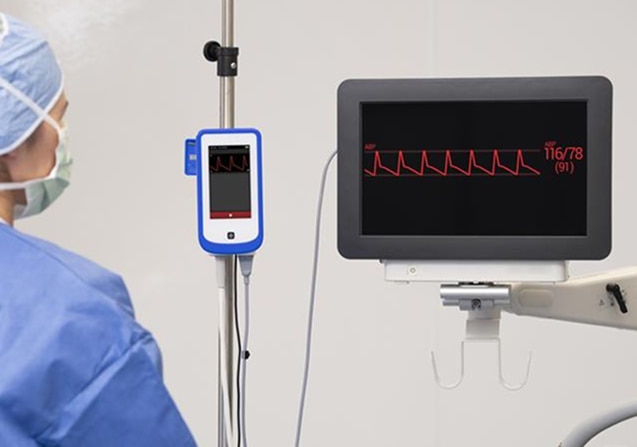
With VitaWave™ Plus System, you'll see real-time blood pressure measurements—enabling you to quickly detect and respond to rapid changes in blood pressure.
CONTACT US FOR DEMO
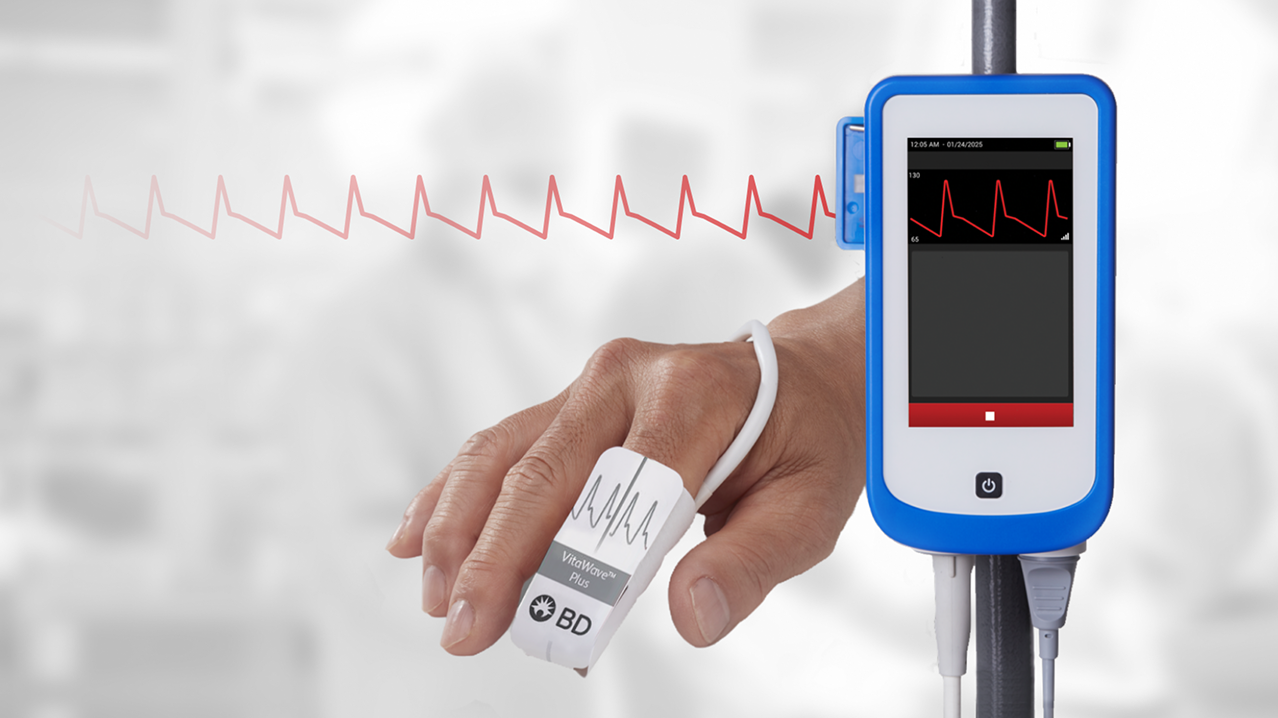
Now streaming accuracy
VitaWave™ Plus System provides a blood pressure waveform with accuracy comparable to a radial arterial line, noninvasively. The system automatically calibrates to ensure accurate measurements, even with changes in vascular tone. It also compensates for patient movement, helping to maintain reliable readings. The traditional arm cuff has been shown to overestimate intraoperative blood pressure in lower ranges and underestimate blood pressure in higher ranges.*2
*According to a retrospective study of 27,493 patients undergoing noncardiac surgery.
Clinical Perspectives
- Michael Scott, MB ChB
- Brad Cardonell, MD
- Jenny Williams, CRNA

“Monitoring blood pressure and perfusion during and after surgery is key to reducing major complications after surgery. Anesthesia providers have been waiting for the availability of a simple way to measure continuous blood pressure noninvasively. This is a landmark technology to improve global patient safety.”
In Their Words
Why Continuous, Noninvasive Monitoring Matters to Brad Cardonell, MD
In Their Words
Why Continuous, Noninvasive Monitoring Matters to Jenny Williams, CRNA
Continuous vs Intermittent monitoring
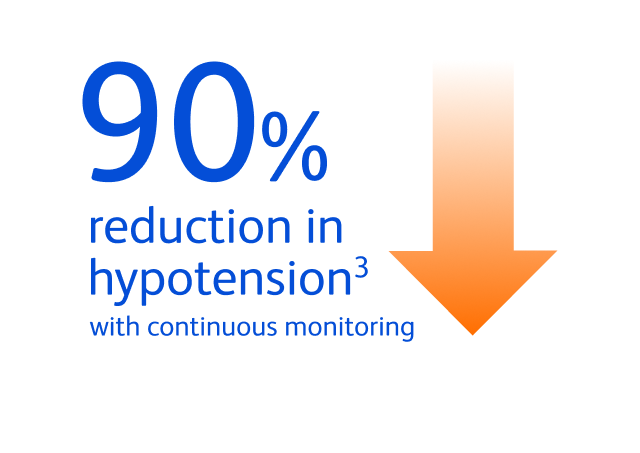
A randomized controlled trial demonstrated that patients monitored with a continuous noninvasive finger cuff monitoring experienced about 90% less hypotension during noncardiac surgery compared to patients monitored with traditional arm cuffs.**3
Review our consolidated list of studies on continuous, noninvasive monitoring and the limitations of the traditional arm cuff.
**Hypotension defined as MAP <65 mmHg for at least 1 min.
- Scott MJ, APSF Hemodynamic Instability Writing Group. Perioperative Patients With Hemodynamic Instability: Consensus Recommendations of the Anesthesia Patient Safety Foundation. Anesth Analg. 2023. Online ahead of print.
- Kim DS, Kwon S, Bovik AC, Markey MK, Giovannucci EL, Cannesson M. Intraoperative Blood Pressure Misclassification Due to Inaccuracy of Noninvasive Oscillometric Cuff-Measured Blood Pressure. Hypertension. 2025;82(2):e1-e3.
- Kouz K, Weidemann F, Naebian A, et al. Continuous Finger-cuff versus Intermittent Oscillometric Arterial Pressure Monitoring and Hypotension during Induction of Anesthesia and Noncardiac Surgery: The DETECT Randomized Trial. Anesthesiology. 2023;139(3):298-308. doi:10.1097/ALN.0000000000004629

VitaWave™ Plus System Overview
VitaWave™ Plus System consists of VitaWave™ Plus Finger Cuff, Smart Pressure Controller and HemoSphere Stream™ Module. The compact module mounts easily to an IV pole and serves as the interface that delivers continuous, noninvasive arterial blood pressure waveform data from VitaWave™ Plus Finger Cuff to compatible patient monitors.

How does it work?
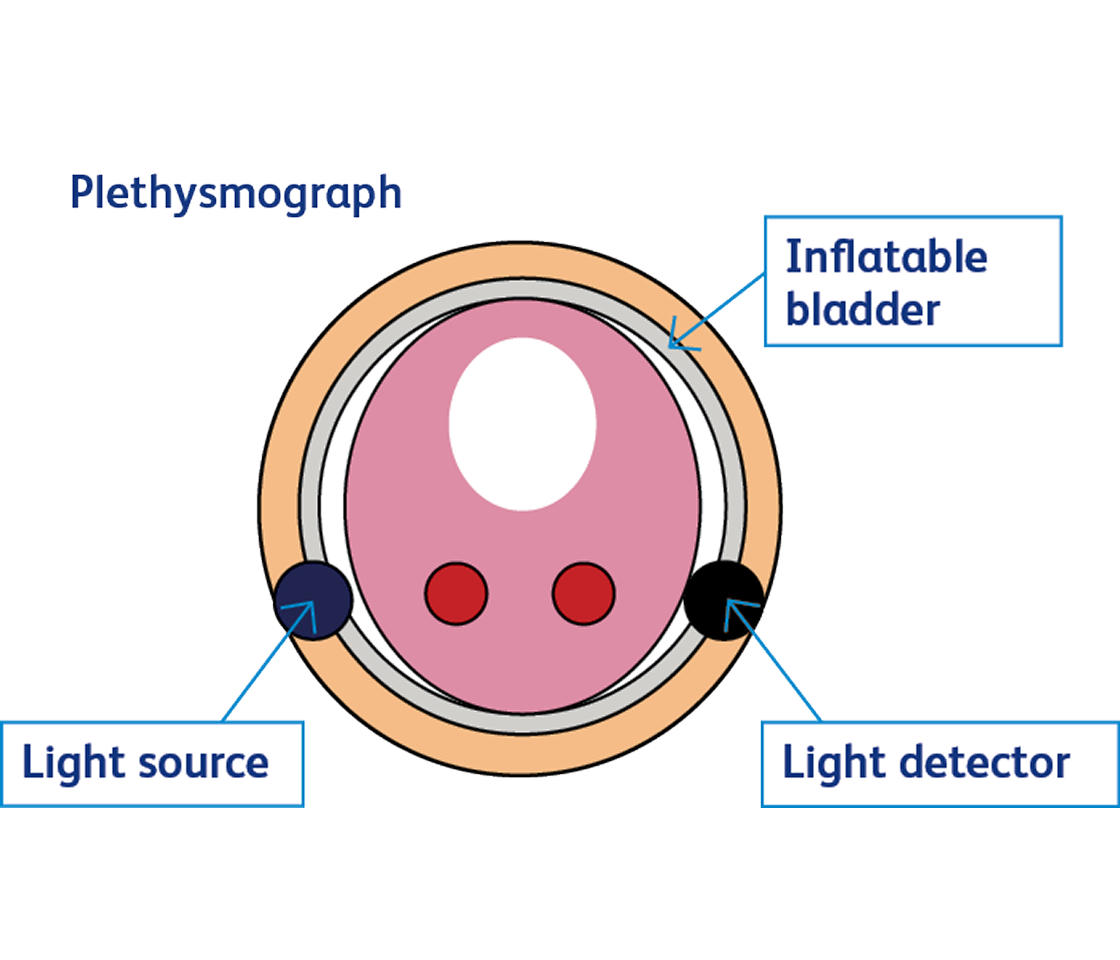
Volume clamp method
- An inflatable bladder on the finger cuff dynamically provides equal pressures on either side of the arterial wall by clamping the artery to a constant volume
- The cuff pressure is adjusted 1000 times each second
to keep the diameter of the finger arteries constant
- Continuous recording of the cuff pressure results in a real-time finger pressure waveform1
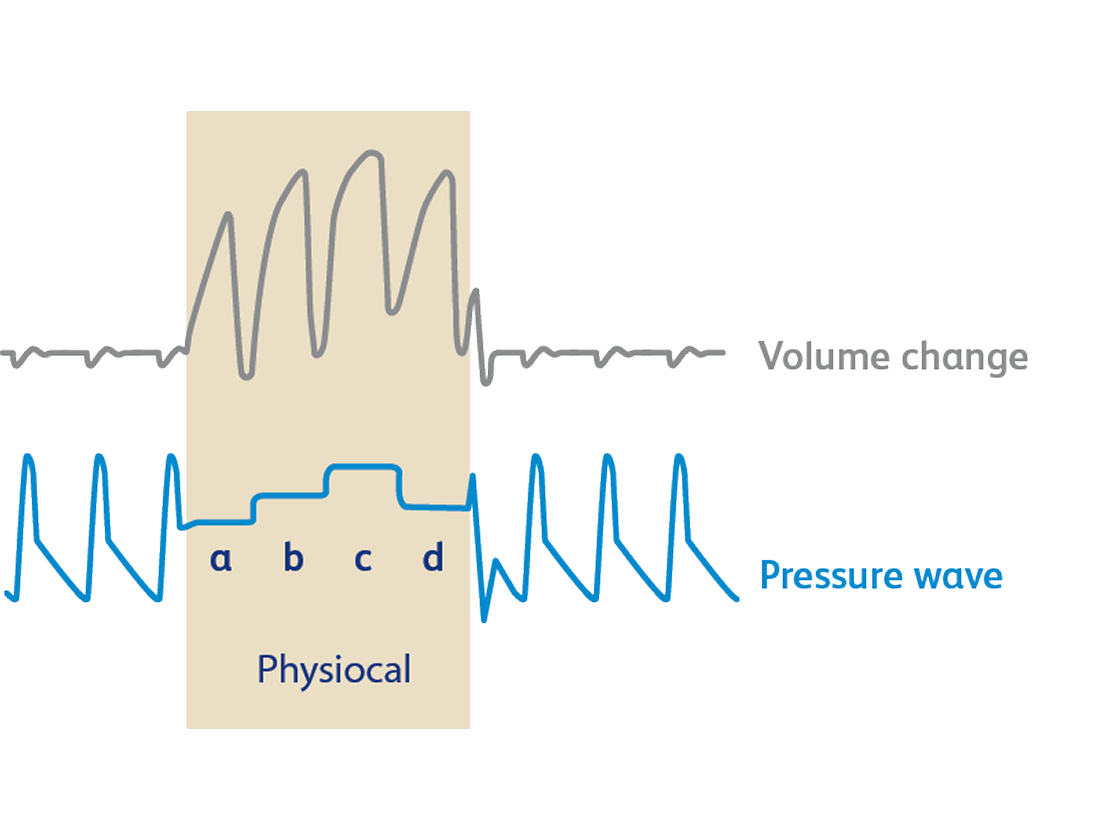
The Physiocal method – Physiological Calibration
- The Physiocal method determines the real-time proper arterial ‘unloaded’ volume (i.e., no pressure gradient across the arterial wall)
- Automatic periodic adjustments and recalibration compensates for physiologic changes (e.g., during vasoconstriction)
- Calibration interval starts at 10 beats, but it increases to every 70 beats as stability increases
- Physiocal interval >30 beats is considered reliable2
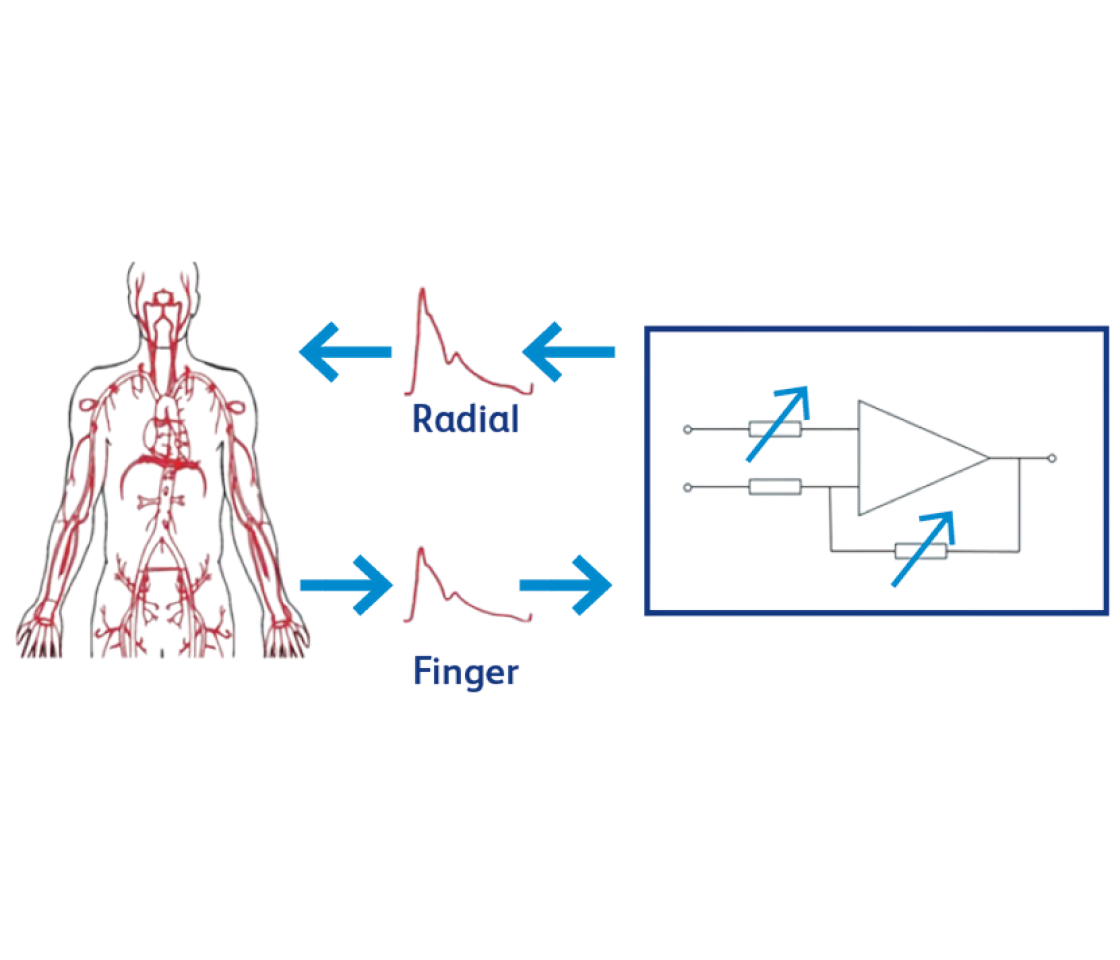
Radial pressure reconstruction
- The clinical gold standard for continuous BP
monitoring is a radial arterial line
- The system reconstructs the radial arterial pressure waveform from the finger arterial pressure waveform using an algorithm based on a vast clinical database3
Smart Pressure Controller
Technology
The Smart Pressure Controller (model PC1Q) uses heart reference software to automatically calculate the vertical height difference, also referred to as the offset between the monitored finger relative to the heart. This is to ensure blood pressure measurements are at heart level.
System Highlights
- The software uses a mathematical model developed based on vast clinical data points and leverages hemodynamic features extracted from the arterial pressure waveform
- The motion sensor technology tracks changes and recalibrates pressure offset both during system initialization and whenever significant motion is detected
- Combined, these compensate for position changes while preserving physiological changes in blood pressure

HemoSphere Stream™ Module Screens


- Peñáz J. Photoelectric measurement of blood pressure, volume and flow in the finger. 1973; Dresden 1973. p. 104.
- Wesseling KH, Wit B, Hoeven GMA, Goudoever J, Settels JJ. Physiocal, calibrating finger vascular physiology for Finapres. Homeostasis. 1995;36:67–82.
- Gizdulich P, Prentza A, Wesseling KH. Models of brachial to finger pulse wave distortion and pressure decrement. Cardiovasc Res. 1997;33:698–705.
Does VitaWave™ Plus System Work with Your Patient Monitor?
Pressure Out Cable Compatibility


Representative examples of common patient monitor connector ends shown for reference only. Compatibility may vary by system.
Please contact us for ordering guidance and additional recommendations regarding full patient monitor compatibility.
Clinical Evidence Bibliography
| Title, Author, Year, Publication | Study Design | Patient Population | Key Point(s) |
| Blood Pressure Monitoring for the Anesthesiologist: A Practical Review. Bartels et al. (2016). Anesth Analg. | Narrative review | N/A | Major shortcomings of oscillometry are its poor performance at the extremes and its lack of information concerning BP waveform. |
| Invasive and concomitant noninvasive intraoperative blood pressure monitoring: observed differences in measurements and associated therapeutic interventions. Wax et al. (2011). Anesthesiology. | Propensity-score matched analysis | Noncardiac surgery | Noninvasive blood pressure (oscillometric cuff) was generally higher than intraarterial blood pressure during periods of hypotension (SBP <90 mmHg). |
| Oscillometric versus invasive blood pressure measurement in patients with shock: a prospective observational study in the emergency department. Meidert et al. (2021). J Clin Monit Comput. | Prospective observational study | Emergency department patients | Oscillometric MAP was markedly higher than invasive MAP. Oscillometric blood pressure measurement was not able to reliably detect hypotension (MAP <60 mmHg). |
| Noninvasive oscillometric versus invasive arterial blood pressure measurements in critically ill patients: A post hoc analysis of a prospective observational study. Kaufmann et al. (2020). J Crit Care. | Prospective observational cohort | Critically ill patients | Brachial cuff oscillometry showed large limits of agreement compared with invasive measurements. |
| Perioperative Blood Pressure Management. Saugel & Sessler (2021). Anesthesiology. | Review | N/A | Oscillometric monitors use proprietary algorithms, and agreement between oscillometric and intraarterial blood pressure measurements is highly variable. |
| Methods of Blood Pressure Measurement in the ICU. Lehman (2013). Crit Care Med. | Retrospective study | Patients admitted to the ICU | Clinically significant discrepancies exist between invasive and noninvasive systolic blood pressure measurements during hypotension (SBP <95 mmHg). |
| Abstract: Inaccuracy of Noninvasive Brachial Cuff-Measured Blood Pressure During Surgery. Kim et al. (2023). Circulation. | Prospective study | Surgical patients | Noticeable inaccuracy was observed with noninvasive brachial cuff devices compared with intraarterial blood pressure during surgery. |
| Blood Pressure Measurement in Atrial Fibrillation: Review and Meta-analysis of Evidence on Accuracy and Clinical Relevance. Stergiou et al. (2019). J Hypertens. | Systematic review and meta-analysis | Atrial fibrillation | Oscillometric measurements were significantly different from intraarterial blood pressure in patients with atrial fibrillation. |
| Intraoperative Blood Pressure Monitoring in Obese Patients. Schumann et al. (2021). Anesthesiology. | Prospective study | Obese surgical patients | Agreement between finger cuff and intraarterial measurements was better than agreement between oscillometric and intraarterial measurements. |
| Effects of Cuff Size on the Accuracy of Blood Pressure Readings: The Cuff(SZ) Randomized Crossover Trial. Ishigami et al. (2023). JAMA Intern Med. | Randomized crossover trial | Community-dwelling adults | Using a regular cuff size regardless of arm size resulted in strikingly inaccurate blood pressure readings. |
| Arm and Finger Measurements in the Third Trimester: Implications for Blood Pressure Measurement. Eley et al. (2018). Pregnancy Hypertens. | Prospective observational pilot study | Pregnant women | Some women may be unsuited to traditional arm cuffs; finger-cuff devices may be a suitable alternative. |
| Rectangular Cuffs May Overestimate Blood Pressure in Individuals with Large Conical Arms. Palatini et al. (2012). J Hypertens. | Observational study | Patients attending general medical outpatient clinics | In obese individuals, cylindrical cuffs may overestimate blood pressure because of a conical arm shape. |
| Accuracy of Oscillometric Noninvasive Blood Pressure at the Ankle in the Lateral Position During General Anesthesia. Farag et al. (2024). BMC Anesthesiol. | Prospective observational study | Noncardiac surgery | Ankle blood pressure measurements are not interchangeable with corresponding invasive measurements. |
| Title, Author, Year, Publication | Study Design | Patient Population | Key Point(s) |
| The Effect of Intermittent versus Continuous Noninvasive Blood Pressure Monitoring on the Detection of Intraoperative Hypotension, a Sub-Study. Wijnberge et al. (2022). J Clin Med. | Cohort study (sub-study) | Surgical patients | Intermittent BP monitoring resulted in missed IOH and the hypotensive events that were detected were recognized with a delay. |
| The impact of continuous noninvasive arterial blood pressure monitoring on blood pressure stability during general anaesthesia in orthopaedic patients: A randomised trial. Meidert et al. (2017). Eur J Anaesthesiol. | Randomized controlled trial | Orthopedic patients | Compared with patients whose blood pressure is monitored intermittently only, continuous BP monitoring contributes to maintaining a stable BP and results in fewer hypotensive episodes (MAP <60 mmHg). |
| A Randomized Trial of Continuous Noninvasive Blood Pressure Monitoring During Noncardiac Surgery. Maheshwari et al. (2018). Anesth Analg. | Randomized controlled trial | Noncardiac surgery | Continuous noninvasive hemodynamic monitoring nearly halved the amount of IOH compared to an oscillometric cuff because continuous monitoring allowed earlier detection and response. |
| Continuous Finger-cuff versus Intermittent Oscillometric Arterial Pressure Monitoring and Hypotension during Induction of Anesthesia and Noncardiac Surgery: The DETECT Randomized Trial. Kouz et al. (2023). Anesthesiology. | Randomized controlled trial | Noncardiac surgery | Continuous finger-cuff arterial pressure monitoring helps clinicians reduce hypotension within 15 minutes after induction and during noncardiac surgery compared to intermittent oscillometric monitoring. |
| Intraoperative Hypotension in Patients Having Major Noncardiac Surgery Under General Anesthesia: A Systematic Review of Blood Pressure Optimization Strategies. Lee et al. (2024). Anesth Analg. | Systematic review | N/A | Four studies (n=556) found that continuous noninvasive blood pressure monitoring with a finger-cuff reduced exposure to IOH compared with conventional intermittent oscillometric monitoring. |
| Title, Author, Year, Publication | Study Design | Patient Population | Key Point(s) |
| Perioperative Patients With Hemodynamic Instability: Consensus Recommendations of the Anesthesia Patient Safety Foundation. Scott et al. (2024). Anesth Analg. | Consensus statement | Perioperative patients | Monitoring technologies that are continuous, noninvasive, and provide early detection and prediction of hemodynamic instability are recommended for adoption into clinical practice. |
| PeriOperative Quality Initiative (POQI) international consensus statement on perioperative arterial pressure management. Saugel et al. (2024). Br J Anaesth. | Consensus statement | Perioperative patients | Clinicians should consider continuous intraoperative arterial pressure monitoring as it can help reduce the severity and duration of hypotension compared to intermittent arterial pressure monitoring. |
| Intraoperative haemodynamic monitoring and management of adults having non-cardiac surgery: Guidelines of the German Society of Anaesthesiology and Intensive Care Medicine in collaboration with the German Association of the Scientific Medical Societies. Saugel et al. (2024). J Clin Monit Comput. | Consensus statement | Noncardiac surgery | Continuous arterial pressure monitoring should be used in all patients who – because of anesthesiologic or surgical procedures or concomitant diseases – are at risk for complications associated with hypotension or hypertension. |
| Title, Author, Year, Publication | Study Design | Patient Population | Key Point(s) |
| FDA 510K Approval: K230919. | Regulatory clearance | N/A | Noninvasive continuous blood pressure by Acumen IQ Cuff, ClearSight Cuff, or VitaWave Cuff meets FDA equivalency standards for accuracy compared to an arterial line. |
| Clinical agreement of a novel algorithm to estimate radial artery blood pressure from the noninvasive finger blood pressure. Kho et al. (2022). J Clin Anesth. | Observational study | Noncardiac surgery | Noninvasive blood pressure from a finger cuff had good agreement with radial artery blood pressure measurements |
| Noninvasive continuous arterial pressure monitoring during anesthesia induction in patients undergoing cardiac surgery. Frank et al. (2021). Ann Card Anaesth. | Prospective study | Cardiac surgery | The use of noninvasive arterial blood pressure measurement with ClearSight during induction of anesthesia in patients scheduled for major cardiac surgery is reliable and easy to use. |
| Comparison of direct intra-arterial pressure and ClearSight finger cuff arterial pressure measurements in elderly patients undergoing transcatheter aortic valve replacement. Yahagi et al. (2023). Blood Press Monit. | Prospective observational study | Transcatheter aortic valve replacement (TAVR) | The ClearSight finger cuff arterial pressure measurement showed good agreement with direct intra-arterial pressure in elderly patients undergoing TAVR |
| Continuous Noninvasive Arterial Pressure Monitoring for Transcatheter Aortic Valve Replacement. Lu et al. (2021). J Cardiothorac Vasc Anesth. | Retrospective review | TAVR | The accuracy, agreement, and precision of the ClearSight device were convincing for mean arterial pressure, systolic blood pressure, and diastolic blood pressure |
| Continuous Noninvasive Arterial Pressure Monitoring in Obese Patients During Bariatric Surgery. Rogge et al. (2019). Anesth Analg. | Prospective study | Severely obese patients undergoing bariatric surgery | Arterial pressure monitoring with the vascular unloading technique (ClearSight system) shows good accuracy, precision, and trending capabilities for mean arterial pressure. |
| Feasibility and Accuracy of Noninvasive Continuous Arterial Pressure Monitoring during Transcatheter Atrial Fibrillation Ablation. Di Cori et al. (2023). J Clin Med. | Prospective study | Atrial fibrillation ablation | Continuous noninvasive blood pressure monitoring with the ClearSight device showed acceptable agreement with invasive radial arterial blood pressure monitoring. |
| Noninvasive continuous blood pressure monitoring using the ClearSight system for pregnant women at high risks of post-partum hemorrhage. Misugi et al. (2022). Obstet Gynecol Sci. | Prospective observational study | Cesarean section | The ClearSight system showed excellent accuracy and precision compared to that of the currently used invasive monitoring system. |
| Noninvasive continuous blood pressure monitoring during shoulder surgery in the beach chair position. Chachula et al. (2020). BMC Anesthesiol. | Prospective study | Shoulder surgery in the beach chair position | The levels of agreement among the three blood pressure measurements methods (noninvasive intermittent, noninvasive continuous, and invasive continuous) were comparable between the beach chair and supine positions |
| Feasibility of continuous noninvasive finger blood pressure monitoring in adult patients admitted to an intensive care unit: A retrospective cohort study. Schuurmans et al. (2023). Heart Lung. | Retrospective cohort study | ICU patients | Finger blood pressure monitoring was feasible in more than 90% of adult patients admitted to the general ICU and is therefore a potential alternative for invasive arterial catheters in patients who do not require frequent arterial blood gas samples. |
| Comparing volume-clamp method and intra-arterial blood pressure measurements in patients with atrial fibrillation admitted to the intensive or medium care unit. Berkelmans et al. (2018). J Clin Monit Comput. | Prospective study | Atrial fibrillation | The volume-clamp method can measure blood pressure, including its beat-to-beat fluctuations, accurately in patients with atrial fibrillation. |
| Intraoperative Blood Pressure Monitoring in Obese Patients. Schumann et al. (2021). Anesthesiology | Prospective study | Obese surgical patients | The agreement between finger cuff and intraarterial measurements was better than the agreement between oscillometric and intraarterial measurements for mean arterial pressure and diastolic blood pressure. |
| Title, Author, Year, Publication | Study Design | Patient Population | Key Point(s) |
| Cost savings through continuous vital sign monitoring in the medical-surgical unit. Beard et al. (2023). J Med Econ. | Cost-savings analysis | Post-operative medical-surgical unit | There is the potential for significant cost-savings by improving patient outcomes through implementation of continuous monitoring technologies in medical-surgical units. |
| Triggers for medical emergency team activation after non-cardiac surgery. Douglas et al. (2023). Anaesth Intensive Care. | Retrospective cohort study | Noncardiac surgery | Hypotension (SBP <90 mmHg) was the most common trigger for medical emergency team calls after noncardiac surgery. |
| Outcomes of Postoperative Overnight High-Acuity Care in Medium-Risk Patients Undergoing Elective and Unplanned Noncardiac Surgery. Ludbrook et al. (2023). JAMA Surg. | Observational cohort | Medium-risk surgical patients receiving post-operative ward care | Brief high-acuity care with advanced recovery room care allowed enhanced detection and management of early medical emergency response-level complications. |
| The Cost-Effectiveness of Early High-Acuity Postoperative Care for Medium-Risk Surgical Patients. Leaman et al. (2024). Anesth Analg. | Economic analysis | Medium-risk surgical patients receiving post-operative ward care | Early high-acuity care for approximately 24 hours after surgery in medium-risk patients provides highly cost-effective improvements in outcomes when compared to usual ward care. |
CAUTION: Federal (United States) law restricts this device to sale by or on the order of a physician.
See instructions for use for full prescribing information, including indications, contraindications, warnings, precautions and adverse events.
true
true
