header-bd-logo.svg
  • Products
  • Solutions
    • Administrator
      • Advanced Hemodynamic Monitoring Solutions
      • Ambulatory Surgery Center Solutions
      • BD Acute Urology
      • BD Hypodermic Needle and Syringe Solutions
      • Diagnostic Accuracy and Efficiency
      • Hazardous Drug Safety
      • Integrated Diagnostic Solutions
      • Medication Management Solutions
      • Patient Safety Solutions
      • Sepsis Management
      • Surgical Solutions
      • Vascular Access Management (VAM)
    • Clinician
      • Advanced Hemodynamic Monitoring Solutions
      • Ambulatory Surgery Center Solutions
      • Antimicrobial Resistance
      • BD Acute Urology
      • B2B and Industry Partners
      • BD Hypodermic Needle and Syringe Solutions
      • Cervical Cancer Screening Portfolio
      • Clinical and Lab Support
      • Diagnostic Accuracy and Efficiency
      • Hazardous Drug Safety
      • Integrated Diagnostic Solutions
      • Medication Management Solutions
      • Patient Safety Solutions
      • Sepsis Management
      • Stone Management
      • Surgical Solutions
      • Vascular Access Management (VAM)
    • Distributor
      • Advanced Hemodynamic Monitoring Solutions
      • BD Acute Urology
      • B2B and Industry Partners
      • BD Hypodermic Needle and Syringe Solutions
    • Drug Development Company
      • Drug Delivery Systems
    • Medical Device Manufacturer
      • B2B and Industry Partners
    • Laboratory
      • Antimicrobial Resistance
      • B2B and Industry Partners
      • Clinical and Lab Support
      • Clinical Microbiology
      • Diagnostic Accuracy and Efficiency
      • Integrated Diagnostic Solutions
      • Patient Safety Solutions
      • Pharmaceutical Microbiology
      • Sepsis Management
    • Pharmacy
      • BD Hypodermic Needle and Syringe Solutions
      • Hazardous Drug Safety
      • Integrated Diagnostic Solutions
      • Medication Management Solutions
      • Patient Safety Solutions
      • Pharmaceutical Microbiology
      • Sepsis Management
      • Vascular Access Management (VAM)
    • Surgery
      • Advanced Hemodynamic Monitoring Solutions
      • Ambulatory Surgery Center Solutions
      • BD Acute Urology
      • BD Hypodermic Needle and Syringe Solutions
      • Hernia Repair Solutions
      • Patient Safety Solutions
      • Plastic and Reconstructive Surgery Solutions
      • Surgical Solutions
      • Venous Technology
  • Knowledge Center
    • Events
    • Literature
    • Training and Education
      • Advanced Monitoring Clinical Education Page
      • BD Learning Academy
  • Support
    • Customer Portals
      • BD Learning Academy
      • Customer Care Portal Guides and FAQ’s
      • Medication Management Customer Login
  • About BD
    • Our Company
      • About BD
      • Segments
      • Leadership
      • Board of Directors
      • Ethics and Compliance
    • Communities
      • Georgia
      • Nebraska
      • New Jersey
      • Utah
    • Cybersecurity at BD
      • About Us
      • Trust Center
      • Bulletins and Patches
      • Disclosure Process
      • Supplier Cyber Requirements
    • Corporate Sustainability
      • Climate Change
      • Healthy Workforce & Communities
      • Product Impact
      • Supply Chain
      • Transparency
    • Global External Funding Opportunities
    • Investors
    • Innovation at BD
      • Overview
      • BD Idea Submission Process
    • News, Media and Blogs
    • Policies, Guidelines and Statements Center
    • Quality
    • Recent Mergers and Acquisitions
    • Response to COVID-19
    • Suppliers
      • Corporate Policies and Expectations
      • Doing Business with BD
      • Global Procurement
      • Supplier Programs
      • Supplier Recognition
  • Careers
  • header-flag-icon-boosted-blue.svg

    United States

    • North America
      • Canada (EN)
      • Canada (FR)
      • United States
    • South America
      • América Latina (ES)
      • América Latina (PT)
    • Europe
      • Belgique
      • België
      • Česká republika
      • Deutschland
      • España
      • France
      • Israel
      • Italia
      • Nederland
      • Nordics
      • Österreich
      • Polska
      • Schweiz
      • United Kingdom
    • Middle East, North Africa, Turkey
      • Middle East, North Africa, Turkey
      • Sub-Saharan Africa
    • Asia Pacific
      • Australia & New Zealand
      • 中国
      • Greater Asia
      • India
      • 日本
      • 대한민국
      • Southeast Asia
  • header-user-icon-boosted-blue.svg

    Login

  • header-flag-icon-boosted-blue.svg

    United States

    North America
    • Canada (EN)
    • Canada (FR)
    • United States
    South America
    • América Latina (ES)
    • América Latina (PT)
    Europe
    • Belgique
    • België
    • Česká republika
    • Deutschland
    • España
    • France
    • Israel
    • Italia
    • Nederland
    • Nordics
    • Österreich
    • Polska
    • Schweiz
    • United Kingdom
    Middle East, North Africa, Turkey
    • Middle East, North Africa, Turkey
    • Sub-Saharan Africa
    Asia Pacific
    • Australia & New Zealand
    • 中国
    • Greater Asia
    • India
    • 日本
    • 대한민국
    • Southeast Asia
  • header-user-icon-boosted-blue.svg

    Login

true

BD® MaxPlus™ and
BD® MaxZero™ Needle-free
Connector and Extension Sets

63% lower CLABSI risk.1 55.1% fewer occlusions.2 

One solid choice.
Contact Us
Background Image
MaxPlus™ and MaxZero™ Needle-free Connector

Ready to learn more? Let’s have a conversation.

Loading
  1. Overview
  2. Guidelines & Clinical Evidence
  3. Products & Accessories
  4. EIFU & Resources
Small enough to overlook. Too important to ignore.

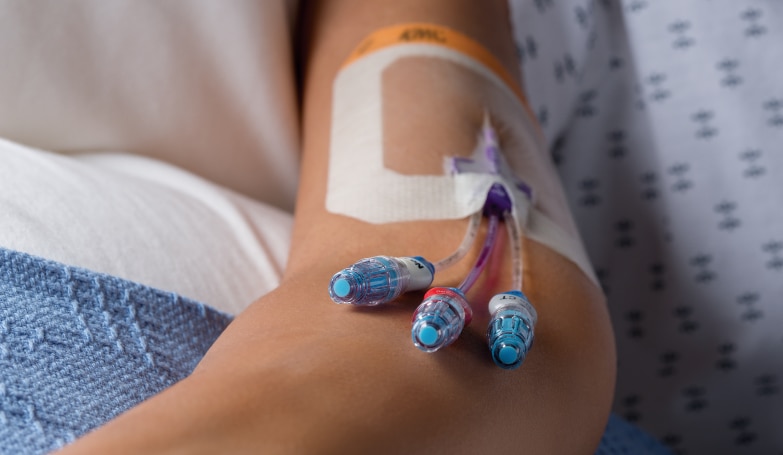
Meet your microbial gatekeeper3

You take every precaution to protect your patients—scrubbing the hub, flushing lines before and after access and following best practices at each step. But what if one of the biggest catheter infection risks was hiding in the smallest component of your vascular access bundle?

Fifty percent of catheter-related infections can be traced back to colonization of the needle-free connector itself.4 And guess what—those needle-free connectors are used on nearly every single IV line.

It’s time to recognize needle-free connectors as more than just an access point, but a critical component in patient safety.

Small device.
Big responsibility.

Not all needle-free connectors
are created equal

Here’s the challenge: while every needle-free connector allows IV access, not every connector is designed to help reduce the risk of infection.

A needle-free connector with a differentiated design may help to:

  • Prohibit microbial entry5
  • Reduce occlusions2,6
  • Reduce needlestick injuries5,6
  • Improve disinfecting and flushing techniques5

Choosing the right needle-free connector isn’t just important—it’s critical to your patients’ safety.

Make the solid choice

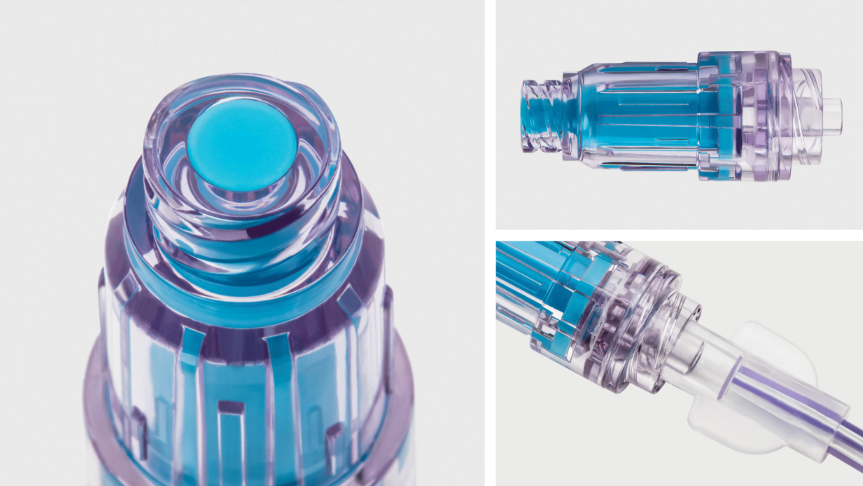
Choose the only needle-free connectors on the market today with a solid access surface—a feature associated with a 2x reduction in CLABSI*

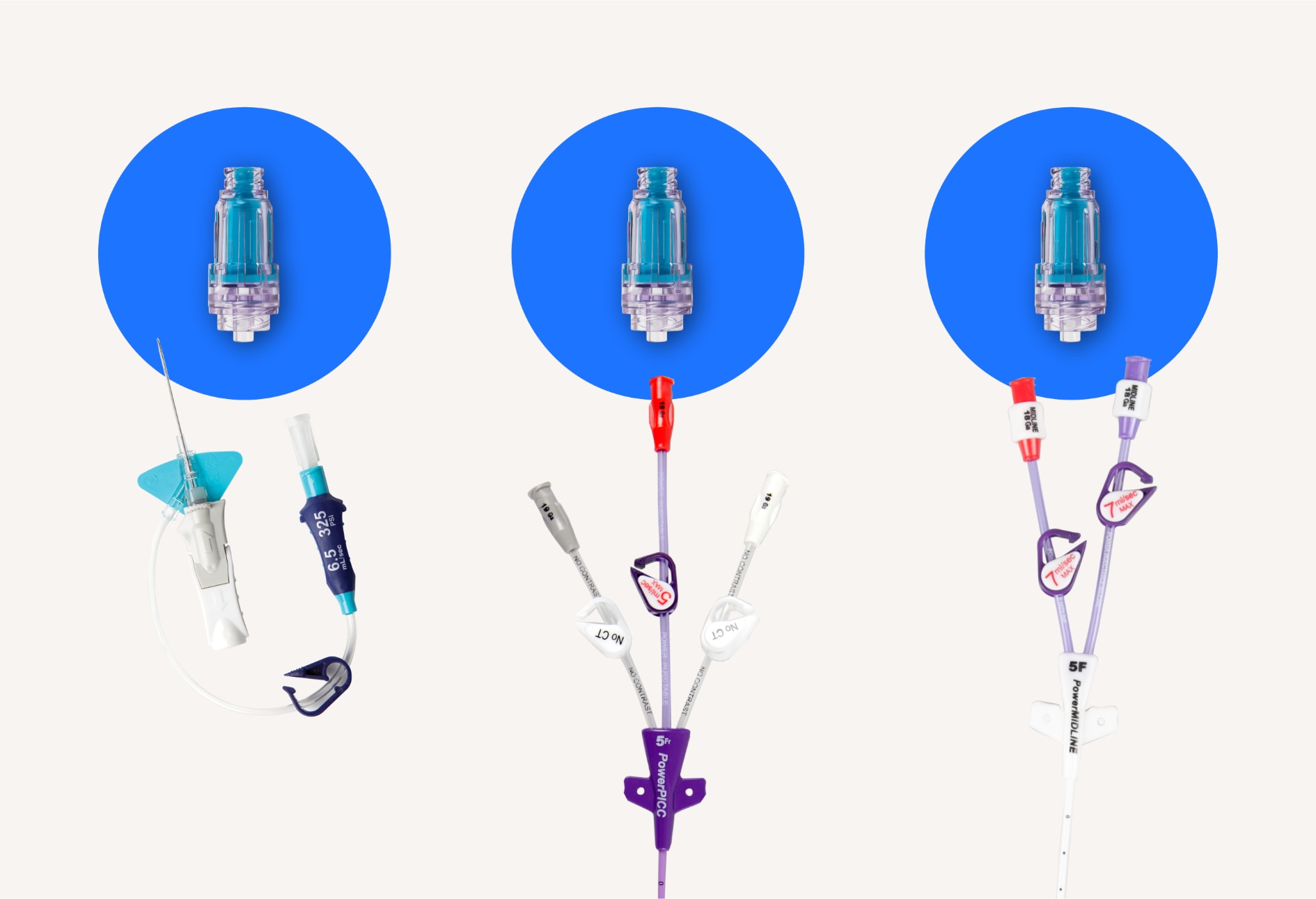
MaxPlus™ Needle-free Connectors are the only connectors that feature positive displacement technology, which may help to reduce central line-associated bloodstream infections (CLABSIs).7 The MaxPlus™ Needle-free Connector and the MaxZero™ Needle-free Connector use the same fundamental technology: The Max Needle-free Connector technology.

*Compared to those without a solid external access surface

Backed by a decade of evidence

The differentiated MaxPlus™ and MaxZero™ Needle-free Connector technology has been
helping facilities reduce central line-associated bloodstream infections (CLABSIs) and
occlusions for over 10 years.1-2,8-15

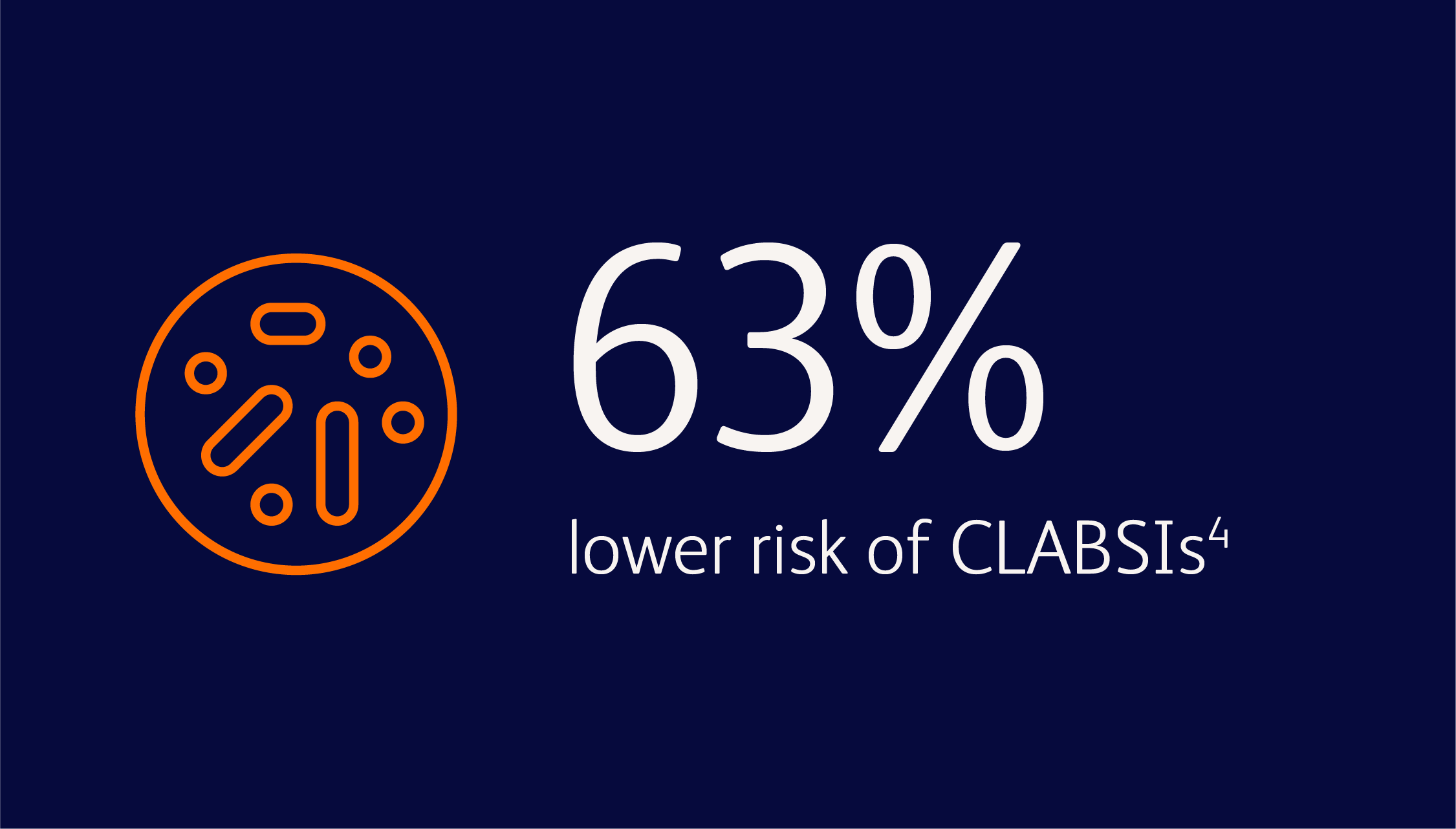
63% lower risk of CLABSI1

The MaxPlus™ Needle-free Connector was shown to reduce the risk of CLABSI by 63%, compared to other needle-free connectors, in a 2014 meta-analysis published in the American Journal of Infection Control.1

55.1% reduction in occlusions2

In a 2018 retrospective observational study of 720 home infusion patients, the MaxZero™ Needle-free Connector reduced PICC^ occlusion rates by 55.1% (p=0.001), compared to a leading neutral displacement connector.2

^ PICC: Peripherally Inserted Central Catheter.

~60% reduction in alteplase use

A 2024 study demonstrated approximately 60% reduction in alteplase use associated with MaxPlus™ and MaxZero™ Needle-free Connectors which could result in cost savings for a hospital.16

The difference is in the design

Explore the design innovations that differentiate BD MaxPlus™ and BD MaxZero™ Needle-free Connector technology

Related Solutions

Let’s have a conversation.

MaxPlus™ and MaxZero™ Needle-free Connector
Ready to learn more? Let’s have a conversation.
Reference

*Compared to the standard of care that included a standard peripheral catheter and three way stopcock among other elements.

  1. Tabak YP, Jarvis WR, Sun X, Crosby CT, Johannes RS. Meta-analysis on central line-associated bloodstream infections associated with a needleless intravenous connector with a new engineering design. Am J Infect Control. 2014;42(12):1278–1284. doi: 10.1016/j.ajic.2014.08.018.
  2. Williams A. Catheter occlusion in home infusion: the influence of needleless connector design on central catheter occlusion. J Infus Nurs. 2018;41(1):52–57. doi: 10.1097/NAN.0000000000000259.
  3. Curran E. Needleless connectors: the vascular access catheter's microbial gatekeeper. J Infect Prev. 2016;17(5):234-240. doi:10.1177/1757177416657164
  4. Moureau NL, Flynn J. Disinfection of needleless connector hubs: Clinical evidence systematic review. Nurs Res Pract. 2015;796762. doi:10.1155/2015/796762
  5. Jarvis WR. Needleless connectors and the improvement of patient and healthcare professional safety. Infection Control Today. Accessed November 18, 2020. https://www.infectioncontroltoday.com/view/needleless-connectors-and-improvement-patient-and-healthcare
  6. Jarvis WR. Choosing the best design for intravenous needleless connectors to prevent bloodstream infections. Infection Control Today. Accessed February 4, 2021. https://www.infectioncontroltoday.com/view/choosing-best-design-intravenous-needleless-connectors-prevent-bloodstream
  7. BD MaxPlus™ Needle-free Connector Directions for Use.
  8. Tabak YP, Johannes RS, Sun X, Crosby CT, Jarvis WR. Innovative use of existing public and private data sources for postmarketing surveillance of central line-associated bloodstream infections associated with intravenous needleless connectors. J Infus Nurs. 2016;39(5):328–335. doi: 10.1097/NAN.0000000000000185.
  9. Costello JM, Morrow DF, Graham DA, Potter-Bynoe G, Sandora TJ, Laussen PC. Systematic intervention to reduce central line-associated bloodstream infection rates in a pediatric cardiac intensive care unit. Pediatrics. 2008;121(5):915–923. doi: 10.1542/peds.2007-1577.
  10. Wallace MC, Macy DL. Reduction of central line-associated bloodstream infection rates in patients in the adult intensive care unit. J Infus Nurs. 2016;39(1):47–55. doi: 10.1097/NAN.0000000000000151.
  11. Sandora TJ, Graham DA, Conway M, Dodson B, Potter-Bynoe G, Margossian SP. Impact of needleless connector change frequency on central line-associated bloodstream infection rate. Am J Infect Control. 2014;42(5):485–489. doi: 10.1016/j.ajic.2014.01.022.
  12. Royer T. Implementing a better bundle to achieve and sustain a zero central line-associated bloodstream infection rate. J Infus Nurs. 2010;33(6):398–406. doi: 10.1097/NAN.0b013e3181f8586b.
  13. Casey AL, Karpanen TJ, Nightingale P, Chaganti S, Elliott TSJ. Microbiologic contamination of a positive- and a neutral-displacement needleless intravenous access device in clinical use. Am J Infect Control. 2016;44(12):1678–1680. doi: 10.1016/j.ajic.206.06.027.
  14. Clavier T, Ferguen M, Gouin P, et al. Impact of BD MaxZero™ needle-free connector on the incidence of central venous catheter-related infections in surgical intensive care unit. Aust Crit Care. 2019;32(2):107–111. doi: 10.1016/j.aucc.2018.03.003.
  15. Hankins R, Majorant OD, Rupp ME, et al. Microbial colonization of intravascular catheter connectors in hospitalized patients. Am J Infect Control. 2019;47(12):1489–1492. doi: 10.1016/j.ajic.2019.05.024.
  16. Lange VR. Use of different designed needle-free connectors: a snapshot of central venous catheter intraluminal blood occlusion and central line-associated bloodstream infection in hospitals. Int J Infect Control. 2024(20). doi.org/10.3395/ijiic.v20.23731
  17. Guenezan J, Marjanovic N, Drugeon B, et al. Chlorhexidine plus alcohol versus povidone iodine plus alcohol, combined or not with innovative devices, for prevention of short-term peripheral venous catheter infection and failure (CLEAN 3 study): an investigator-initiated, open-label, single centre, randomised-controlled, two-by-two factorial trial. Lancet Infect Dis. 2021. doi: 10.1016/S1473-3099(20)30738-6.

BD-27572 (08/25)

Vascular access evidence-based guidelines

What industry guidelines say about choosing and using needle-free connectors

quote-icon

Evaluate published outcomes of infection risks associated with each type of needleless connector
when making product purchase decisions, focusing on risks, benefits and educational requirements.
 

— Infusion Nurses Society (INS) 2024 Infusion Therapy Standards of Practice1


quote-icon

Use needleless connectors (NC) as IV connection devices.

Use a luer-lock mechanism to ensure a secure junction when attaching NC to a VAD or access site. Avoid three-way stopcocks as IV connection devices.

—

International Nosocomial Infection Control Consortium (INICC) 2017 Care Bundles to Prevent Central and Peripheral Line-Related Bloodstream Infections2


Evidence that speaks for itself

Demonstrated outcomes.
Documented results.

For over a decade, study after study has consistently validated the impact of Max™ Needle-free Connector technology.

Reduced CLABSI and occlusion rates3

A 2024 study by Dr. Victor Lange published in International Journal of Infection Control found that the use of MaxPlus™ and MaxZero™ Needle-free Connectors correlated with lower rates of both CLABSI and intraluminal catheter blood occulation, which are known risk factors for infections.3

63% lower risk of CLABSIs4

The MaxPlus™ Needle-free Connector was shown to reduce the risk of CLABSI by 63%, compared to other needle-free connectors, in a 2014 peer-reviewed meta-analysis reporting on 7 studies, published in the American Journal of Infection Control,4 and is associated with lower CLABSI risk, independent of seasonality, case mix index, infusion care and cleaning practices.4

Lower CLABSIs and standardized infection ratios4

A systematic review of 2013 CMS Hospital Compare data from 3,074 hospitals, accounting for nearly 11,000 CLABSIs associated with nearly 10 million catheter days, shows that hospitals using the MaxPlus™ Needle-free Connector had lower unadjusted CLABSI rates, as well as lower standardized infection ratios, compared to hospitals not using the MaxPlus™ Needle-free Connector.4

55.1% reduction in occlusions5

In a retrospective observational study of 720 home infusion patients, the MaxZero™ Needle-free Connector reduced PICC occlusion rates by 55.1% (p=0.001), compared to a leading neutral displacement connector.5 There was a 55.1% reduction in the total number of nurse visits per 100 central line-days and a 56.4% reduction in Alteplase use and associated cost, after patients were switched to the MaxZero™ Needle-free Connectors.5

Over 70% reduction in CLABSIs in a pediatric cardiac ICU6

A multidisciplinary evidence-based initiative consisting of a CVL insertion, access and maintenance bundle, including implementation of the MaxPlus™ Needle-free Connector, resulted in a reduction in CLABSIs from an estimated 7.8 CLABSIs per 1000 catheter days to 2.3 CLABSIs per 1000 catheter days.6

Reduced CLABSIs in an ICU7

An ICU in a suburban Baltimore hospital reduced CLABSI rates to zero in 2012, by revising its CVAD policies and initiatives and implementing a bundled approach, including the use of MaxPlus™ Needle-free Connectors.7

BD Vascular Access Management Assessments

Our powerful evidence-based assessments, with analytics and benchmarks, are the first phase of BD Vascular Access Management—and the first step on the path to help you reduce complications and improve patient care.

  • Learn more forward arrow
clinician-discussion.jpg

Let’s have a conversation.

MaxPlus™ and MaxZero™ Needle-free Connector
Ready to learn more? Let’s have a conversation.
Reference
  1. Nickel B, Gorski L, Kleidon T, et al. Infusion Therapy Standards of Practice, 9th Edition. J Infus Nurs. 2024;47(1S Suppl 1):S1-S285. doi:10.1097/NAN.0000000000000532
  2. International Nosocomial Infection Control Consortium (INICC) Care bundles to prevent central and peripheral line-related bloodstream infections. INICC website. http://www.inicc.org/media/docs/2017-INICCBSIPreventionGuidelines.pdf. Published January 1, 2017. Accessed June 2, 2021.
  3. Lange VR. Use of different designed needle-free connectors: a snapshot of central venous catheter intraluminal blood occlusion and central line-associated bloodstream infection in hospitals. Int J Infect Control. 2024;(20). doi.org/10.3395/ijiic.v20.23731
  4. Tabak YP, Jarvis WR, Sun X, Crosby CT, Johannes RS. Meta-analysis on central line-associated bloodstream infections associated with a needleless intravenous connector with a new engineering design. Am J Infect Control. 2014;42(12):1278–1284. doi: 10.1016/j.ajic.2014.08.018.
  5. Williams A. Catheter occlusion in home infusion: the influence of needleless connector design on central catheter occlusion. J Infus Nurs. 2018;41(1):52–57. doi: 10.1097/NAN.0000000000000259.
  6. Costello JM, Morrow DF, Graham DA, Potter-Bynoe G, Sandora TJ, Laussen PC. Systematic intervention to reduce central line-associated bloodstream infection rates in a pediatric cardiac intensive care unit. Pediatrics. 2008;121(5):915–923. doi: 10.1542/peds.2007-1577.
  7. Wallace MC, Macy DL. Reduction of central line-associated bloodstream infection rates in patients in the adult intensive care unit. J Infus Nurs. 2016;39(1):47–55. doi: 10.1097/NAN.0000000000000151.

BD-27572 (08/25)

BD MaxPlus™ Needle-free Connector
RELATED PRODUCTS NOT AVAILABLE
BD MaxZero™ Needle-free Connector
RELATED PRODUCTS NOT AVAILABLE
BD MaxPlus™ Extension Sets
RELATED PRODUCTS NOT AVAILABLE
BD MaxZero™ Extension Sets
RELATED PRODUCTS NOT AVAILABLE

Please let us know the areas that you are interested in:

MaxPlus™ and MaxZero™ Needle-free Connector
Ready to learn more? Let’s have a conversation.

Literature

Event Icon
BD MaxPlus™ and BD MaxZero™

BD's collection of literature on our infusion offerings gives you information you can use to continue striving for excellence.

Learn more
EIFUs

  • BD products
true

Please let us know the areas that you are interested in:

MaxPlus™ and MaxZero™ Needle-free Connector
Ready to learn more? Let’s have a conversation.
  • Follow us
    • Linked In
    • Facebook
    • Instagram
    • Twitter
    • Youtube
Quick Links
  • Recalls and Field Actions
  • Careers
  • Cybersecurity
  • Electronic Instructions for Use
  • Events
  • Investors
  • Inclusion and Engagement
  • Literature
  • News, Media and Blogs
  • Our Company
  • Ethics and Compliance
  • Support
  • Training
  • Contact us
  • Cookie Preferences
  • Privacy Notice
  • Terms of Use
  • Website Accessibility
  • Your Privacy Choices
BD_tag_en_1-Color_Reverse_RGB_TransparentBurst

© 2026 BD. All rights reserved. BD and the BD Logo are trademarks of Becton, Dickinson and Company. All other trademarks are the property of their respective owners.

true
MaxPlus™ and MaxZero™ Needle-free Connector Demonstrated in 10 peer-reviewed published studies to reduce catheter-related complications BD MaxPlus™,MaxZero™ NFC, needle-free connectors /content/dam/bd-assets/bd-com/en-us/logos/bd/header-bd-logo.svglogo

63% lower CLABSI risk.1 55.1% fewer occlusions.2 

One solid choice.

/en-us/products-and-solutions/products/product-brands/maxplus-and-maxzero-needle-free-connector